Tashkent Dialogue on Central Asia’s Safe Nuclear Future Held at UWED
Tashkent Dialogue on Central Asia’s Safe Nuclear Future Held at UWED
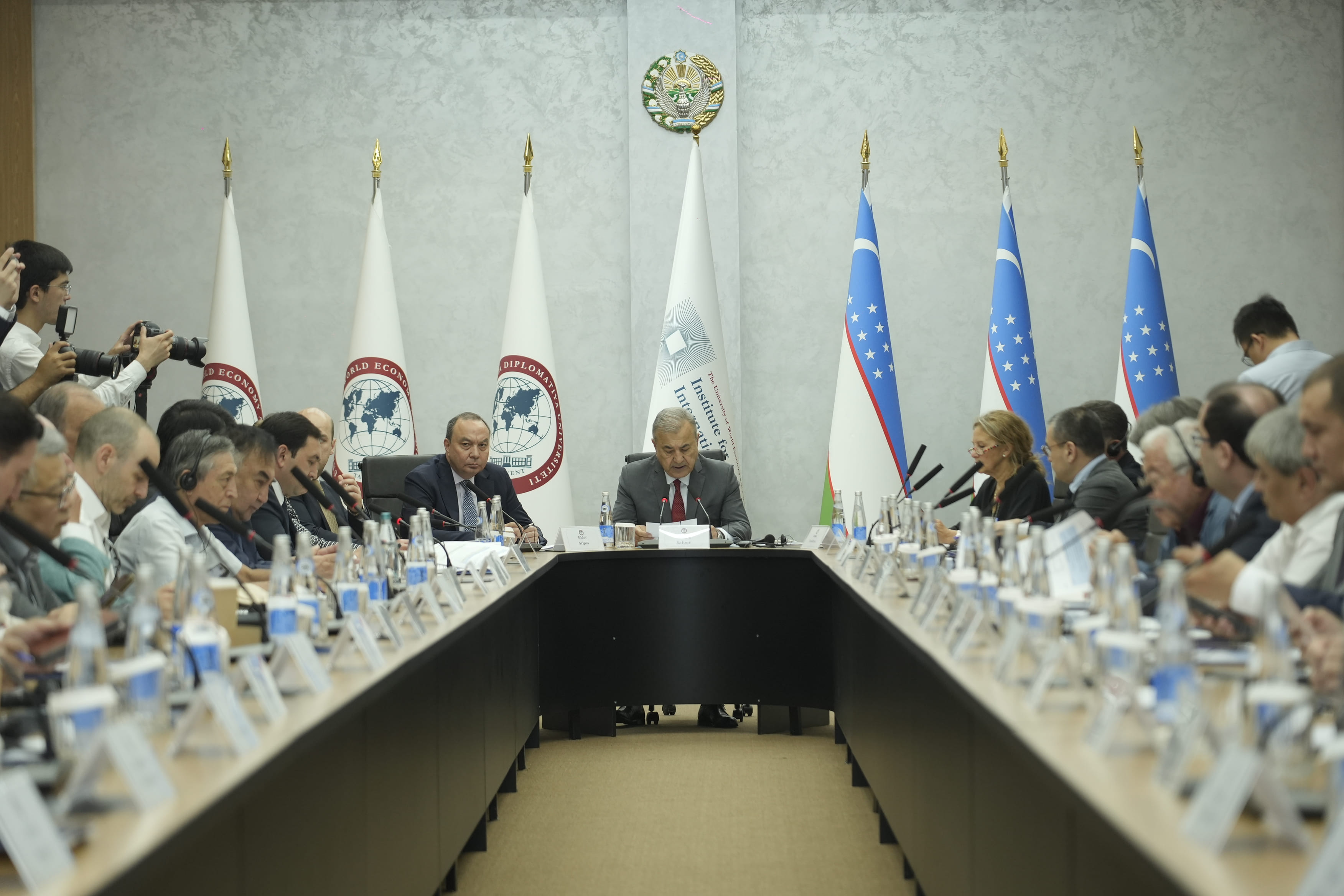
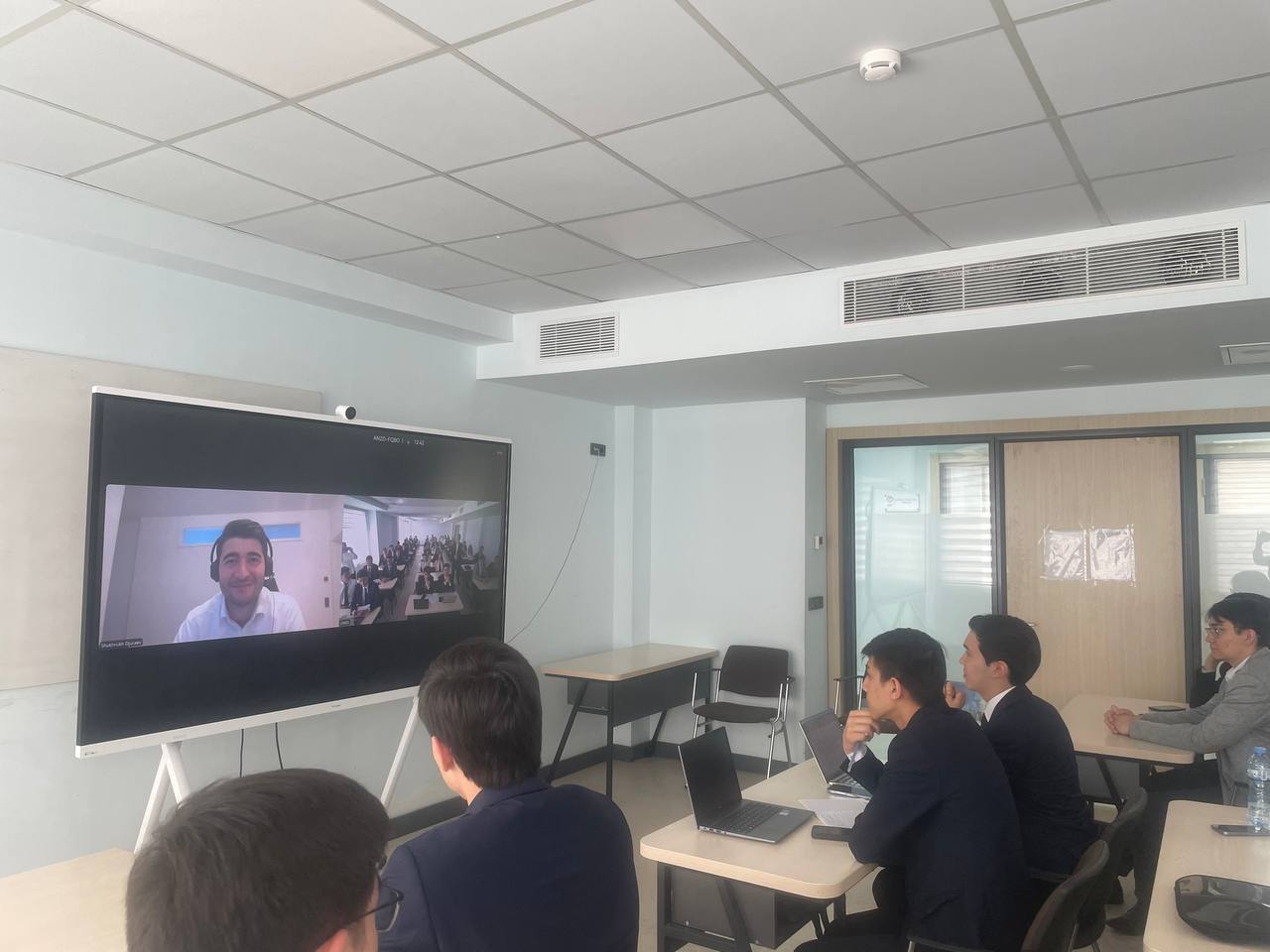
On June 26 of this year, the University of World Economy and Diplomacy hosted the Tashkent Dialogue titled “Central Asia’s Safe Nuclear Future: From Nuclear Non-Proliferation to Risk Management”. The event was organized by the Institute for Advanced International Studies under UWED in cooperation with the Institute for Strategic and Regional Studies under the President of the Republic of Uzbekistan and the James Martin Center for Nonproliferation Studies at the Middlebury Institute of International Studies at Monterey.
The Dialogue was held within the framework of the Monterey Symposium initiated by Professor Anna Vassilieva. Participants discussed Central Asia’s role amid the changing global nuclear and geopolitical landscape, strengthening the nuclear non-proliferation regime, managing nuclear and radiological risks, and ensuring safety as the peaceful use of atomic energy continues to expand.
The event opened with welcoming remarks by Sodyq Safoev, First Deputy Chairperson of the Senate of the Oliy Majlis of the Republic of Uzbekistan and Rector of UWED; Eldor Aripov, First Deputy Secretary of the Security Council under the President of the Republic of Uzbekistan and Director of the Institute for Strategic and Regional Studies; and Anna Vassilieva, Director of the Monterey Initiative at the Middlebury Institute of International Studies.
William Clark Potter, Director of the James Martin Center for Nonproliferation Studies, delivered the keynote address. Representatives of the Atomic Energy Agency, the Institute of Nuclear Physics of the Academy of Sciences of Uzbekistan, research institutions, and the international expert community also presented reports on nuclear safety, radiological risks, environmental sustainability, and international cooperation.
The discussions focused on compliance with safety requirements throughout all stages of the life cycle of nuclear facilities, the prevention of accidents and technological risks, strengthening the capacity of national regulatory authorities, and managing nuclear and radiological risks as Central Asia develops into a major transport and logistics hub. The Tashkent Dialogue served as an important expert platform for developing practical approaches aimed at ensuring a safe, sustainable, and responsible nuclear future for the region.