UWED holds Masterclass on Expropriation in International Investment Law
UWED holds Masterclass on Expropriation in International Investment Law
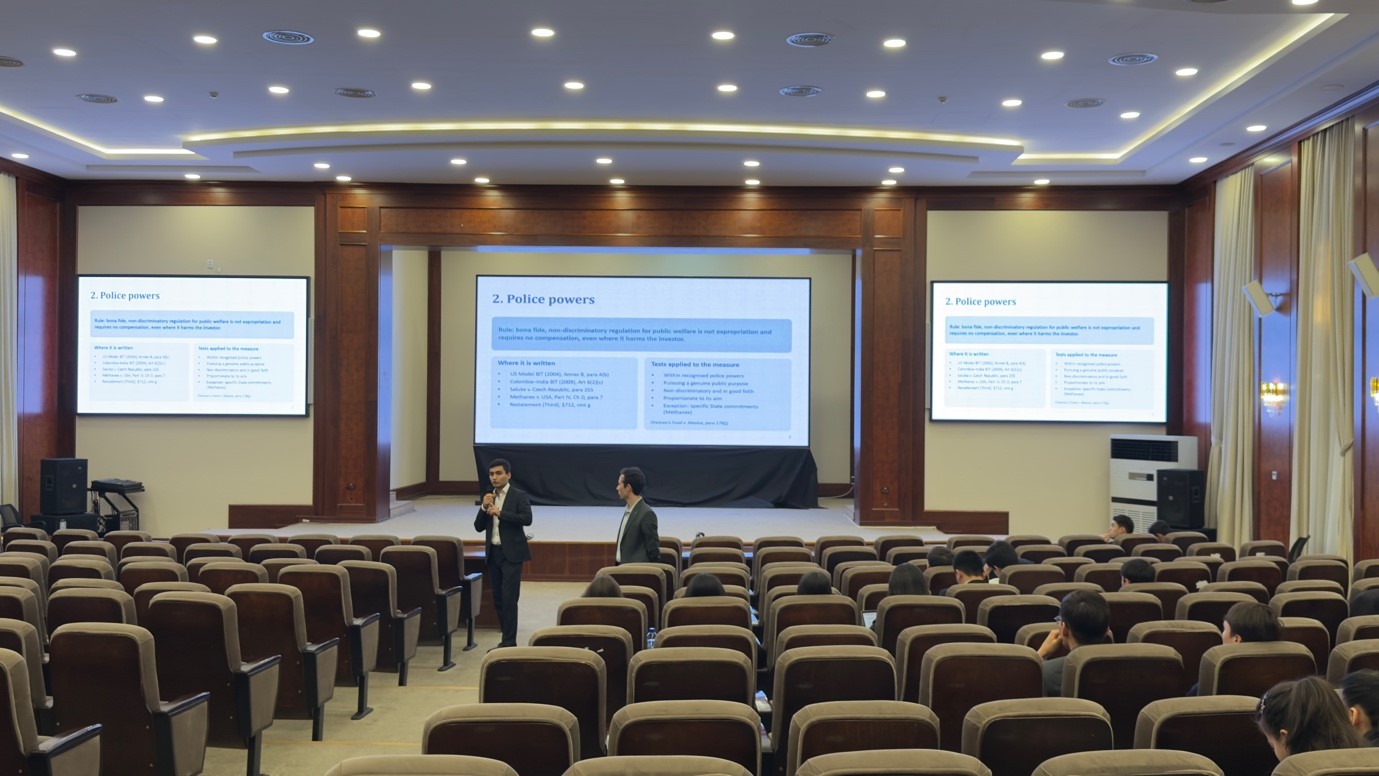
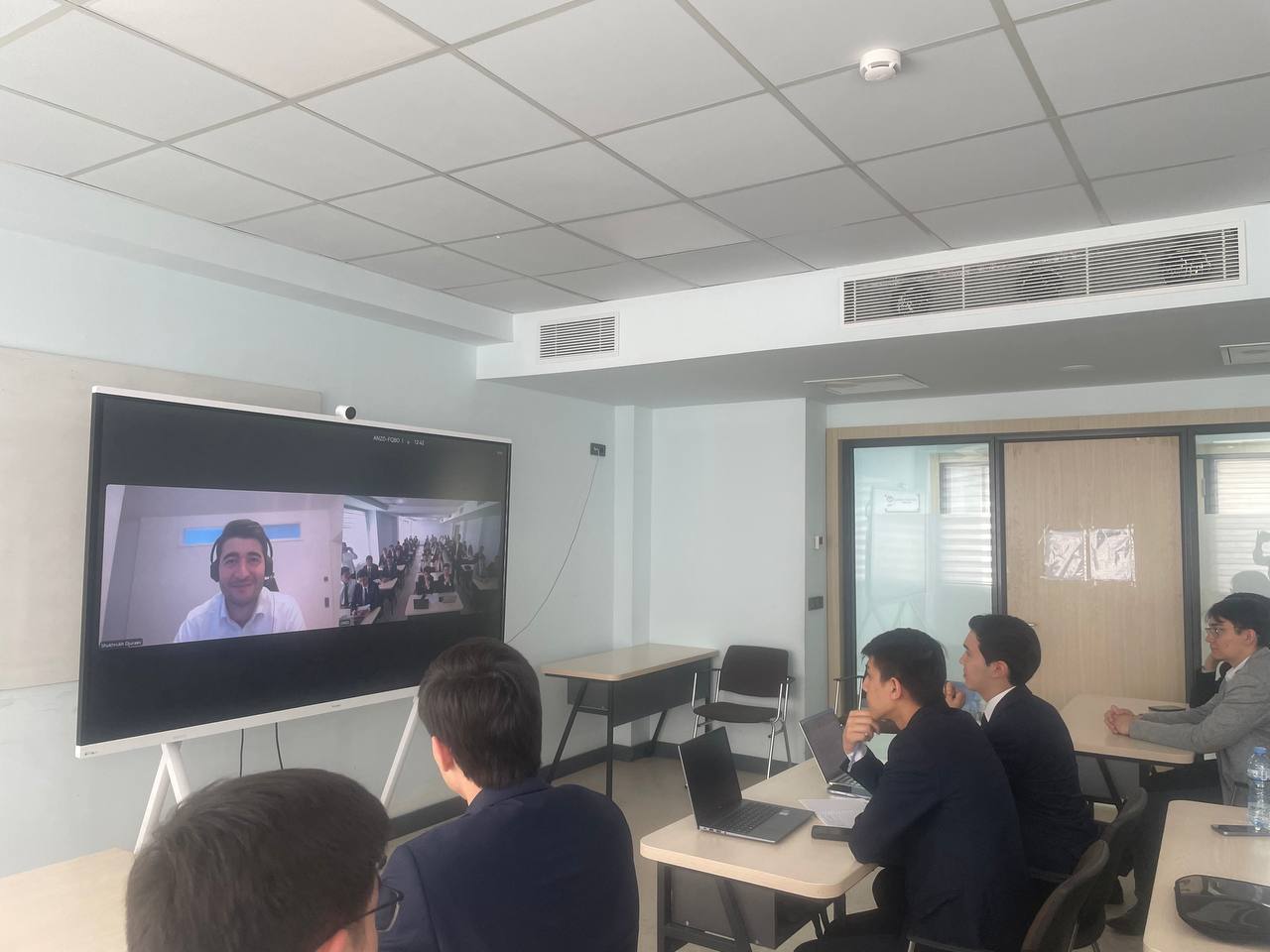
Investment Law” course for undergraduate students, the Department of Civil Law and International Private Law Disciplines of the University of World Economy and Diplomacy (UWED) held a masterclass on “International Investment Law: Legal Foundations of Expropriation, Police Powers and Compensation.” The event was organized by the Head of the Department, Sherzodbek Masadikov, and lecturer Alisher Bobonazarov, as part of the ongoing development of practice-oriented legal education at the university.
The masterclass was delivered by two master's students of the “International Arbitration and Dispute Resolution” programme — Manuchehr Bekhzodiy, an employee of the Secretariat of the Business Ombudsman under the President of the Republic of Uzbekistan, and Madinabonu Karimkulova, Junior Legal Counsel at the Legal Department of Coca-Cola Ichimligi Uzbekiston, Ltd. — for fourth-year students of the Faculty of International Economics and Management. The main objective of the session was to deepen undergraduate students' analytical skills in examining international investment disputes on the basis of UNCTAD research and the arbitration practice of the International Centre for Settlement of Investment Disputes (ICSID).
During the masterclass, the presenters explained the distinction between the direct taking of property and indirect losses resulting from state interference, drawing on the landmark arbitration decisions in Tecmed v. Mexico and Starrett Housing v. Iran. Together with the students, they examined in detail the four criteria that determine the lawfulness of state action — a genuine public purpose, non-discrimination, due process of law, and adequate compensation — and showed, through practical examples, the circumstances in which non-discriminatory state regulation aimed at protecting the environment and public health does not give rise to an obligation to pay compensation.
Students were also introduced to the applicable standards of compensation and to modern business-valuation methods, including the Discounted Cash Flow (DCF) method.
This masterclass resonates with the ideas of Sustainable Development Goal 4 — “Quality Education,” by strengthening students' practical and analytical legal skills through a case-based approach to teaching, as well as Goal 16 — “Peace, Justice and Strong Institutions,” in particular target 16.3, which calls for promoting the rule of law and ensuring equal access to justice; the session showed that the rule of law and the guarantee of judicial protection are inseparable from freedom of contract and the equality of parties, which form the foundation of international investment law.
Such masterclasses are of considerable importance in shaping the professional and legal awareness of future specialists and in ensuring a genuine integration of theory and practice.
| Date: | 08.11.2026 |
| Views: | 8 |
| Share: |