Master Class held on The Specific Features of Selected Types of International Commercial Transactions
Master Class held on The Specific Features of Selected Types of International Commercial Transactions
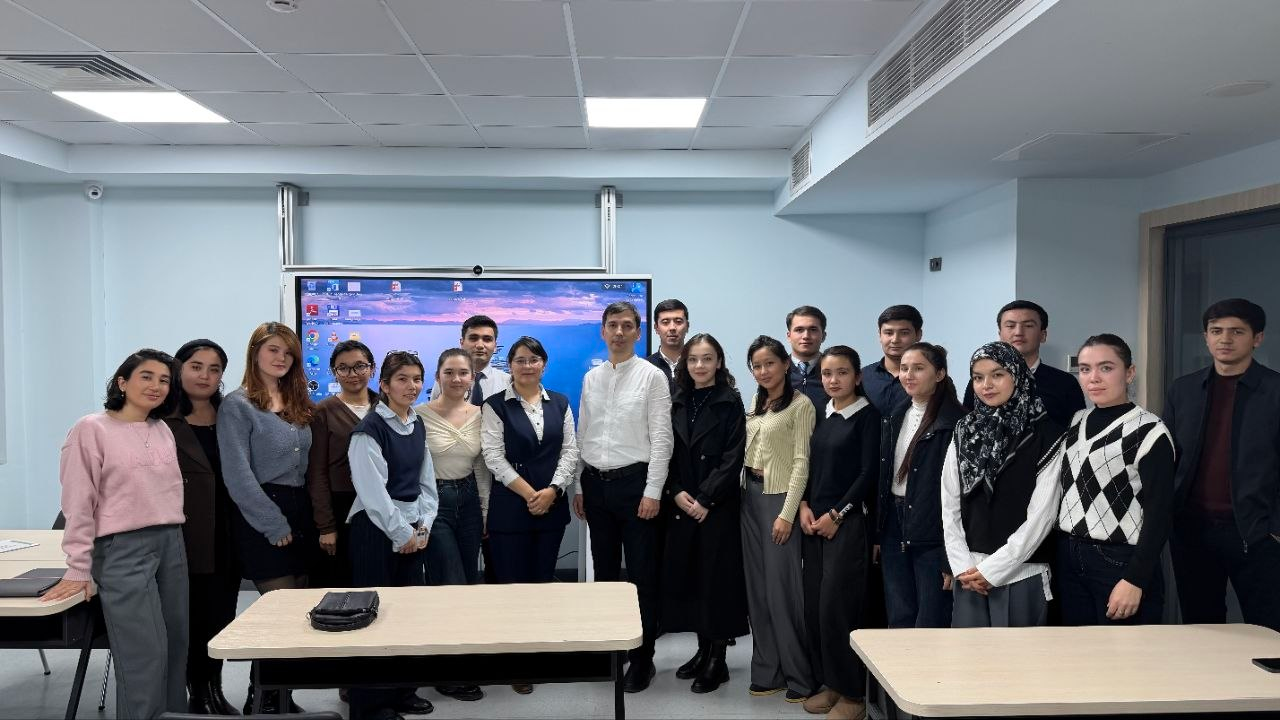
On 18 November this year, the University of World Economy and Diplomacy held a master class as part of its efforts to advance the Sustainable Development Goals (SDGs). The event was organised for Master's students enrolled in the International Arbitration and Dispute Resolution programme as part of the course International Commercial Transactions. It focused on the legal and practical aspects of international factoring and forfaiting agreements as contractual mechanisms used in international commercial practice.
The master class was organised by Imamova Dilfuza, Professor of the Department of Civil Law and International Private Law Disciplines, with the aim of deepening students' theoretical knowledge, developing their practical skills and enhancing their professional training.
The invited expert was Islomov Bunуod, Head of the Legal Department at KDB Bank Uzbekistan.
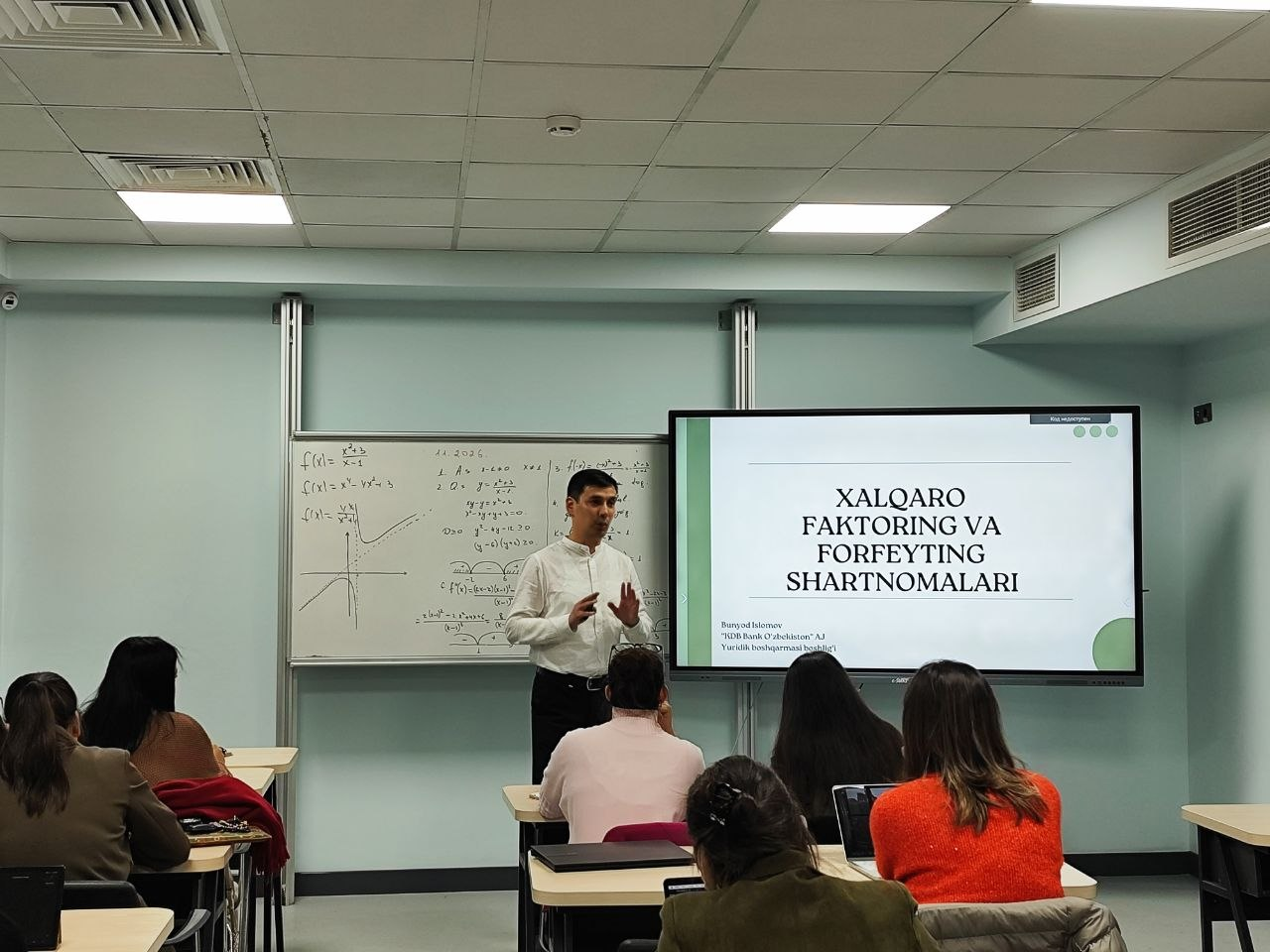
During the master class, Islomov Bunуod provided a detailed overview of the substance and specific features of factoring and forfaiting as contractual mechanisms for financing international commercial activities. In particular, he addressed their legal nature, significance and regulatory framework, the procedures for concluding the relevant agreements, the rights and obligations of the parties, as well as the specific features of applying these contractual mechanisms in banking practice.
Particular attention was paid to explaining the mechanisms underlying factoring and forfaiting operations, their similarities and differences, the determination of the applicable law, and the procedures for resolving disputes arising from the relevant contractual relationships. In addition, the invited expert shared his practical experience in providing legal support for contractual activities in the banking sector.
The Master's students demonstrated considerable interest in the subject, actively participated in the discussion and raised questions concerning the legal and practical aspects of concluding and performing factoring and forfaiting agreements. Their questions received comprehensive and informative answers, enabling participants to gain a deeper understanding of how these contractual instruments are applied in international commercial and banking practice.
The master class contributed to the implementation of SDG 4 “Quality Education”, which aims to ensure inclusive and equitable quality education and promote lifelong learning opportunities for all. In particular, the event was aligned with Target 4.4, which seeks to increase the number of young people and adults equipped with relevant professional skills necessary for employment, decent work and entrepreneurship. The involvement of a practising specialist in banking and contract law contributed to the development of the Master's students' professional competencies and the expansion of their practical knowledge.
Furthermore, the event was consistent with SDG 16 “Peace, Justice and Strong Institutions”, particularly Target 16.3, which aims to promote the rule of law and ensure equal access to justice for all. Examining the legal regulation of international factoring and forfaiting agreements, as well as mechanisms for resolving disputes arising in connection with their conclusion and performance, contributes to fostering legal awareness and developing the professional legal reasoning of future lawyers.
The master class also supported SDG 17 “Partnerships for the Goals”, particularly Target 17.6, which provides for strengthening international cooperation in the fields of science, technology and innovation. The University's engagement with a representative of the professional legal community promotes the exchange of practical experience, the development of practice-oriented education and stronger links between academia and legal practice.
The event made a valuable contribution to improving the educational process, developing the professional competencies of Master's students and strengthening cooperation between the University and the professional legal community in the context of implementing the Sustainable Development Goals.
| Date: | 19.11.2026 |
| Views: | 30 |
| Share: |