A master class on the financial supervisory powers of the Central Bank was held at UWED
A master class on the financial supervisory powers of the Central Bank was held at UWED
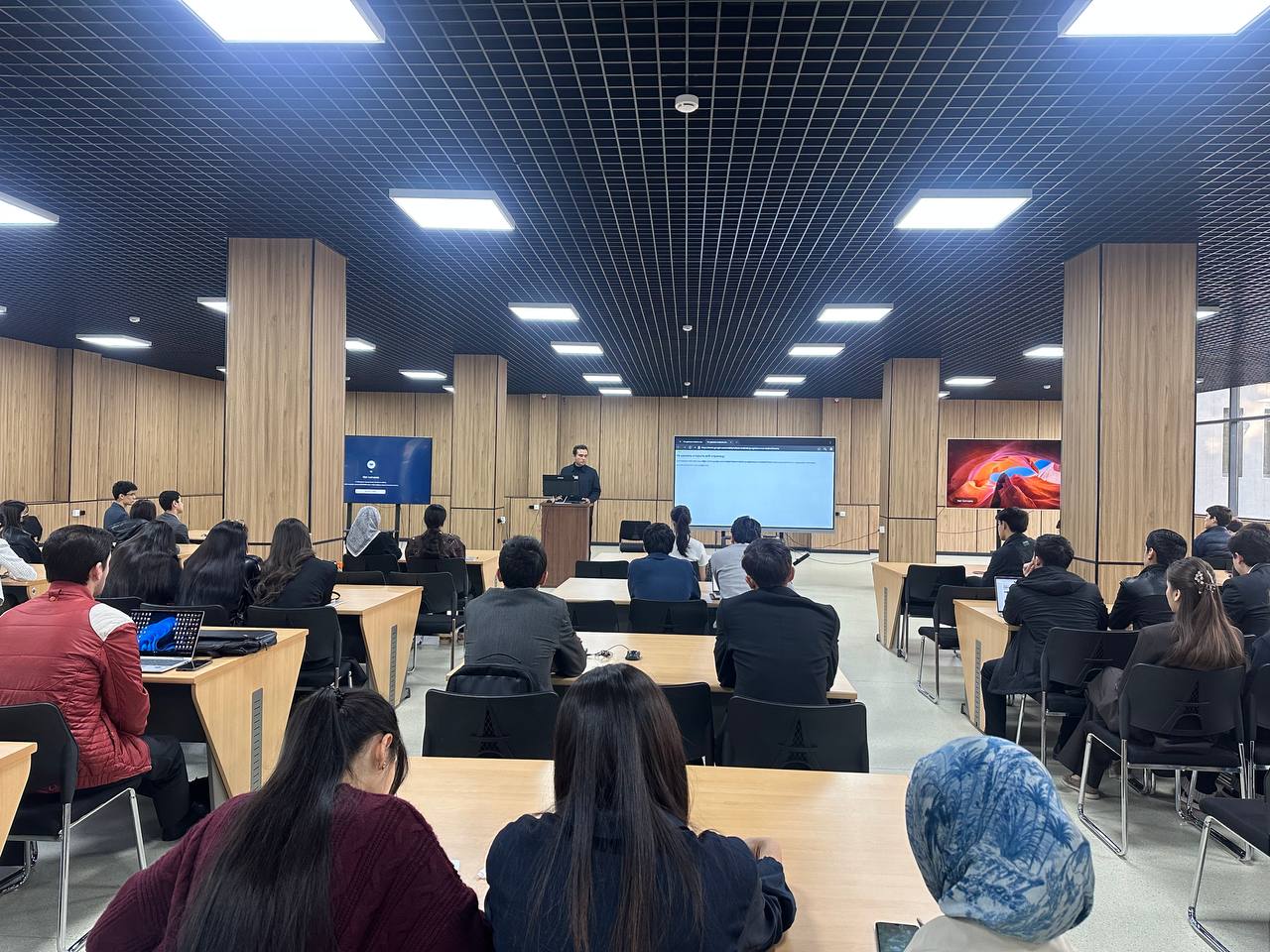
On October 31, 2026, at the initiative of senior lecturers M. Ibragimova and D. Soliyev of the Department of International Law and Public Law Disciplines of the University of World Economy and Diplomacy, a master class on “Legal Regulation of the Powers of the Central Bank in the Field of Financial Supervision” was held within the course “Financial and Tax Law.” The practical session featured Bakhtiyor Odiljon o‘g‘li Kobulov, Head of Division at the Legal Department of the Central Bank of the Republic of Uzbekistan, who briefed students on the Central Bank’s financial supervisory powers, the mechanisms of state regulation of the banking system, and the specific features of national legislation in this area.
The master class covered the legal status of the Central Bank of the Republic of Uzbekistan, the procedure for supervising banking activities, prudential requirements, mechanisms for ensuring financial stability, and the legal enforcement measures applied for violations of banking legislation. Particular attention was paid to the Central Bank’s supervisory functions and the legal mechanisms for exercising them under the Laws of the Republic of Uzbekistan “On the Central Bank of the Republic of Uzbekistan” and “On Banks and Banking Activity.” Ensuring the stability and transparency of the banking system, as a key condition for economic growth and wider access to financial services, is closely linked to Sustainable Development Goal 8 — “Decent Work and Economic Growth” (SDG 8).
A key feature of the session was its focus on linking theoretical knowledge with practice and on building students’ skills in analyzing financial-legal relations, interpreting legal acts, and approaching legal problems independently. The direct involvement of a practitioner gave students first-hand insight into current issues of law enforcement practice. This supports quality, practice-oriented education and contributes to Sustainable Development Goal 4 — “Quality Education” (SDG 4).
Building young people’s understanding of how financial supervisory institutions operate on the principles of legality, transparency, and accountability helps strengthen the rule of law and plays an important role in achieving Sustainable Development Goal 16 — “Peace, Justice and Strong Institutions” (SDG 16). Moreover, such cooperation between an educational institution and financial sector professionals contributes to Sustainable Development Goal 17 — “Partnerships for the Goals” (SDG 17).
Overall, this master class can be regarded as an effective educational and legal practice that strengthens students’ knowledge of the legal regulation of the banking and financial system, develops their professional competencies, and bridges theory and practice.
| Date: | 01.11.2026 |
| Views: | 45 |
| Share: |