Stockholm Seminar Discusses Uzbekistan’s Reform Transformation and Central Asia’s Growing Role
Stockholm Seminar Discusses Uzbekistan’s Reform Transformation and Central Asia’s Growing Role
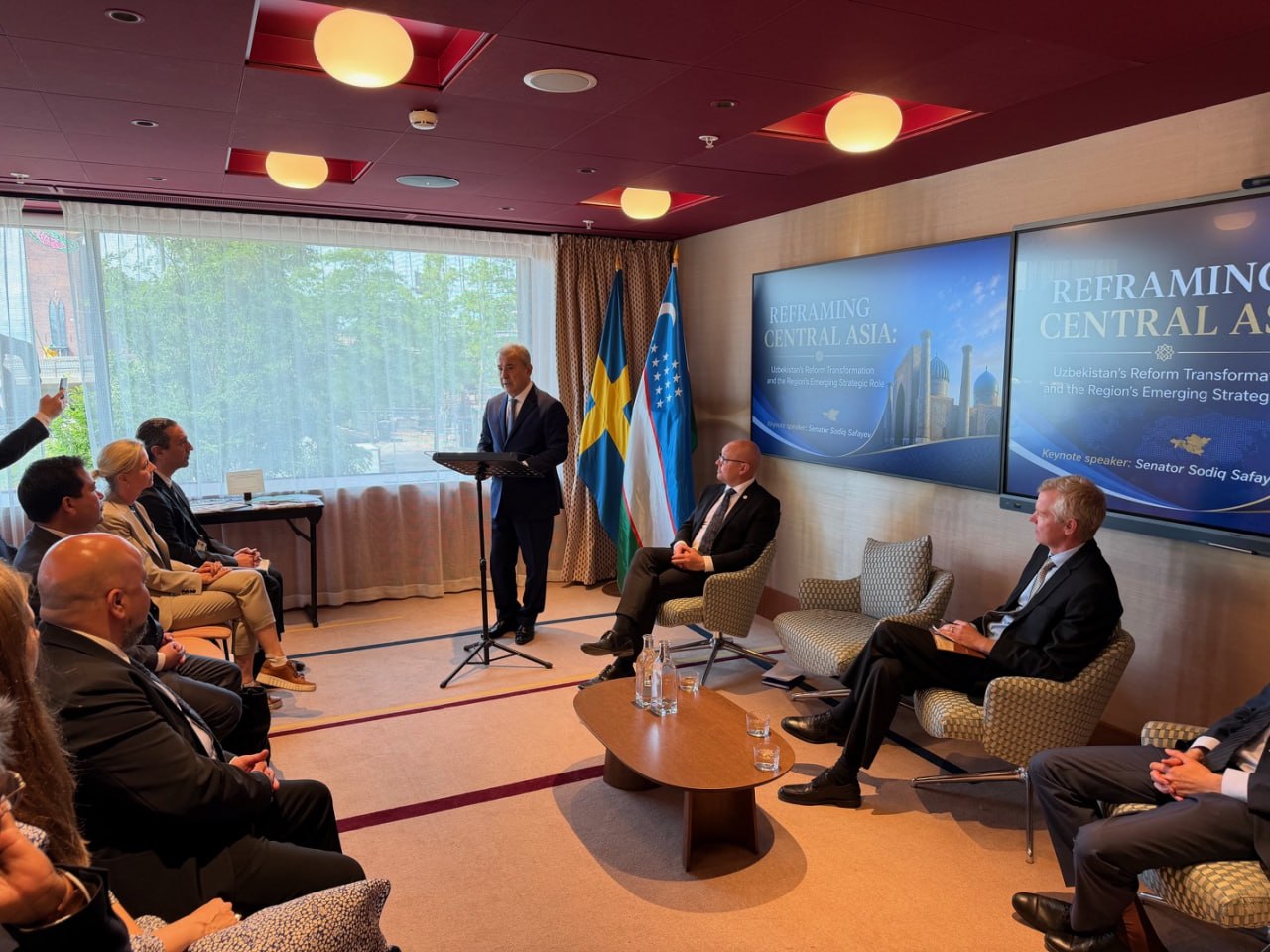
A high-level international seminar titled “Reframing Central Asia: Uzbekistan’s Reform Transformation and the Region’s Emerging Strategic Role” was held in Stockholm, bringing together policymakers, diplomats, researchers, and experts from Uzbekistan and Sweden.
The event focused on the growing strategic importance of Central Asia in the changing Eurasian landscape, as well as Uzbekistan’s ongoing reforms and its role in promoting regional cooperation, connectivity, and constructive international dialogue.
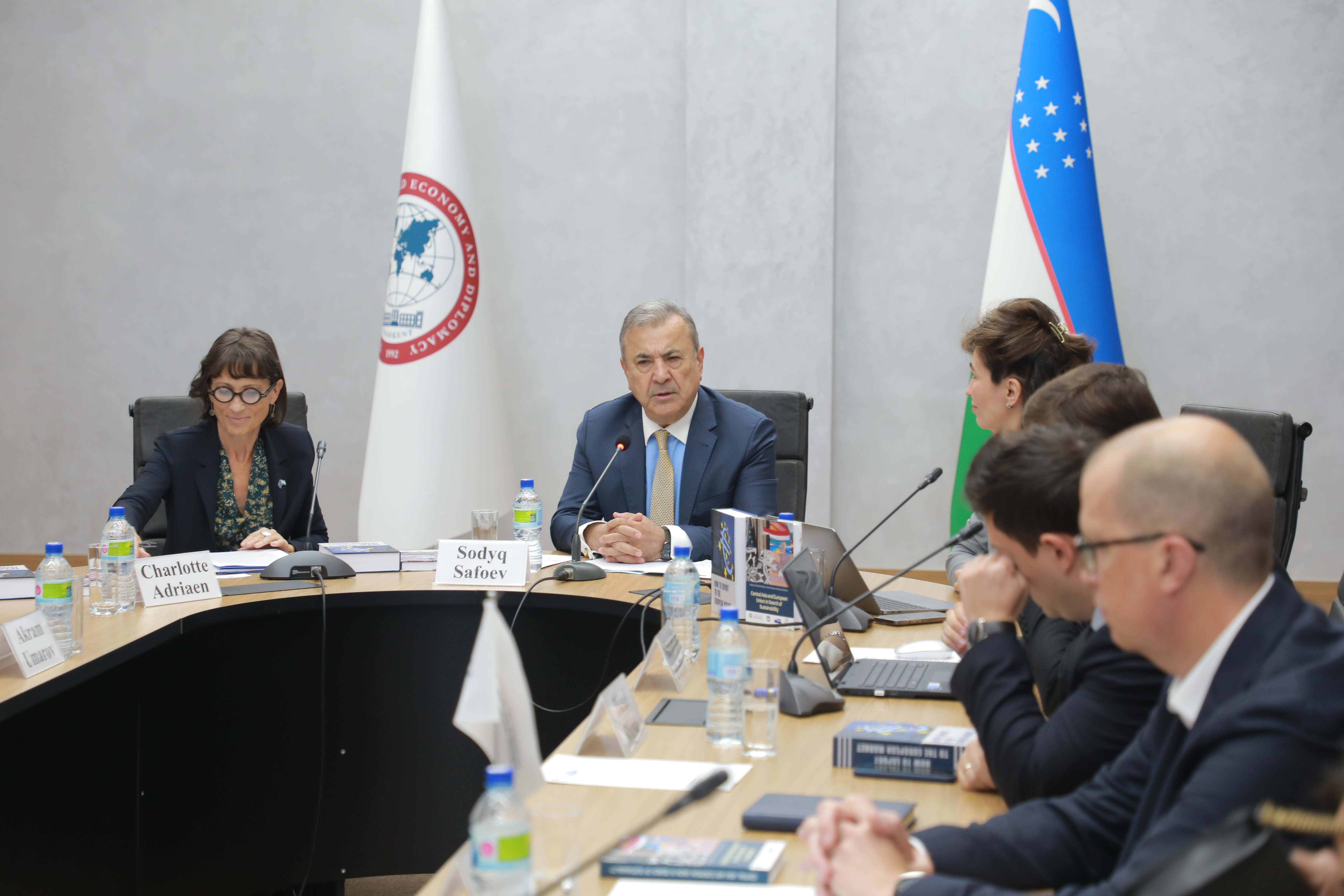
The keynote address was delivered by Sodyq Safoev, First Deputy Chairman of the Senate of the Republic of Uzbekistan and Rector of the University of World Economy and Diplomacy. In his remarks, Senator Safoev presented Uzbekistan’s reform and modernization experience, emphasizing the country’s contribution to strengthening regional cooperation and international engagement.
Addressing Swedish policymakers, diplomats, scholars, and experts, S.Safoev highlighted the transformation taking place across Central Asia and the region’s growing role as a space of openness, partnership, and cooperation. He also stressed the importance of expanding practical cooperation between Central Asia and the Nordic countries in areas such as sustainable development, transport and logistics, energy, education, innovation, and people-to-people exchanges.
The seminar was opened by Rakhmatulla Nurimbetov, Ambassador Extraordinary and Plenipotentiary of the Republic of Uzbekistan to Sweden, together with Swedish political and policy representatives. The discussions were moderated by prominent Central Asia expert Dr. Svante Cornell. Participants also heard strategic commentaries from leading Swedish experts on regional developments and prospects for strengthening Nordic–Central Asian cooperation.
The event generated strong interest among Swedish stakeholders and served as an important platform for discussing the future of Central Asia in an evolving Eurasian environment. Participants noted the increasing international attention to Uzbekistan’s reform agenda and the region’s growing significance as a bridge between Europe and Asia.
The Stockholm seminar formed part of ongoing efforts to deepen political, economic, academic, and cultural ties between Uzbekistan and the Nordic countries, while promoting greater international understanding of the opportunities and challenges shaping Central Asia’s future.
| Date: | 04.06.2026 |
| Views: | 1136 |
| Share: |