A scientific and practical seminar of the Methodological Council was held at UWED
A scientific and practical seminar of the Methodological Council was held at UWED
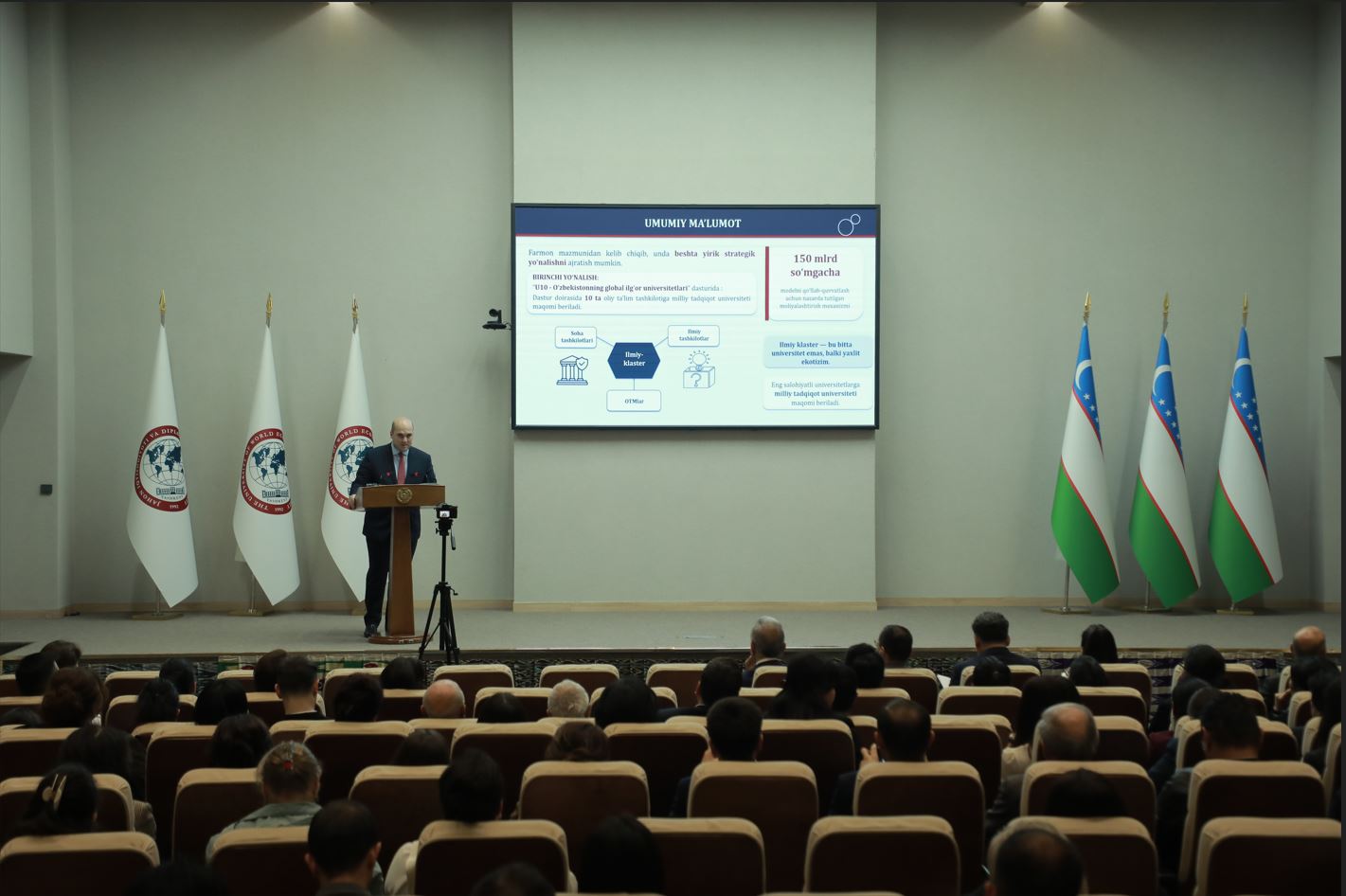
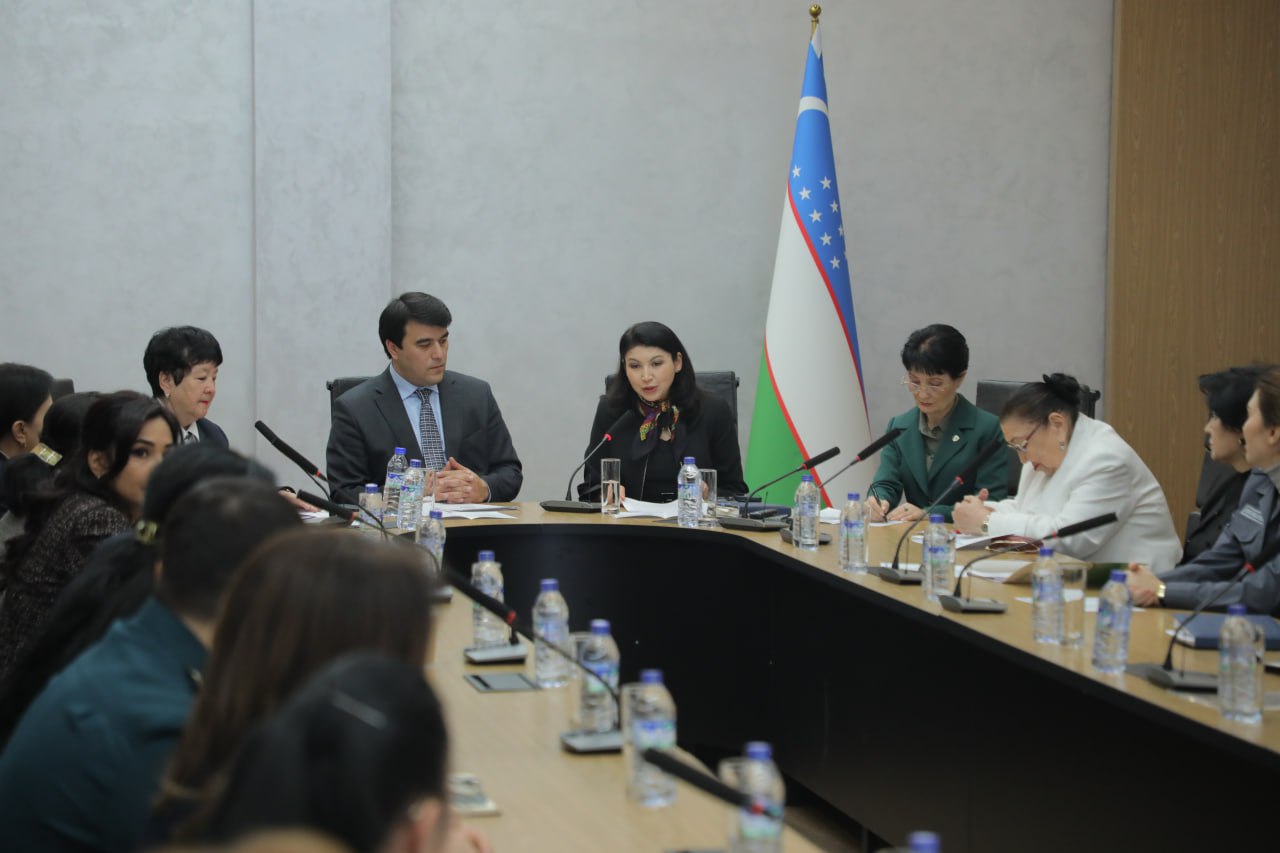
On April 23, 2026 the Methodological Council of the University of World Economy and Diplomacy arranged the academic seminar on “Main dimensions and priority tasks of the Decree of the President of the Republic of Uzbekistan ‘On additional measures to improve the system of higher education, science and innovations’”.
The meeting was attended by the First Deputy Chairman of the Senate of Uzbekistan, Rector of UWED S. Safoyev, First Vice Rector for Academic Affairs A. Umarov, Vice Rector for Research and Innovations T. Dadabaev, members of the Academic Council, administrative and teaching staff.
In the main part of the event First Vice Rector for Academic Affairs Dr. A. Umarov delivered/gave a keynote speech. In his presentation speaker introduced main dimensions and priority tasks of the Decree ‘On additional measures to improve the system of higher education, science and innovations’ (DP-58), aimed at "transforming high-potential higher education institutions into internationally competitive scientific and intellectual centers" in accordance with the principles of the “U 10” Program. The Decree DP-58 exposes roadmap outlining a set of practical measures to develop Uzbekistan’s capabilities as an international educational hub.
Stemming from key areas of the Decree, the focus was made on UWED development priorities: (i) transforming into a national research university, (ii) further enhancing its scientific/academic capacity and capabilities, (iii) strengthening partnerships with Top-300 educational institutions, (iv) modernizing the University’s research infrastructure, (v) ensuring international recognition of its core Curricula, (vi) converting its scientific and educational capabilities into a strategic advantages and constant financial basis, (vii) strengthening the University’s scientific, academic, and institutional competitiveness, (viii) improving the system for admitting international students, and (ix) ensuring the interconnectedness of Curricula with the practice and future career/ employment of graduates.
In the concluding part of the workshop participants addressed relevant questions regarding the criteria for creating scientific clusters stipulated in the Decree; area priorities for international scientific and academic cooperation within the framework of cluster creation; current challenges and risks to the development of higher education, science, and innovation, and more.
| Date: | 26.04.2026 |
| Views: | 866 |
| Share: |
Similar news