A master class was organized on the topic “The Significance of Islamic Law in the Modern World”
A master class was organized on the topic “The Significance of Islamic Law in the Modern World”
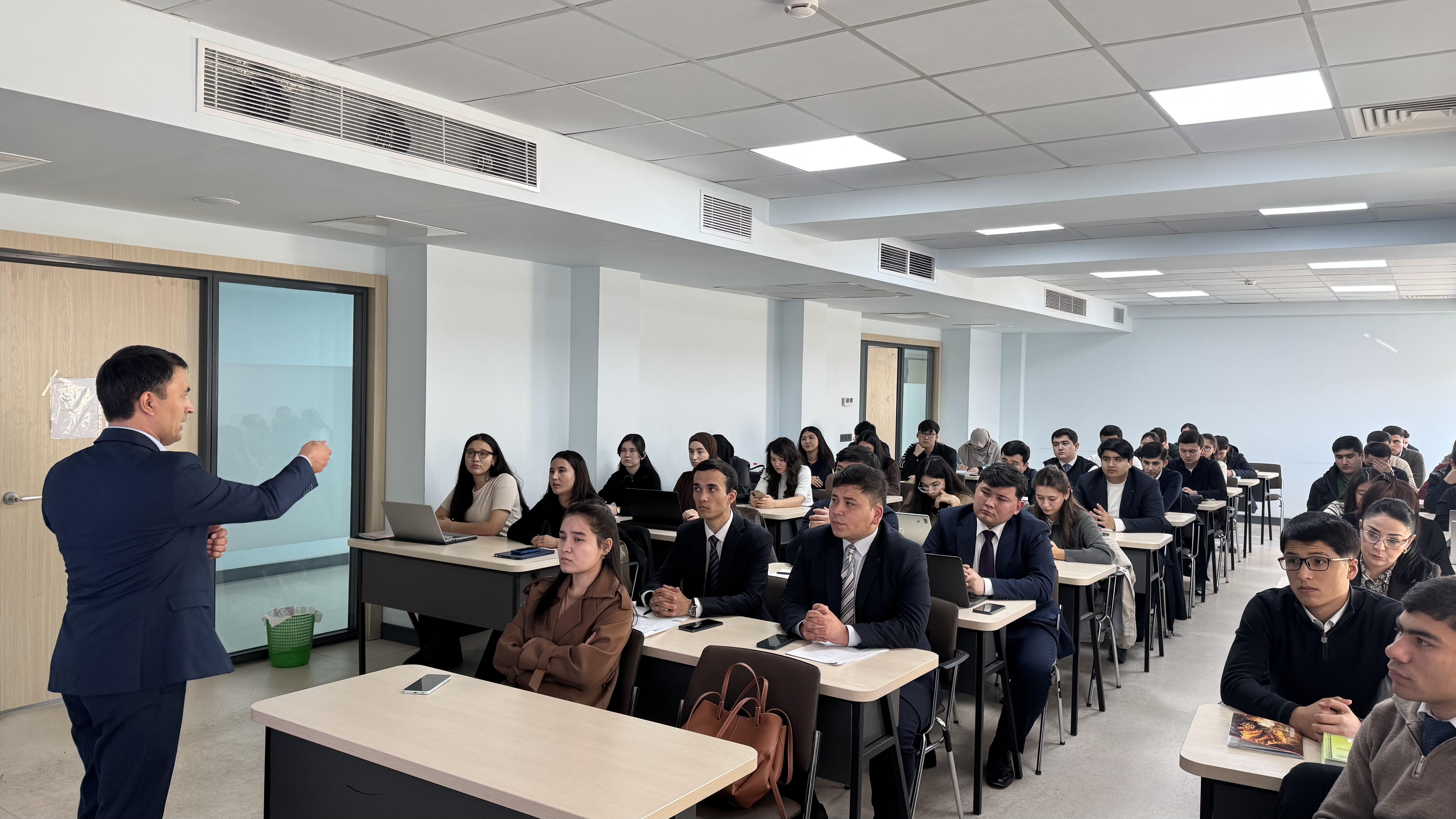
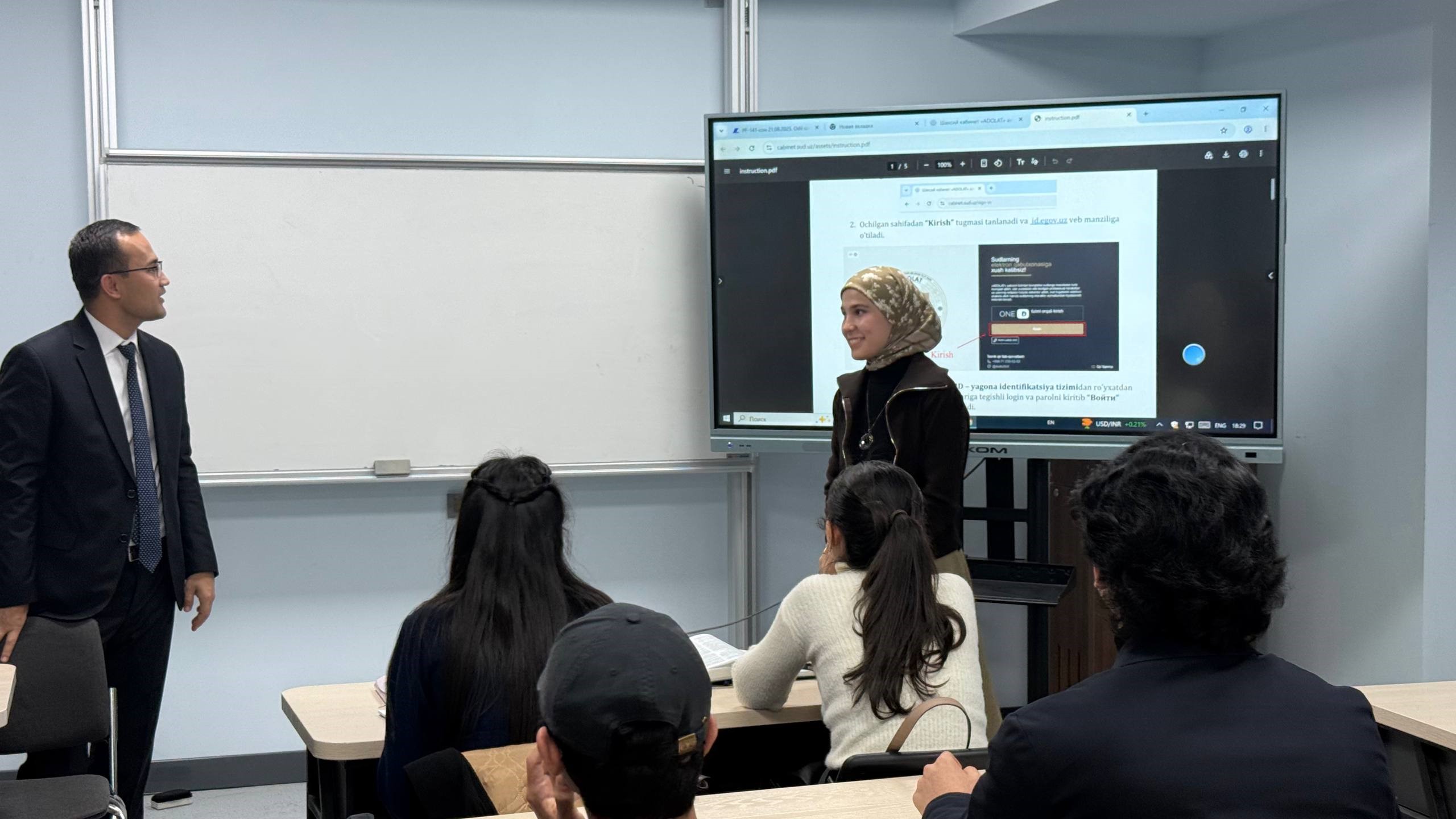
On November 16, a masterclass entitled “The Significance of Islamic Law in the Modern World” was held for students of the Faculty of International Law. The event featured Shukurillo Rahimovich Juraev, Associate Professor at the International Islamic Academy of Uzbekistan and Doctor of Philosophy (PhD) in Historical Sciences.
The primary objective of the masterclass was to provide students with in-depth theoretical knowledge of the role and significance of Islamic law in the contemporary global legal landscape, its theoretical foundations and fundamental principles, as well as its interaction with contemporary international legal processes.
During the session, the historical origins and development of Islamic law were examined, with particular attention to the role and significance of its principal sources — the Quran, Sunnah, Ijma (consensus) and Qiyas (analogical reasoning) — in legal regulation. The lecturer also addressed the fundamental principles of Islamic law, including justice, equality, respect for human dignity and religious tolerance.
Special attention was given to the position of Islamic law within the national legal systems of Muslim-majority states in the context of globalization, its interaction with the universally recognized principles of international law, and the harmonization of religious and legal values with universal legal principles.
Throughout the lecture, emphasis was placed on developing students’ abilities to express independent views, conduct comparative legal analysis and apply theoretical knowledge to practical situations.
The masterclass concluded with an exchange of views on the significance of Islamic law in the development of contemporary legal systems and its role in promoting social justice and protecting human rights. The event contributed to broadening students’ knowledge of Islamic law and strengthening their capacity for scientific and analytical assessment of contemporary legal processes.
| Date: | 17.11.2026 |
| Views: | 24 |
| Share: |