UWED Hosts International Round Table Marking The 20th Anniversary Of The Un Convention On The Rights Of Persons With Disabilities In Support Of The SDGs
UWED Hosts International Round Table Marking The 20th Anniversary Of The Un Convention On The Rights Of Persons With Disabilities In Support Of The SDGs
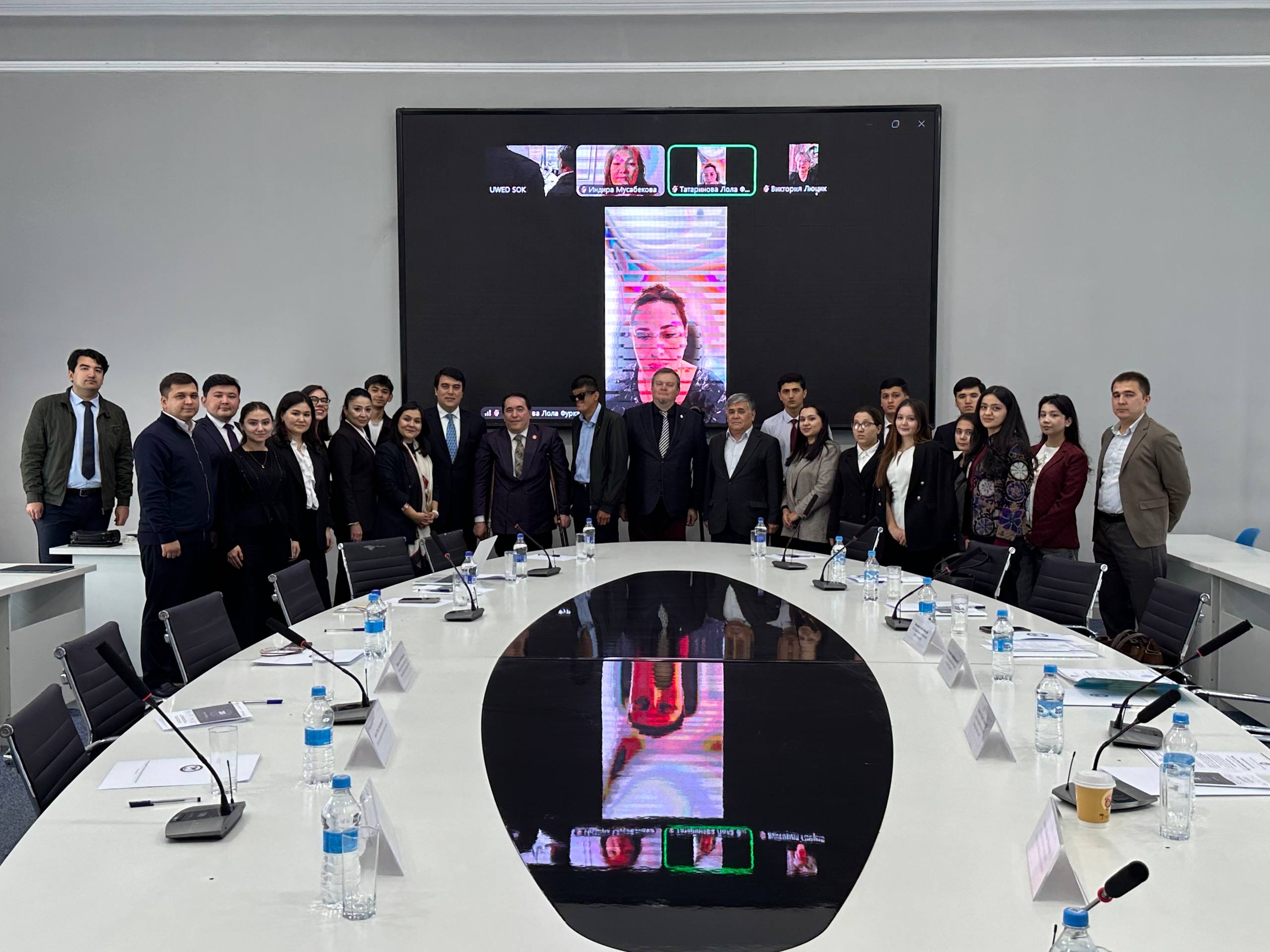
On 19 October 2026, the University of World Economy and Diplomacy (UWED) hosted an international round table entitled “The UN Convention on the Rights of Persons with Disabilities: Twenty Years of Experience and Contemporary Practice.” The event was organised by the Department of International Law and Public Law Disciplines as part of its efforts to support the achievement of the United Nations Sustainable Development Goals (SDGs).
Held in a hybrid format under the motto “Nothing About Us Without Us,” the meeting brought together scholars, experts and representatives of civil society organisations from Uzbekistan, Kazakhstan and Russia. Its themes were directly related to SDG 4, “Quality Education”; SDG 10, “Reduced Inequalities”; SDG 16, “Peace, Justice and Strong Institutions”; and SDG 17, “Partnerships for the Goals.”
Discussions focused on ensuring equal opportunities, advancing inclusive education and removing barriers to the full participation of persons with disabilities in society.
The round table took place ahead of the twentieth anniversary of the adoption of the UN Convention on the Rights of Persons with Disabilities. The Convention was adopted by the UN General Assembly on 13 December 2006 and ratified by Uzbekistan in 2021. Participants discussed experience gained in implementing the Convention, remaining challenges and ways to strengthen mechanisms for protecting the rights of persons with disabilities.
Opening remarks were delivered by Odil Abdugafurovich Yusupdjanov, Head of UWED’s Department for the Retraining of Diplomatic Personnel, and Nargiza Rashitovna Kadirova, Head of the Department of International Law and Public Law Disciplines. The meeting was moderated by Shirin Mirzayuldashevna Khamdamova, Associate Professor in the Department.
Participants included representatives of the National Centre of the Republic of Uzbekistan for Human Rights, Oybek Yusufbekovich Isakov, Chair of the Association of Persons with Disabilities of Uzbekistan, faculty members from Tashkent State University of Law and independent experts.
International perspectives were presented by Alexander Mikhailovich Solntsev, Deputy Head of the Department of International Law at the Law Institute of RUDN University; Viktoriya Vladimirovna Lyutsik of Turan University; Lola Furkatovna Tatarinova of the Adilet Higher School of Law at Caspian Public University; and Indira Temirbekovna Musabekova of the Higher School of Entrepreneurship.
Nine thematic presentations addressed the implementation of the Convention in Uzbekistan, international standards for protecting the rights of persons with autism, aspects of their legal status in Kazakhstan, and the right to live independently and be included in the community. Particular attention was paid to inclusive education for children with disabilities, access to sport, the protection of rights in the context of climate change, and international legal mechanisms for protecting older persons and persons with disabilities.
A central theme throughout the discussions was the full participation of persons with disabilities in decisions affecting their rights and interests. The issues addressed reflected the core commitment of the 2030 Agenda for Sustainable Development to “leave no one behind.”
The round table provided a platform for exchanging academic and practical experience among representatives of the three countries, strengthening professional ties and exploring opportunities for further cooperation in protecting human rights and advancing the SDGs.
| Date: | 20.10.2026 |
| Views: | 74 |
| Share: |