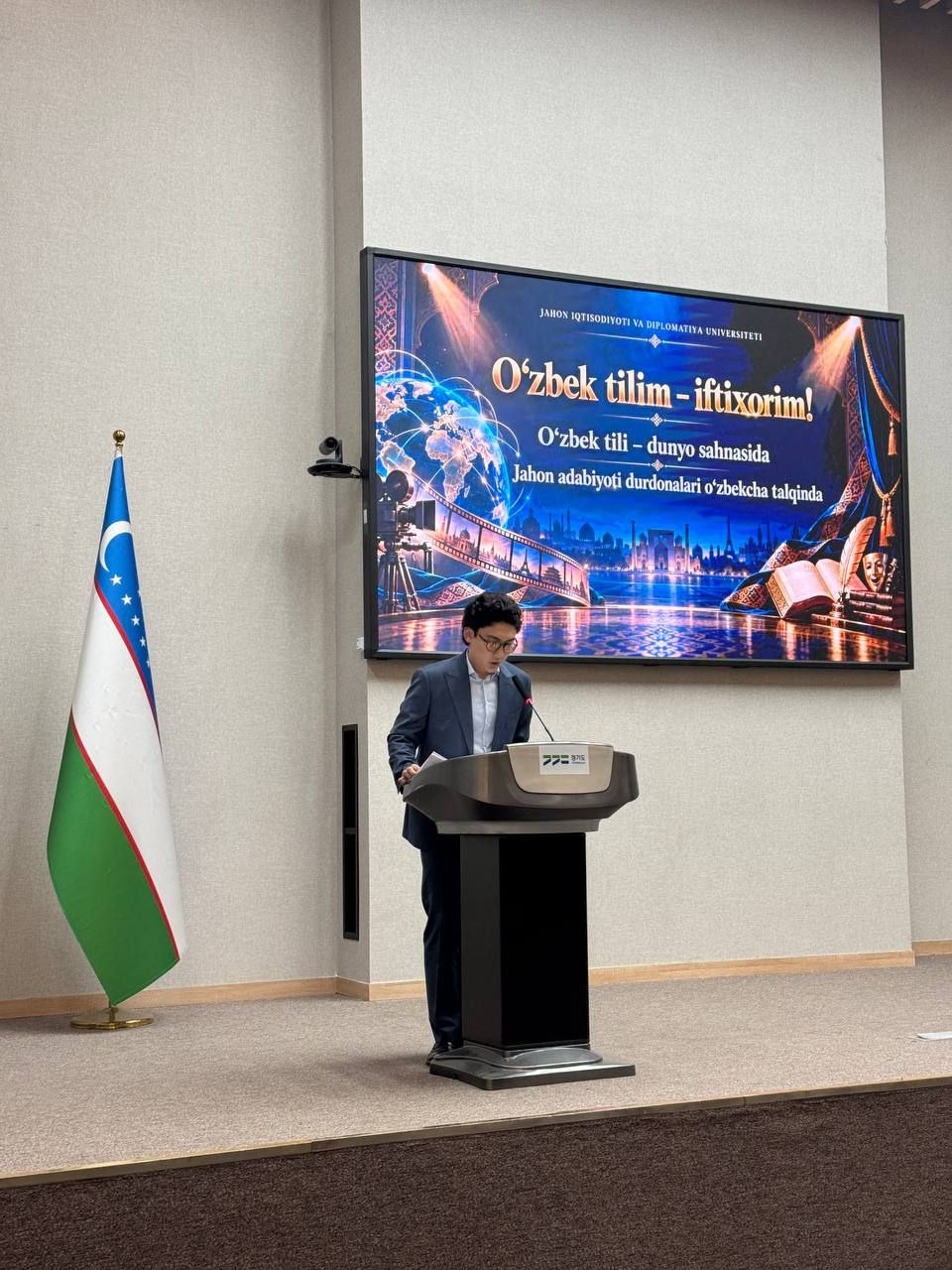
UWED hosted video and monologue competitions under the motto “My Uzbek Language Is My Pride!”
UWED hosted video and monologue competitions under the motto “My Uzbek Language Is My Pride!”
The Uzbek language is a priceless treasure that embodies the historical memory, national thought and spiritual world of our people. Its rich vocabulary, unique artistic potential and literary traditions shaped over centuries are an integral part of our national culture. In today’s era of globalization, it is especially important to raise the younger generation in the spirit of loyalty to national values and to enhance the prestige of the Uzbek language on the international stage.
For students of the University of World Economy and Diplomacy, a thorough command of the Uzbek language is not only a spiritual need but also an important component of their future professional activity. After all, expressing ideas clearly in international communication, presenting national culture with dignity and developing cultural ties between nations all require the effective use of the language’s potential. In this regard, promoting the Uzbek language through a creative approach and modern media not only supports young people’s initiative but also contributes to the international recognition of our national values.
On 19 October, as part of the month of events dedicated to the 37th anniversary of the Uzbek language being granted the status of the state language, the University of World Economy and Diplomacy hosted a festive cultural and educational event titled “My Uzbek Language Is My Pride!”. The ceremonial evening was attended by professors, teaching staff, employees and talented students. The main goal of the event was to further strengthen young people’s deep respect for their native language and their sense of patriotism, as well as to unlock their creative and intellectual potential.
As part of the event, the university’s talented students took part in the video contest “The Uzbek Language on the World Stage” and the monologue contest “Masterpieces of World Literature in Uzbek Interpretation”. To determine the winners, creative works submitted by nearly one hundred participants were evaluated according to established criteria. In the video contest, particular attention was paid to how well the entries highlighted the artistic appeal of the Uzbek language, its rich expressive potential and its international significance.
In the monologue contest, rare masterpieces of world literature were presented through distinctive artistic interpretation and skilled stage performance. Participants performed excerpts from such classic works as Johann Wolfgang von Goethe’s Faust, Sergei Yesenin’s Persian Motifs, William Shakespeare’s Romeo and Juliet and Hamlet, and Alexander Pushkin’s Eugene Onegin, both in the original language and in Uzbek translation. In particular, the Uzbek renditions drew on translations by Erkin Vohidov, Maqsud Shayxzoda and Mirzo Kenjabek.
The monologues, performed in two languages, revealed the unique artistic world of world literature, the power of the word and the subtleties of the art of translation. The performances were judged on a deep understanding of the work’s content, expressive portrayal of the characters’ inner world, conveying the artistic harmony between the original text and the translation, as well as pronunciation and stage performance skills. The contest became a broad creative platform for showcasing the artistic potential of the Uzbek language through performing masterpieces of world literature in our native tongue.
The contests gave students an opportunity to demonstrate their creative potential, speaking skills and artistic thinking. Through their performances, participants sought to reveal the expressive power of their native language, showcase its beauty and express their interest in literary heritage. These initiatives helped strengthen young people’s respect for the state language, widely promote Uzbek language and literature, and demonstrate the harmony between national and universal values.
This ceremonial event played an important role in helping the university community and students appreciate the great and invaluable significance of their native language, and in further strengthening their sense of national pride and responsibility.
| Date: | 19.10.2026 |
| Views: | 48 |
| Share: |