The Faculty of International Relations hosted a meeting with Ambassador of Switzerland Simone Giger
The Faculty of International Relations hosted a meeting with Ambassador of Switzerland Simone Giger
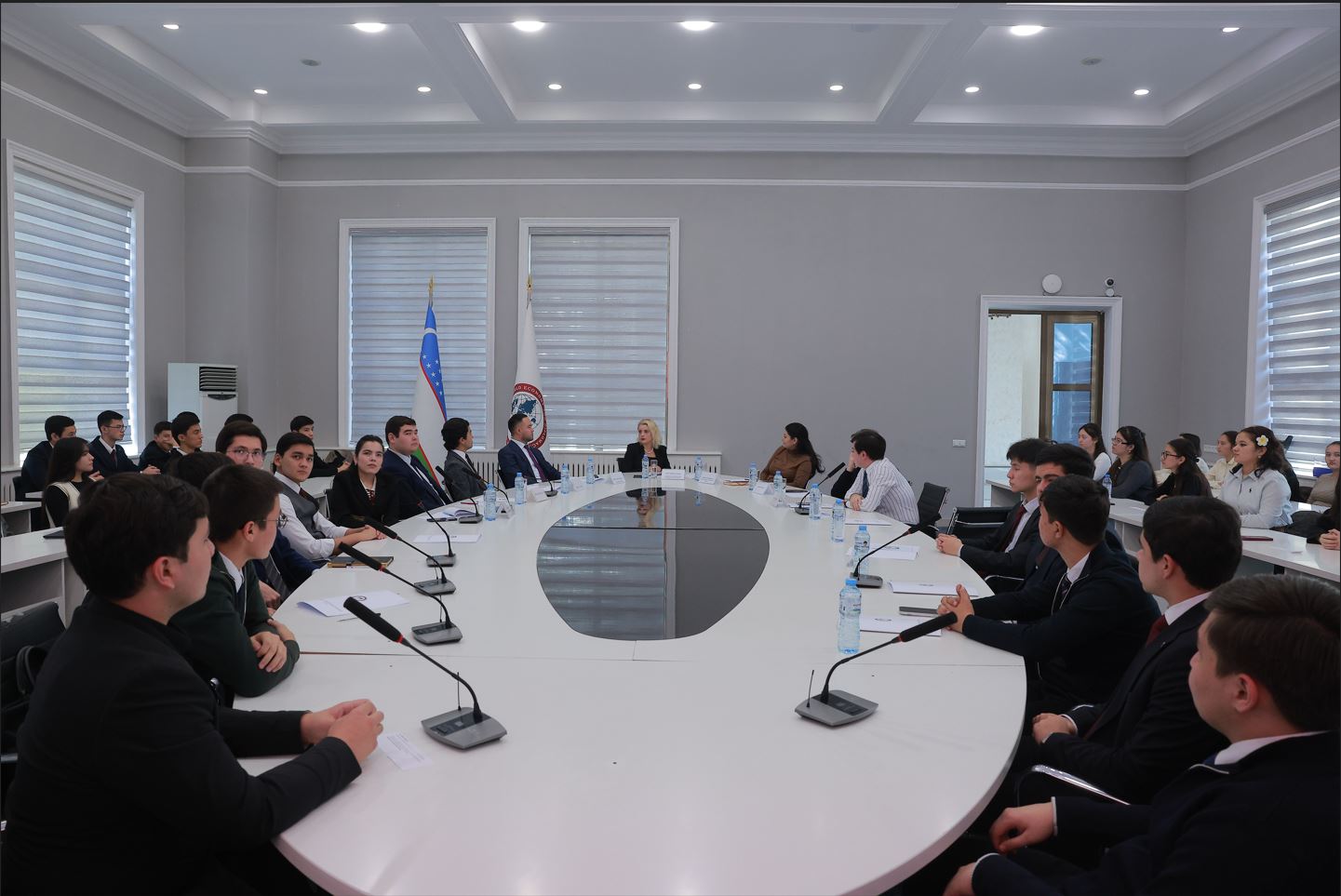
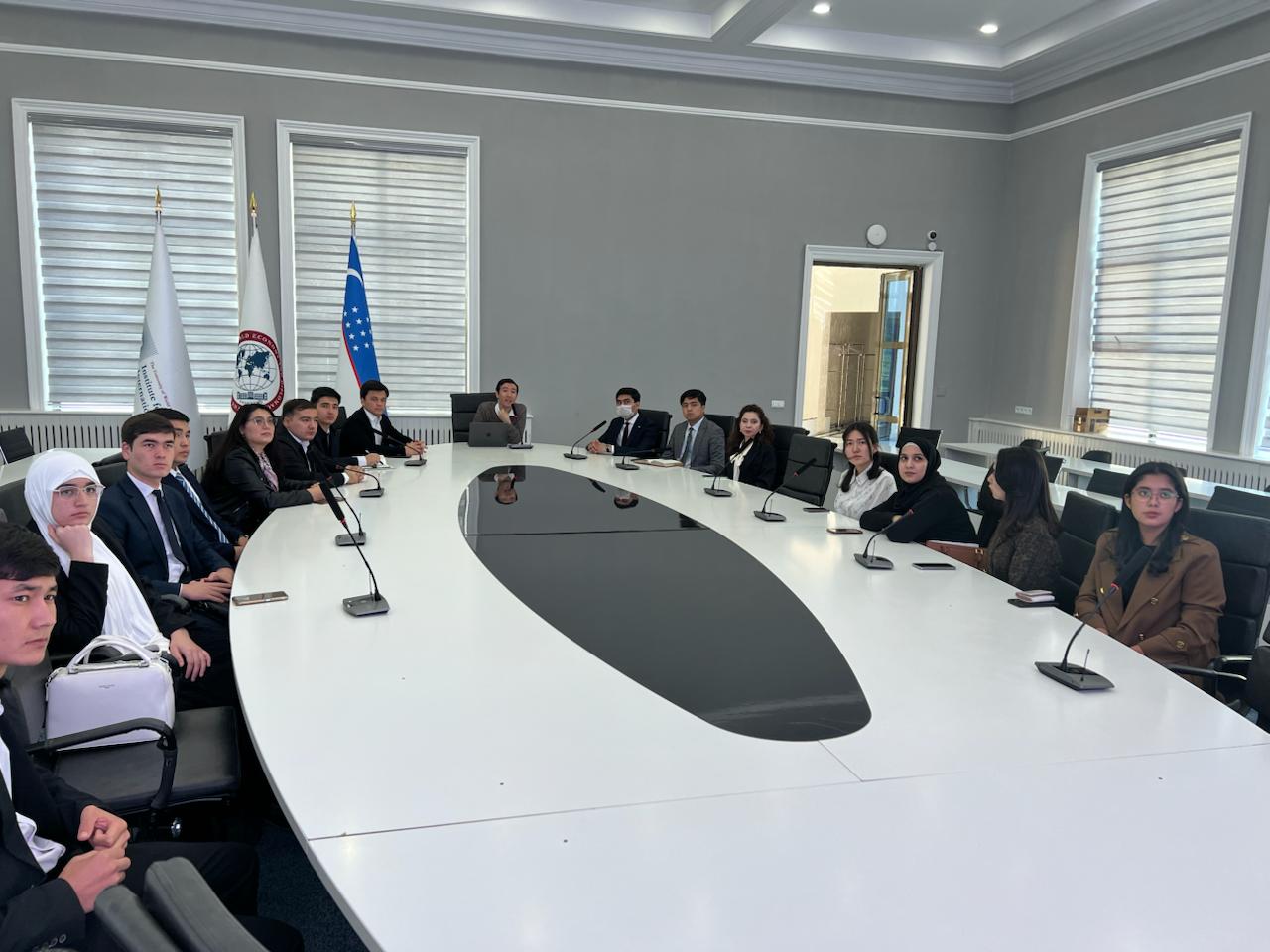
On 20 November 2026, the Faculty of International Relations at the University of World Economy and Diplomacy (UWED) hosted a meeting with Her Excellency Ms Simone Giger, Ambassador of Switzerland to Uzbekistan. University representatives and students attended the event, entitled “Switzerland: The Political System and Economy of a Landlocked Country.” The meeting aimed to introduce students to Switzerland’s model of governance and economic development, as well as to the main areas of cooperation between Switzerland and Uzbekistan.
The lecture opened with an overview of Switzerland. The country has around nine million residents, 27% of whom are foreign nationals. Roughly three quarters of the population live in urban areas, and average life expectancy is 83.5 years.
It was noted that the Swiss political system rests on federalism, collective government and direct democracy. Switzerland consists of 26 cantons and about 2,130 communes, each with wide-ranging autonomy, and four national languages coexist side by side. The government, the Federal Council, has seven members who are elected by Parliament and take decisions collectively. The presidency rotates annually; in 2026, the president is Guy Parmelin. The bicameral Parliament comprises the 200-member National Council and the 46-member Council of States, with federal elections held every four years. Citizens may propose changes to the Constitution with 100,000 signatures or request a referendum on a law with 50,000, and national votes take place up to four times a year.
Particular attention was given to Swiss neutrality, which the international community officially recognised in 1815 and which remains a cornerstone of Swiss foreign policy. It was explained that Swiss neutrality is freely chosen, internationally recognised, permanent and armed, entails non-membership in military alliances, and is flexible in application. It was also noted that in the September 2026 vote, Swiss voters rejected a proposal to impose stricter constitutional rules on neutrality.
The economic part of the lecture showed how Switzerland, despite being landlocked, remains highly connected to European markets. Services account for almost three quarters of GDP; pharmaceuticals, machinery and watches are the main exports, and the European Union is the most important trading partner. The 57.1-kilometre Gotthard Base Tunnel was cited as an example of the importance of transport links, and it was noted that around 70% of goods crossing the Swiss Alps travel by rail.
The final part of the lecture focused on relations between Switzerland and Uzbekistan. Switzerland recognised Uzbekistan on 23 December 1991, diplomatic relations were established on 7 May 1992, and in 1993 Switzerland became the third European country to open a full-fledged diplomatic mission in Uzbekistan. The Embassy in Tashkent handles diplomatic affairs and international cooperation, while consular services are provided by the Embassy of Switzerland in Moscow. The legal framework covers trade, investment protection, road and air traffic, double taxation, restitution, and bilateral and Bretton Woods cooperation. Economic ties are also growing, including trade in precision machinery and pharmaceuticals/diagnostics.
Restitution was a separate topic. Under the 2022 agreement, USD 131 million in confiscated assets is to be returned to Uzbekistan, of which USD 87 million is allocated to projects in healthcare and education and USD 43.5 million to maternity and neonatal care. It was noted that the Ishonch Fund, a UN-managed mechanism, ensures the transparent and accountable use of the returned assets. Bilateral cooperation was described as focusing on water infrastructure and climate change, governance and human rights, and inclusive, sustainable economic development, including labour-market needs and vocational education and training.
The meeting concluded with an open discussion. The substantive dialogue enabled students to connect their knowledge of international relations with the practice of Swiss governance and diplomacy. The Faculty of International Relations extends its sincere gratitude to Her Excellency Ms Simone Giger for sharing professional experience and knowledge with students and for contributing to their academic and professional development.