Master Class on Finance and Tax Law: “Legal Framework for Currency Regulation”
Master Class on Finance and Tax Law: “Legal Framework for Currency Regulation”
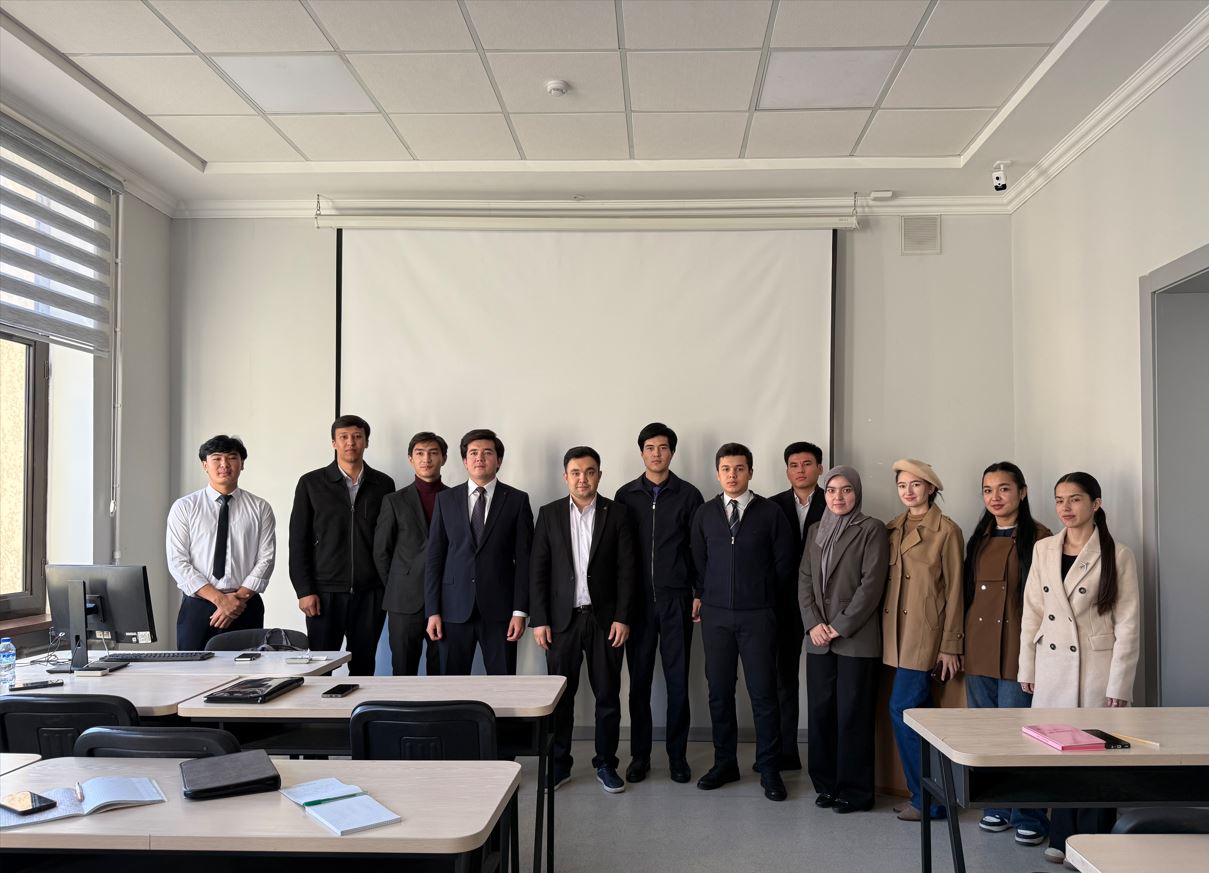
On November 14, 2026, a master class for third-year students was held at the University of World Economy and Diplomacy (UWED) within the framework of the academic course “Finance and Tax Law”, under the leadership of Teacher of the Department of International Law and Public Law Disciplines, O.U. Rasulov. The event was dedicated to the topic “Legal Framework for Currency Regulation” and featured the participation of a guest expert, Umarjon Kholboyev — Lecturer at the University of Sarbon, Private Law faculty.
During his presentation, the specialist analyzed the legal nature of national and foreign currency, the system of sources of currency regulation, and the evolution of approaches to shaping a state’s currency policy amid the globalization of financial markets. Particular attention was paid to the legal issues that arise in determining the limits of state intervention in currency relations and in striking a balance between the freedom of currency transactions and the need to protect financial stability.
The specialist covered in detail the legal status of the Central Bank of the Republic of Uzbekistan as the authority for currency regulation and currency control; the concept and types of currency transactions, and the distinction between transactions of residents and non-residents; the convertibility regime of the national currency and permissible currency restrictions; liability for violations of currency legislation; and the relationship between national norms and international legal standards in the field of currency regulation, including the obligations of states under the International Monetary Fund. The tax aspects of currency transactions were also examined separately, in particular the procedure for accounting for exchange rate differences when calculating the tax base, as well as the legal regulation of the circulation of digital assets as a new object of currency relations.
The master class generated considerable interest among the students and contributed to a deeper understanding of the legal foundations of currency regulation and the mechanisms of its interaction with the tax system.
The master class contributed to the development of the students’ analytical skills and to the deepening of their knowledge in the field of financial and tax law with regard to the legal regulation of currency relations.
| Date: | 15.11.2026 |
| Views: | 5 |
| Share: |