Master Class Aimed at Developing Students’ Diplomatic Communication Competence in English through Simulation-Based Learning Successfully Held
Master Class Aimed at Developing Students’ Diplomatic Communication Competence in English through Simulation-Based Learning Successfully Held
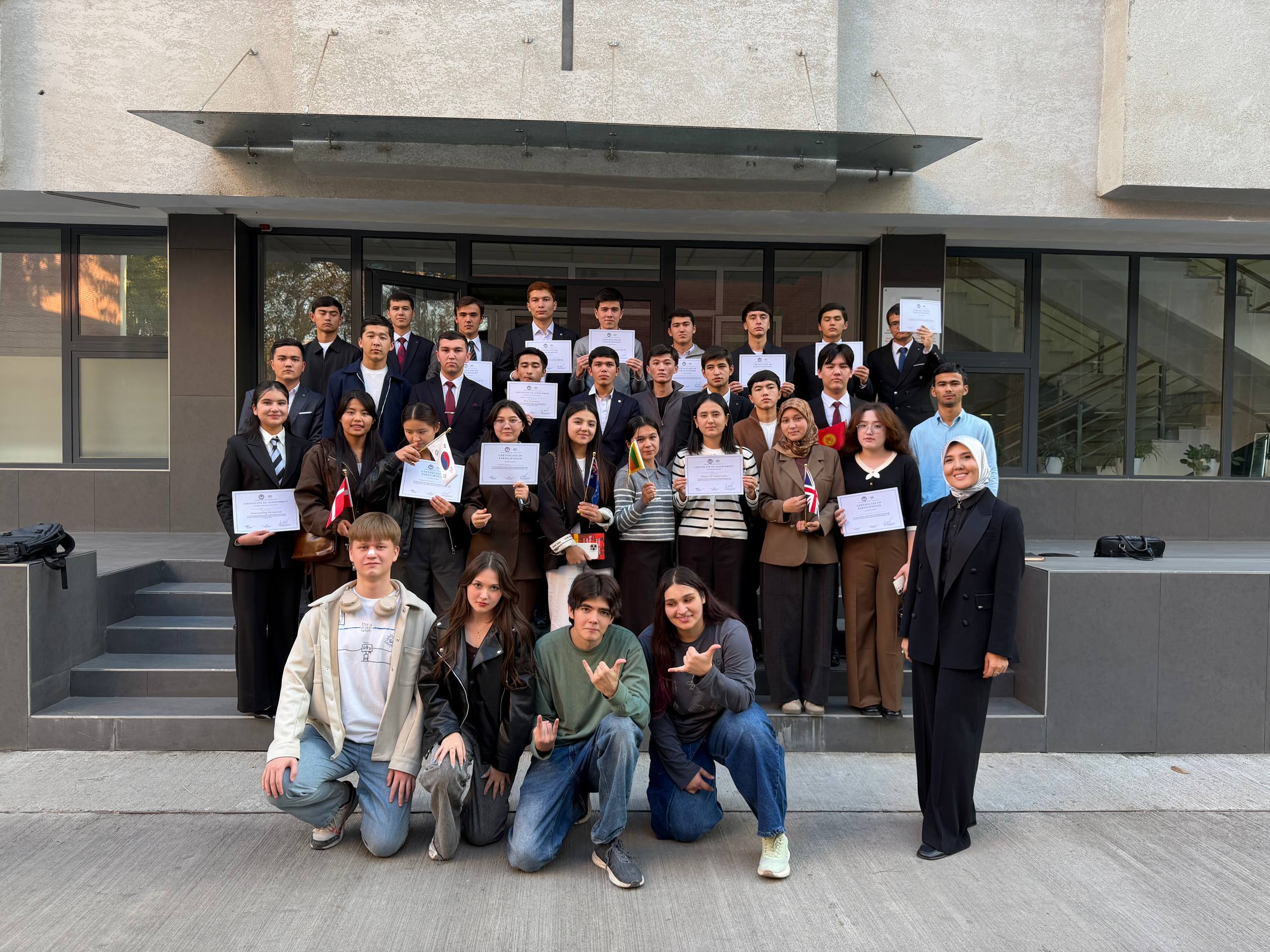
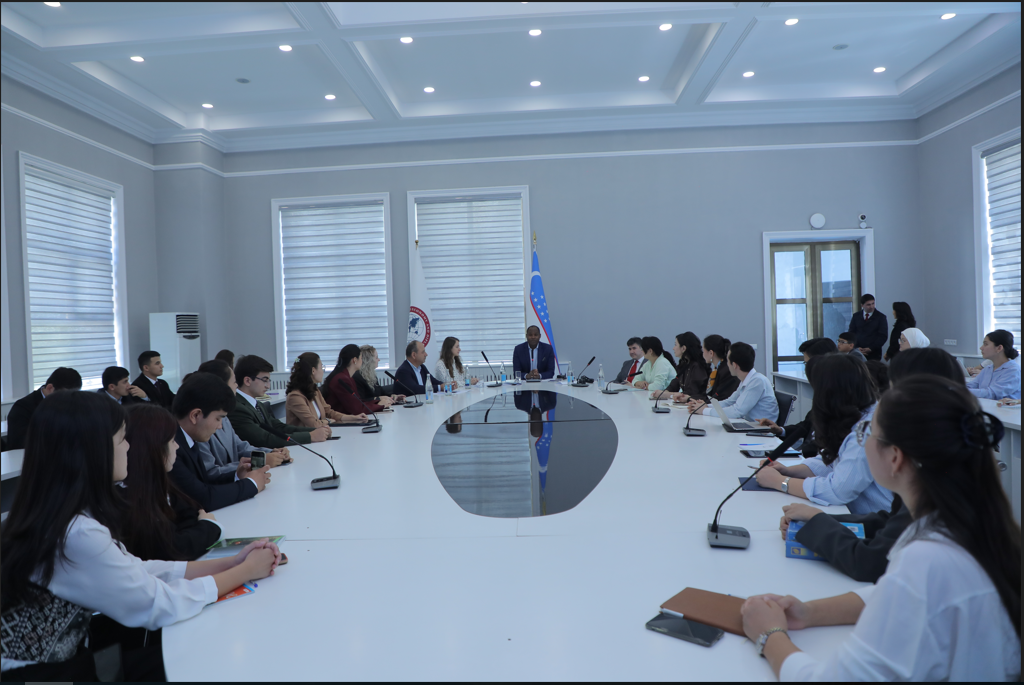
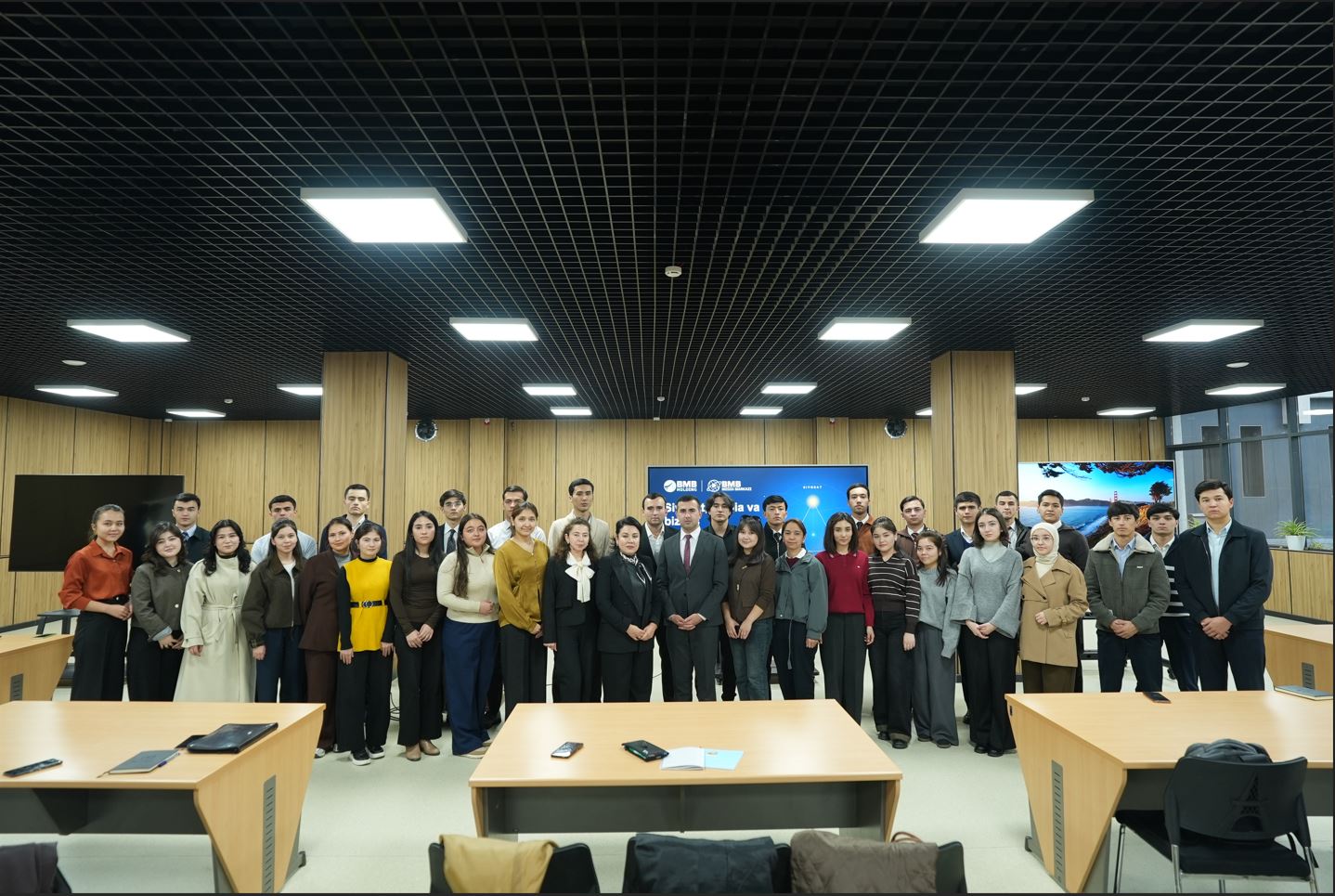
On November 7, 2026, the English Language Department of the University of World Economy and Diplomacy organised the Diplomacy Simulation master class for first-year students of the Faculty of International Relations. The master class was held on the initiative of Associate Professor M.R. Mukhitdinova, in cooperation with specialists from the American Center Tashkent, on the basis of simulation-based learning technology.
The competence-based approach in modern higher education requires future specialists to develop the ability to apply theoretical knowledge in real professional situations. For students of International Relations, the ability to conduct diplomatic dialogue in English, defend one’s position with sound arguments and find compromise solutions is an integral part of professional training. In this regard, simulation-based learning technologies are of particular importance as an effective means of integrating language education with professional training.
The main objective of the master class was to develop students’ negotiation, argumentation, public speaking and critical thinking skills, and to integrate theoretical knowledge of international relations with practice. During the five-hour simulation, students acted as delegations of different countries and negotiated in English on pressing global issues. They defended national interests with well-grounded arguments, formed alliances and developed compromise solutions in order to reach agreement. This activity, based on role play and problem-based situations, enabled students to apply the skills of persuasion, compromise and team leadership in conditions close to real diplomatic practice.
Organised in line with the principles of Sustainable Development Goal 4: Quality Education, the master class contributed to creating a practice-oriented, interactive and student-centred learning environment. Its results demonstrated that simulation-based learning is an important factor in developing students’ diplomatic communication competence and in increasing their learning engagement and professional motivation. Building on this experience, the Diplomacy Simulation and Public Speech Club was launched at the department. The club aims to develop students’ speech culture, fluency and ability to express their views freely.
The English Language Department expresses sincere gratitude to the specialists of the American Center Tashkent for their support in organising and conducting the master class, as well as to all participating students and the university administration.
| Date: | 08.11.2026 |
| Views: | 60 |
| Share: |