Administrative Justice and Anti-Money Laundering: UWED Lecturer Speaks at Round Table at the Academy of Justice
Administrative Justice and Anti-Money Laundering: UWED Lecturer Speaks at Round Table at the Academy of Justice
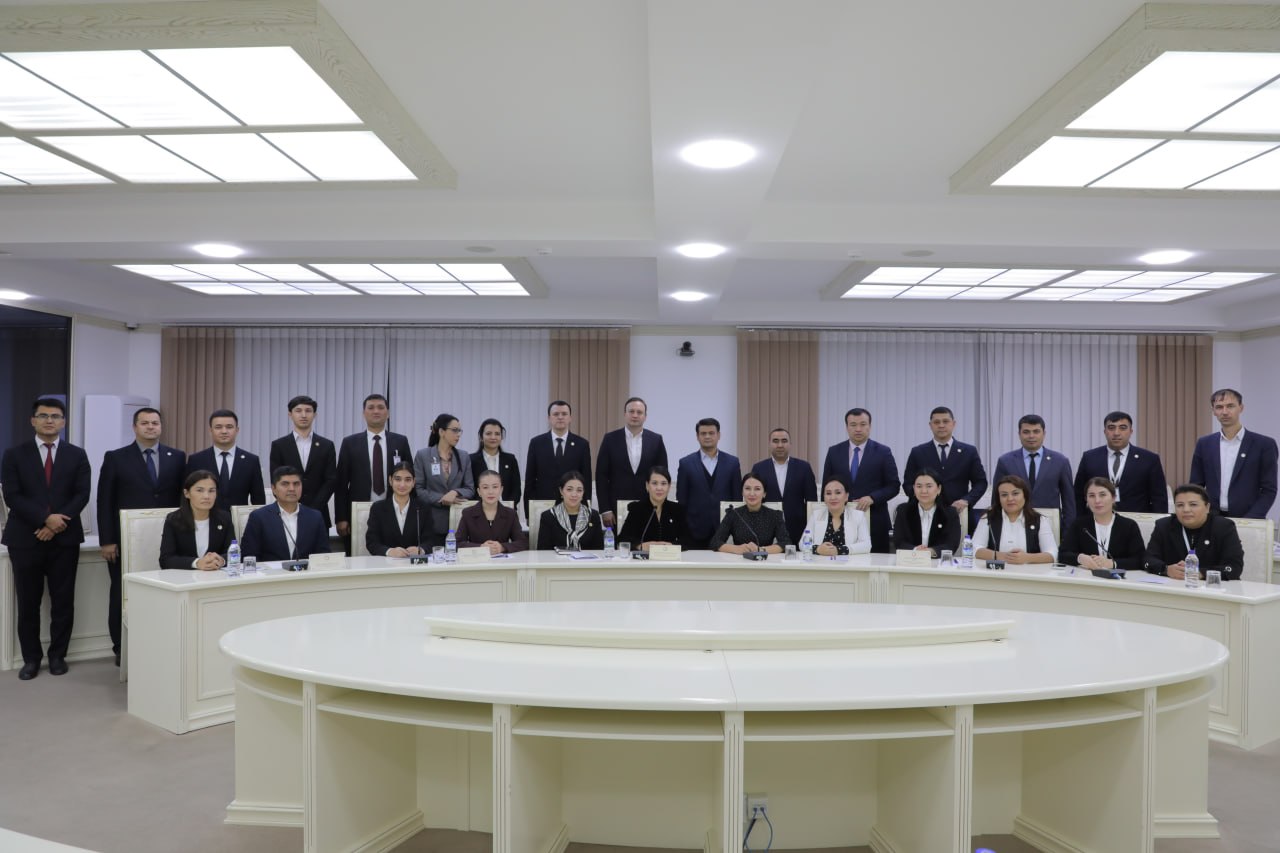
On 11 November 2026, the Academy of Justice of the Republic of Uzbekistan hosted a round table on "Challenging Decisions, Actions (Inaction) of Administrative Bodies: Judicial Practice." The event was held both in person and online. It brought together judges, representatives of the Ministry of Justice, scholars and lecturers from the country's leading law schools.
The round table was opened by Sherzod Yokubjonovich Abdukodirov, Rector of the Academy of Justice, Doctor of Law, Associate Professor. It was moderated by Nozimakhon Muydinjonovna Tojieva, lecturer at the Academy's Department of Administrative Law Disciplines.
Representing the University of World Economy and Diplomacy, Dilshod Bakhtiyor ugli Soliev, Senior Lecturer at the Department of International Law and Public Law Disciplines, presented a paper on “Uniform Judicial Practice in Disputes over Decisions of Administrative Bodies as an Organisational and Legal Mechanism for Developing the System of Administrative Courts.” He shared scholarly and theoretical views on the activities of the Plenum of the Supreme Court, current practical problems in the system of administrative courts, and existing judicial practice.
Naubakhar Bakhadyrovna Uzakbaeva, lecturer at the same Department, also presented a paper on “Administrative Court Proceedings in the Mechanism for Combating the Legalisation of Criminal Proceeds.” She spoke about the role of administrative courts in the anti-money laundering system. She focused on judicial review of the legality of decisions by competent and supervisory authorities and on protecting the rights of entities obliged to comply with AML/CFT requirements. She also addressed the balance between effective financial monitoring and guarantees of judicial protection.
Participants discussed a wide range of issues. These included judicial practice in disputes with civil registry offices and current problems of judicial and prosecutorial oversight of administrative bodies. They exchanged views on the effectiveness of judicial protection when challenging decisions of local authorities, the burden of proof and the active role of the court. The procedure for challenging acts of tax authorities, uniform judicial practice, public oversight and the enforcement of administrative court decisions were also discussed. The meeting concluded with a general discussion and exchange of views.
Following the round table, the theses of all participants will be published in a collection.
The theme of the round table is directly linked to Sustainable Development Goal 16 "Peace, Justice and Strong Institutions." The discussion of mechanisms for challenging decisions of administrative bodies supports Target 16.3: promoting the rule of law and ensuring equal access to justice for all. It also serves Target 16.6: developing effective, accountable and transparent institutions at all levels. The paper on combating the legalisation of criminal proceeds relates to Target 16.4: significantly reducing illicit financial flows and combating all forms of organised crime.
The event also contributes to SDG 17 "Partnerships for the Goals." It brought together the judiciary, government bodies and academia to develop shared approaches to strengthening administrative justice in Uzbekistan.
| Date: | 11.11.2026 |
| Views: | 17 |
| Share: |