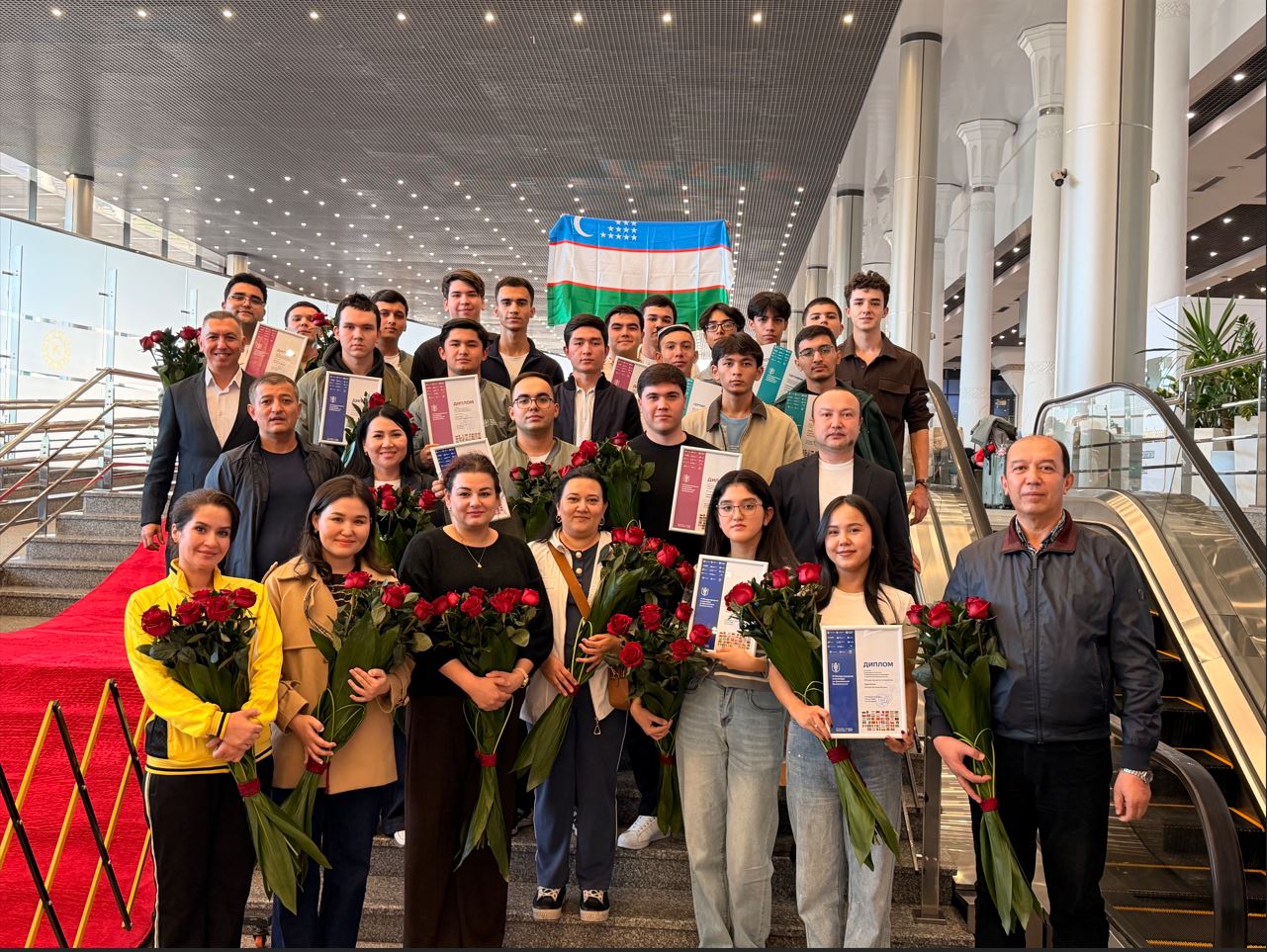
Expert-led masterclass for UWED students on “The German Banking System”
Expert-led masterclass for UWED students on “The German Banking System”
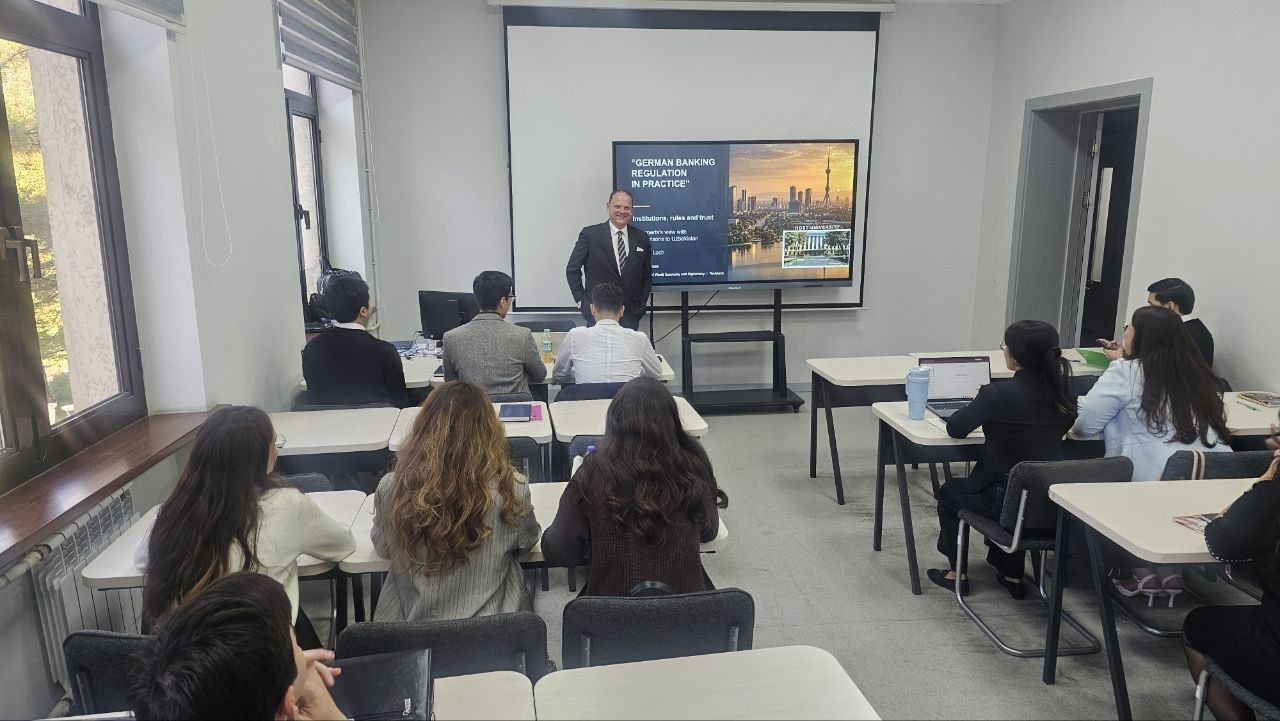
On 5 October 2026, a master class entitled “The German Banking System” was organized for second-year students studying “Comparative Law” by Artikova Vasila Agzamovna, Associate Professor of the Department of International Law and Public Law Disciplines.
The master class was delivered by Markus Loch, a leading specialist in the banking and financial sectors of Germany, an international consultant, and Country Director of the German Sparkassenstiftung for International Cooperation (DSIK).
During the session, the expert provided students with a comprehensive overview of the modern German banking system, focusing on its structure, operating principles, and the legal framework governing financial institutions. Particular attention was paid to Germany’s three-pillar banking system, which comprises private commercial banks, public-law savings banks (Sparkassen), and cooperative banks. Students showed particular interest in the role of German savings banks in ensuring access to financial services, supporting small and medium-sized enterprises, promoting regional development, and contributing to the principles of the social market economy. From a comparative-law perspective, Markus Loch also addressed banking regulation and supervision, as well as the distribution of powers between national and European financial institutions. He explained the respective roles of the Deutsche Bundesbank, the Federal Financial Supervisory Authority (BaFin), and the European Central Bank (ECB) in maintaining financial stability and supervising credit institutions.
Special attention was also given to current challenges facing the banking sector in Germany and the European Union, including the digitalization of financial services, cybersecurity, transparency requirements, and consumer protection.
The master class concluded with an interactive discussion, during which students had the opportunity to ask questions about the functioning of German banks and contemporary trends in European banking regulation. The event became an important element of practice-oriented learning within the Comparative Law course, enabling students to connect theoretical knowledge with the practical operation of a foreign legal and financial system.
| Date: | 05.10.2026 |
| Views: | 39 |
| Share: |