Central Asia has become a more predictable region
Central Asia has become a more predictable region
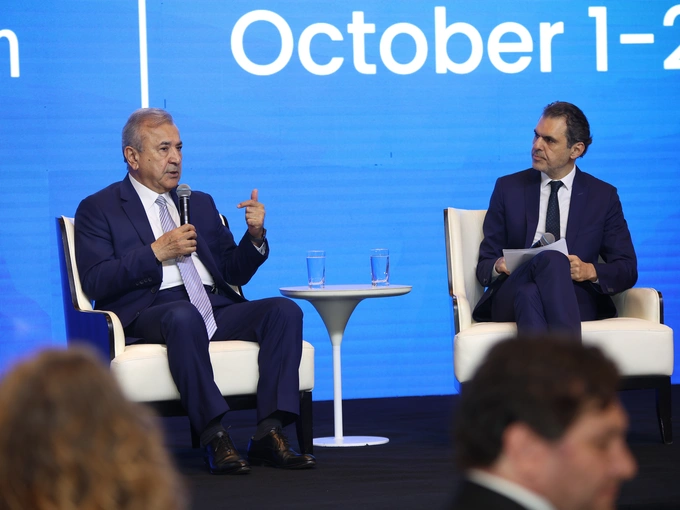
Central Asia is becoming a more predictable region amid global instability, Senator Sodyq Safoev stated. He called for elevating Consultative Meetings to a new institutional level. According to him, further rapprochement among the region's countries requires strengthening trust and shared values.
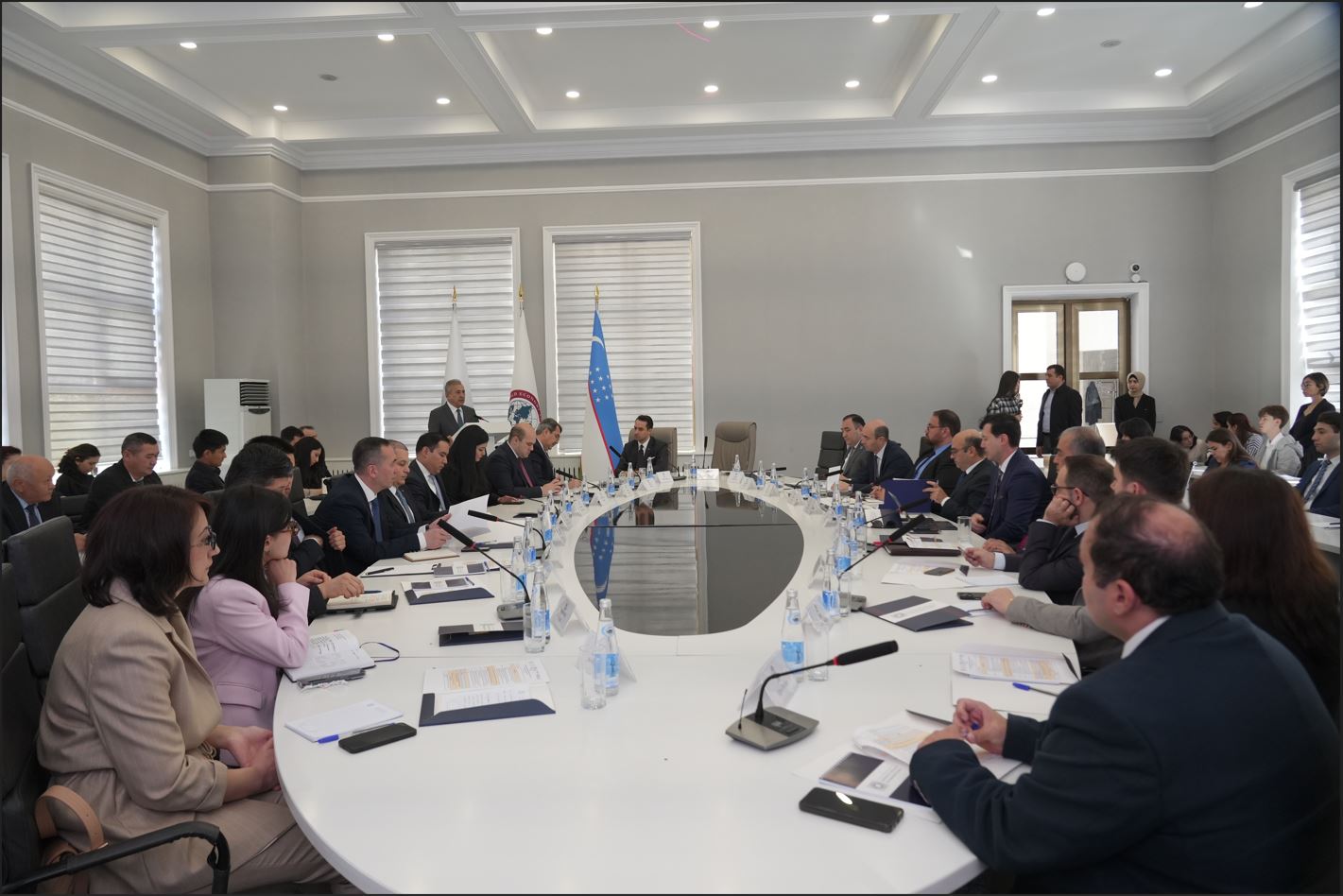
On October 1, First Deputy Chairman of the Senate of the Oliy Majlis, rector of UWED Sodyq Safoev spoke in Baku at the Regional Forum of the CAMCA (Central Asia, Mongolia, Caucasus, Afghanistan) Network, which unites the countries of Central Asia and the Caucasus, as well as Mongolia and Afghanistan.
He stated that amid the international crisis, Central Asia is becoming a more predictable and attractive region, but for further development, it needs to strengthen cooperation, regional identity, and trust. Gazeta provides the main quotes from his speech.
"Being a crossroads is the destiny of Central Asia"
Speaking about the role of Central Asia and the region, Sodyq Safoev noted that the perception of Central Asia as a crossroads is not new.
"Being a crossroads is perhaps the destiny of Central Asia. Since ancient times, this region has connected various macro-regions. It has changed its borders, structure, dominant religion, and languages many times," he noted.
However, today, according to him, the world itself is at a crossroads: "What is happening in the world today is unusual, and Central Asia and the CAMCA region, being at the center of this space, are experiencing the influence of the main global trends. Therefore, the analysis of current and unfolding events in the region, as well as its future, must be considered in a broader global context."
According to Sodyq Safoev, the world is in a state of polycrisis, meaning the simultaneous occurrence of several catastrophic events. He noted that he had never observed such a situation in his lifetime.
"One crisis follows another: bloody wars, sanctions, supply chain disruptions, and other shocks. Added to this is the lack of trust between the world's leading players and the increasingly widespread acceptance of the use of force, which, in my opinion, is a very alarming phenomenon. Last year, countries worldwide spent 2.7 trillion dollars on armaments, while 1 billion people around the world live in difficult conditions," Sodyq Safoev emphasized.
In his assessment, this indicates a transformation of the global order.
"It manifests in the disregard for international law and in fragmentation. At the same time, the main crisis lies in the fact that the world is not becoming less interconnected: globalization has not been canceled, and there is no process of deglobalization. However, trust and mutual understanding between states and key players are disappearing. This is a very dangerous combination: interconnectedness is growing, while trust is disappearing."
In his speech, the senator noted the need for collective action and joint efforts to confront global challenges.
"But at the same time, the ability of such large international organizations and institutions as the UN to respond to these challenges is at a critically low level. Unfortunately, this crisis will not end tomorrow or in the coming years. The world is just entering a long period of transformation, and the countries of the region must have a joint response," he said.
Central Asia as a More Predictable Region
Sodyq Safoev noted that despite the gloomy picture of global development, opposite trends are observed in Central Asia and the broader CAMCA region.
"While multilateral diplomacy is declining worldwide, multilateral diplomacy in our region, on the contrary, is strengthening year by year. If previously Central Asia was defined differently, mainly through its proximity to major regional or global powers, today the region is increasingly perceived not just as a post-Soviet space, not as 'just another stan,' and not as something intermediate, but as a space that connects major markets and major players."
The senator also focused on the concept of being landlocked ("not having access to the sea") and emphasized that Central Asia is gradually transforming from a landlocked region into a land-linked region, that is, a region connected to other spaces.
"If fragmentation is observed in the transatlantic community, the Islamic world, the Arab world, and other spaces, then in the CAMCA region, on the contrary, forces of attraction are emerging that bring countries closer together."
Sodyq Safoev linked these processes, in particular, to the renewal of Uzbekistan's foreign policy under the leadership of President Mirziyoyev.
"Today, a steady trend toward consolidating cooperation is observed in Central Asia. But we are not necessarily talking about integration. Perhaps today we should refrain from using the word 'integration,' as it is too strong. However, deeper and closer cooperation is indeed developing," he noted.
Speaking about the region's priorities, Sodyq Safoev primarily highlighted investments in education and the future.
"It is necessary to strengthen partnerships between universities and the academic community, as well as to ensure that students get to know each other not from a distance or solely through books, but directly, by looking into each other's eyes."
He also noted that personnel training is one of the main growth challenges facing the countries of the region today.
"We need to raise a new generation of civil servants who understand the modern economy, the modern management system, and are sufficiently qualified to meet the requirements of the new era," he noted.
The senator mentioned that over the past 10 years, the number of universities in Uzbekistan has tripled. "But creating a university does not mean that we have already created a school capable of competing with the world's best universities. This will take time. Because a university never emerges from scratch all at once," he clarified.
Sodyq Safoev also emphasized the importance of direct ties between citizens and public diplomacy. According to him, it is necessary to strengthen ties between civil societies and NGOs, and to develop cultural exchanges and tourism. He also mentioned the idea of joint tourism products that could connect Azerbaijan and Central Asia, Georgia and Uzbekistan, and other destinations.
Safoev also proposed a new term that he has been using frequently lately—expert diplomacy.
"Alongside traditional diplomacy, parliamentary diplomacy, and public diplomacy, it is necessary to increasingly develop expert diplomacy today. CAMCA is precisely an example of such expert diplomacy," he noted.
"The modern world is too complex to be entrusted solely to foreign ministries and governments. A link between expert communities is necessary, and not just of one country, but an interdisciplinary and international expert community of the region that could intellectually support the further development of the CAMCA space," the senator said.
| Date: | 03.10.2026 |
| Views: | 41 |
| Share: |