Prospects for Transforming Labor Markets in Central Asia Discussed at UWED
Prospects for Transforming Labor Markets in Central Asia Discussed at UWED
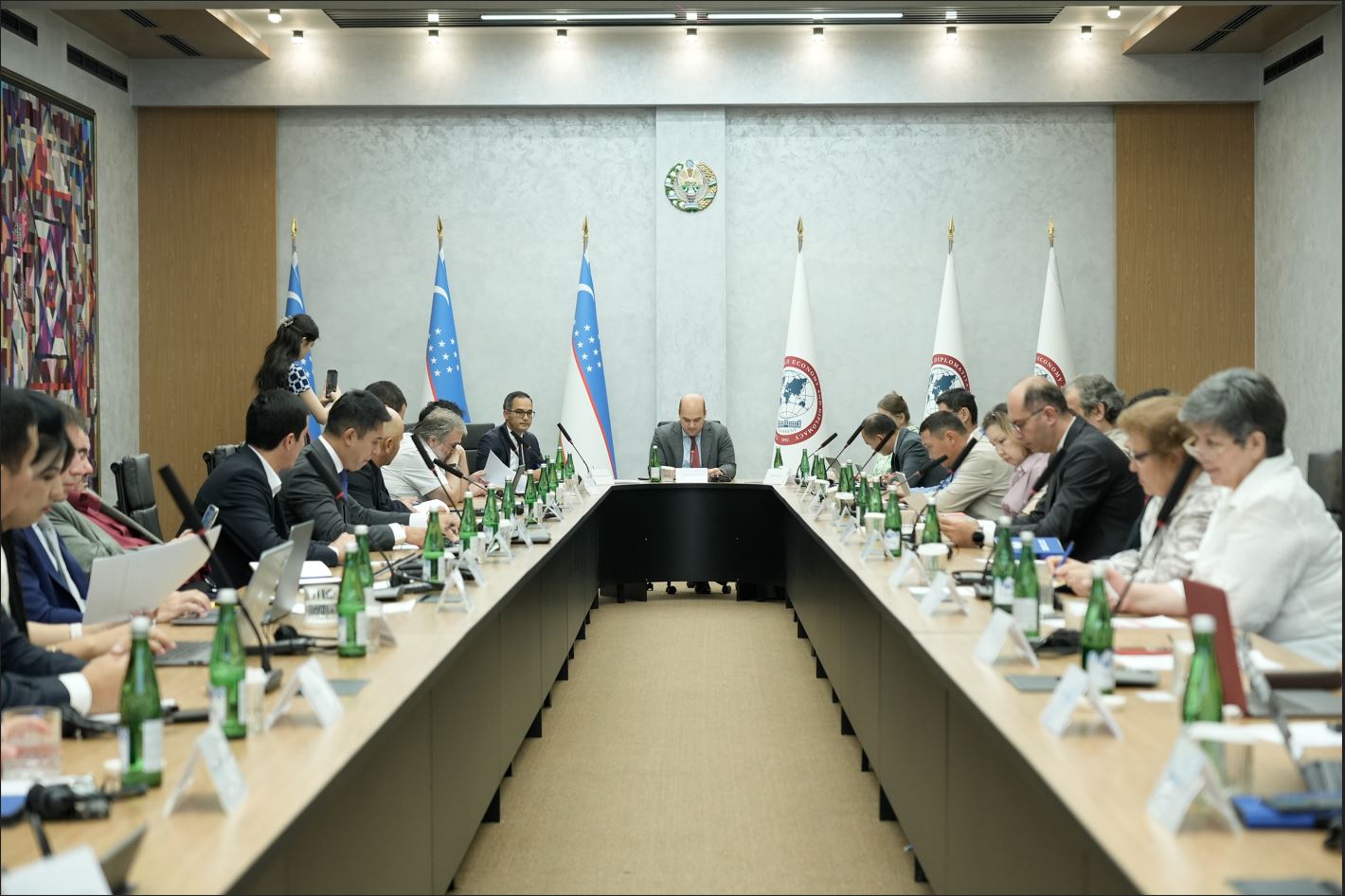
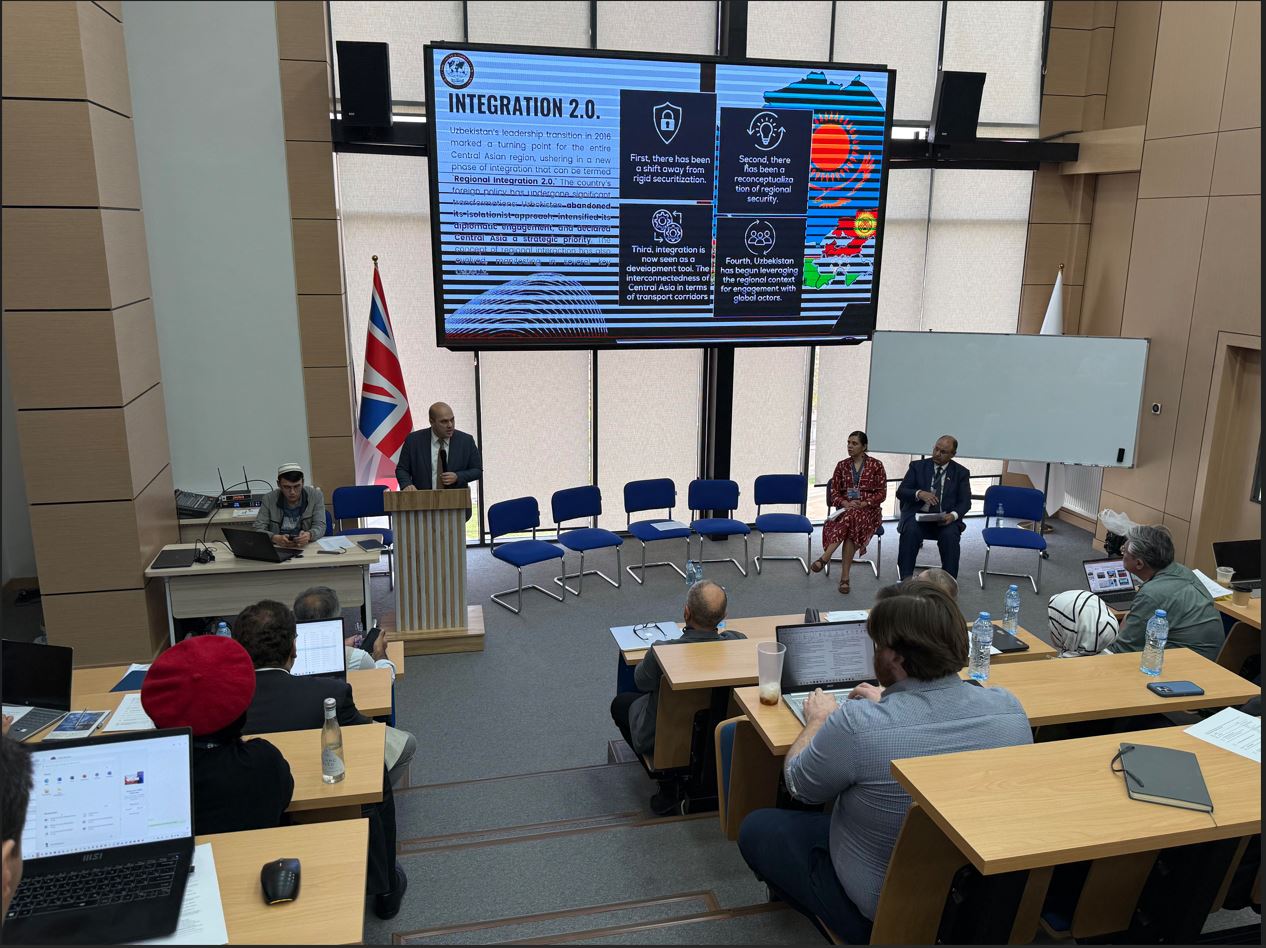
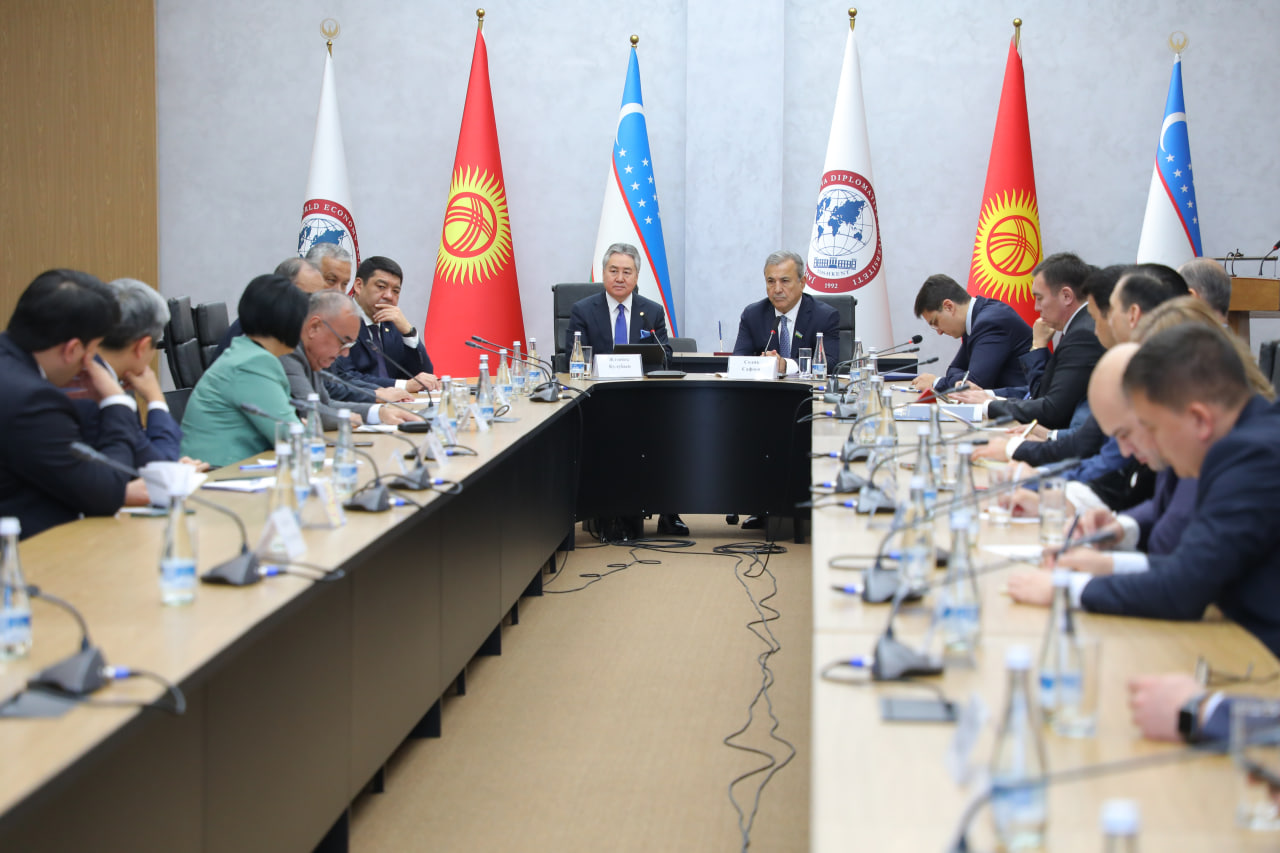
On August 25–26 of this year, the University of World Economy and Diplomacy hosted an international conference titled “Prospects for Transforming Labor Markets in Central Asia in the Era of Green Transition: Challenges and Opportunities”. The event was organized by UWED in cooperation with the Central Asia Regional Office of the Rosa Luxemburg Stiftung.
The conference brought together policymakers, scholars, and experts from Uzbekistan, Kazakhstan, Kyrgyzstan, Tajikistan, China, India, Greece, and Azerbaijan. Participants examined regional labor market adaptation to global ecological shifts, the development of green human capital, geoeconomic strategies, and mechanisms for ensuring a just transition across Central Asian countries.
The event opened with welcoming remarks by Akram Umarov, Vice-Rector for Academic Affairs at UWED and Director of the Institute of Advanced International Studies, and Marlies Linke, Head of the Rosa Luxemburg Stiftung Central Asia Regional Office.
Umid Abidkhadjaev, Deputy Minister of Economy and Finance of the Republic of Uzbekistan, delivered the keynote address. Representatives of the Legislative Chamber of the Oliy Majlis, international consulting organizations, leading regional universities, research institutes, and civil society organizations also presented reports on skill formation, renewable energy integration, social protection, and cross-border cooperation.
The discussions focused on bridging youth skills gaps, aligning vocational education with green market demand, promoting sustainable employment, and mitigating socio-economic vulnerability for workers subject to occupational displacement during structural economic shifts. The international conference served as an important academic platform for formulating practical recommendations aimed at building a resilient, equitable, and sustainable labor market for the region.
| Date: | 27.08.2026 |
| Views: | 387 |
| Share: |