International Conference “Central Asia: A New Paradigm of Regional Development” was held at UWED
International Conference “Central Asia: A New Paradigm of Regional Development” was held at UWED
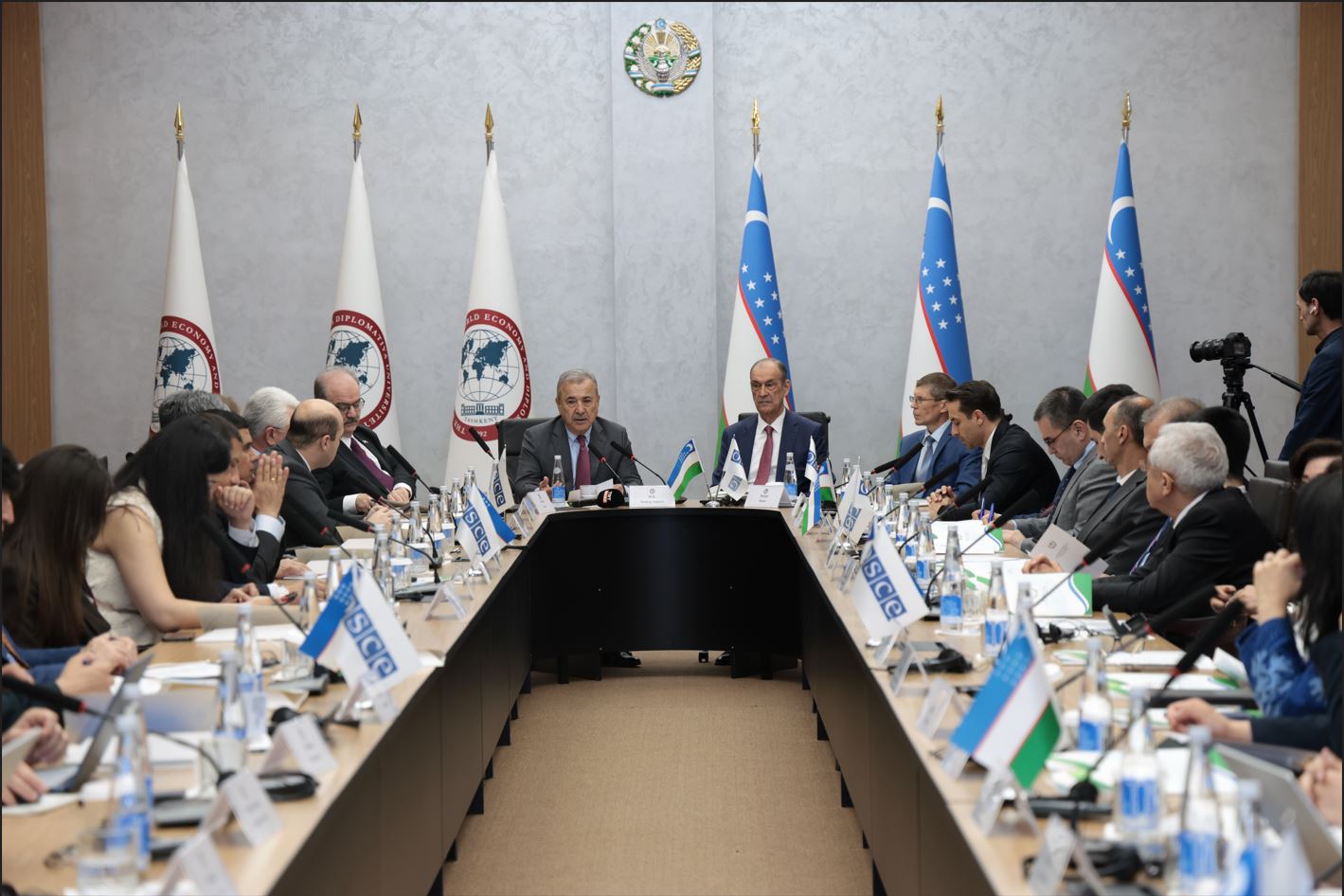
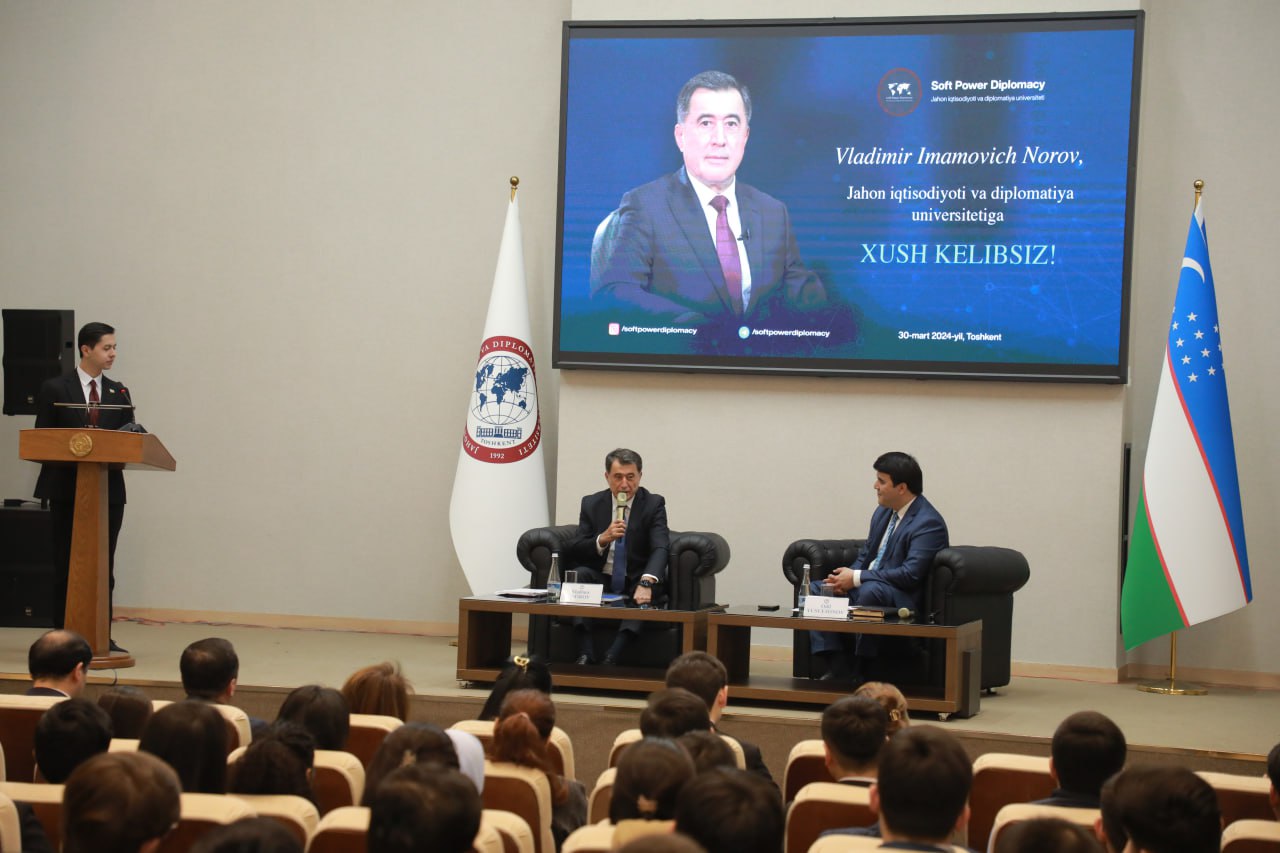
On May 14, 2026, an international conference titled “Central Asia: A New Paradigm of Regional Development” was held at the University of World Economy and Diplomacy (UWED). The event was organized by the Diplomatic Academy at UWED and the Office of the OSCE Project Co-ordinator in Uzbekistan.
The conference was attended by heads of diplomatic academies from Central Asian countries and Azerbaijan, representatives of the UN Regional Centre for Preventive Diplomacy for Central Asia (UNRCCA) in Ashgabat, representatives of the Finnish Institute of International Affairs (FIIA), members of the diplomatic corps and civil society, as well as a number of leading national and international experts.
Special Representative of the UN Secretary-General for Central Asia and Head of UNRCCA, Kaha Imnadze, addressed the participants with a welcome speech (online).
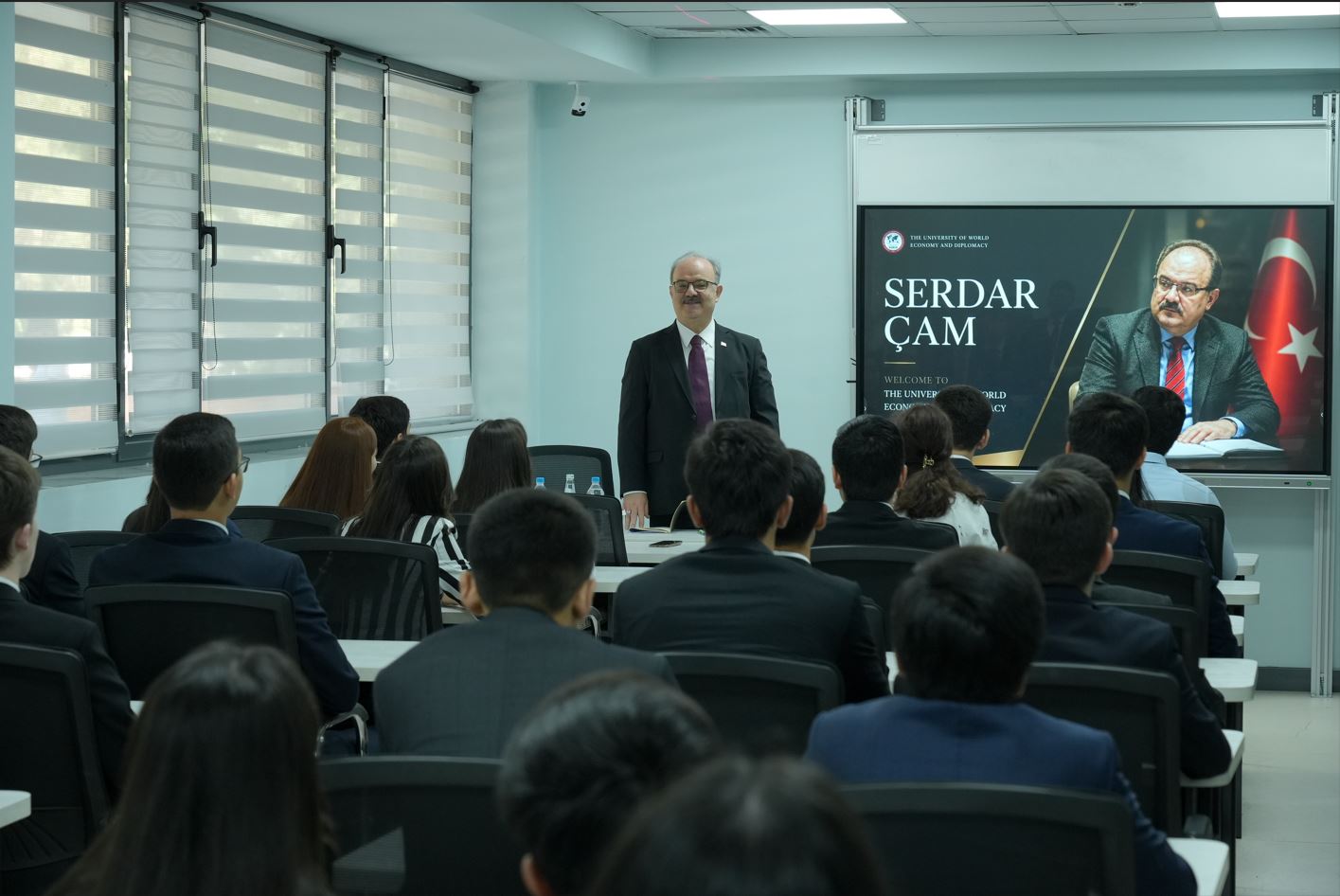
Speakers at the conference included First Deputy Chairman of the Senate of the Oliy Majlis and Rector of UWED Sodyq Safoev; Deputy Advisor to the President of the Republic of Uzbekistan on Foreign Policy and Director of the International Institute for Central Asia Javlon Vakhabov; Deputy Minister of Culture and Tourism of the Republic of Türkiye Serdar Çam; and others.
During the discussions, participants emphasized that the region is experiencing a qualitatively new stage of development, gradually building a model of interaction based on the principles of trust, mutual benefit, and collective responsibility. Special attention was paid to strengthening the regional agency of Central Asia in international relations. It was noted that the states of the region are increasingly acting not only as participants in international processes but also as independent initiators of the regional agenda.
The importance of the regular Consultative Meetings of the Heads of State of Central Asia, initiated by Uzbekistan, was highlighted as a crucial mechanism for strengthening political trust and coordinating joint approaches to key issues of regional development. Participants noted that the intensification of political dialogue in recent years has contributed to the expansion of trade, economic, and humanitarian cooperation, as well as to creating more favorable conditions for joint responses to contemporary challenges and threats.
It was underscored that the modern understanding of security includes climate risks, energy sustainability, rational use of water resources, cybersecurity, and humanitarian stability.
Particular attention was devoted to transport connectivity, infrastructure development, energy cooperation, and sustainable logistics routes capable of reinforcing Central Asia’s role as a key space for Eurasian interconnectedness.
Participants stressed the importance of humanitarian cooperation, scientific and educational exchanges, and the development of academic mobility as key factors in strengthening the long-term sustainability of regional interaction.
In this context, the role of UWED and the Diplomatic Academy was particularly noted as leading educational and expert-analytical platforms making a significant contribution to the development of regional academic dialogue, the training of qualified personnel and a new generation of specialists in international relations, and the formation of the intellectual foundation for modern Central Asian cooperation.
Following the conference, a common view was expressed that the exchange of views, expert assessments, and recommendations formulated during the event will serve as an important contribution to further strengthening regional cooperation and advancing Central Asia as a space of stability, sustainable development, and constructive international engagement.
| Date: | 15.05.2026 |
| Views: | 1178 |
| Share: |