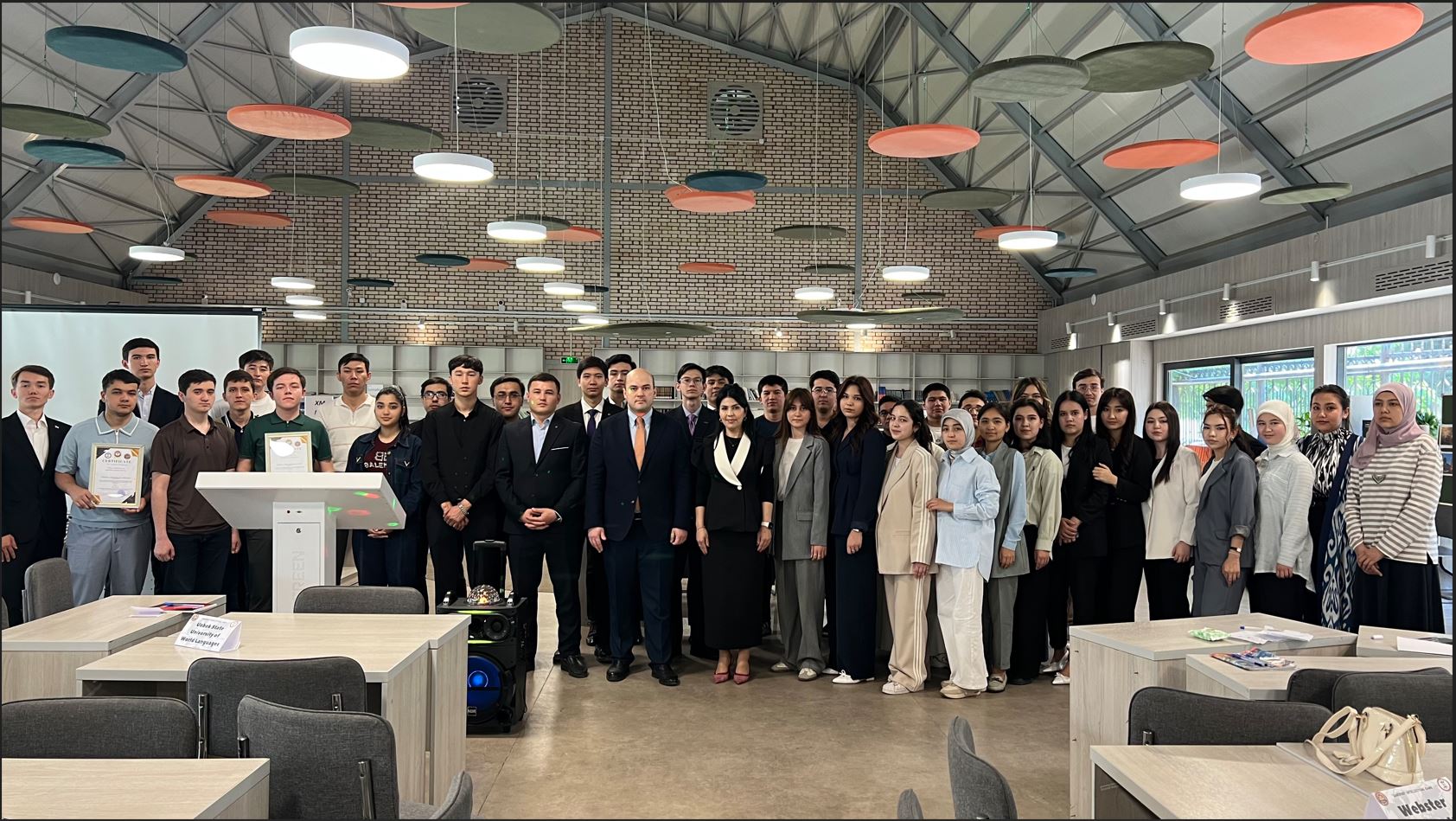
A Practical Session for UWED Students Held at the Sergeli District Criminal Court
A Practical Session for UWED Students Held at the Sergeli District Criminal Court
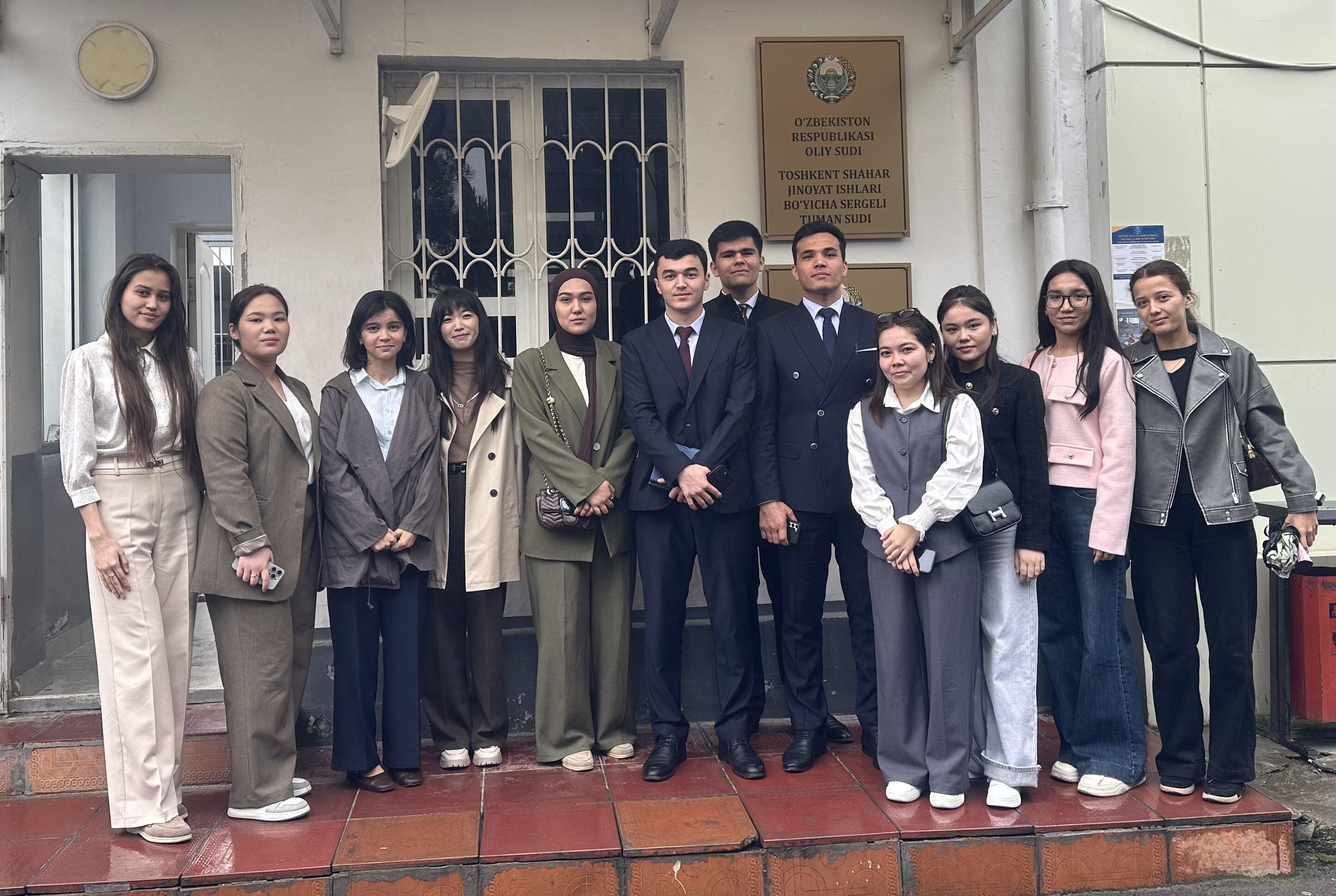
On April 7–8 of the current year, at the initiative of Senior Lecturer D. Soliyev and Lecturer N. Uzakbayeva of the Department of International Law and Public Law Disciplines at the University of World Economy and Diplomacy (UWED), and in cooperation with Judge D. Choriyeva of the Sergeli District Criminal Court, a practical session was organized for second-year students of the Faculty of International Law at the Sergeli District Criminal Court. This initiative aimed at integrating theoretical knowledge with practical experience and enhancing students’ professional competencies.
During the court session, students observed the consideration of criminal cases involving offenses Articles 168, 169, 229, and 276 of the Criminal Code of the Republic of Uzbekistan. They also became familiar with the conduct of judicial investigation and trial proceedings, including the delivery and pronouncement of judgments in accordance with the Criminal Procedure Code.
Within the framework of the practical training, future international law specialists were provided with an opportunity to gain direct and systematic insight into the functioning of the national judicial system of the Republic of Uzbekistan, as well as the practical application of criminal and criminal procedural legislation. In particular, students explored the structure of the judiciary, the distribution of competences among court instances, and the implementation of key principles of judicial proceedings, such as the rule of law, judicial independence, equality of parties, and adversarial procedure.
Furthermore, participation in a real court environment enabled students to understand the procedural order of court hearings, the managerial functions of the presiding judge, the powers of the public prosecutor, the rights and obligations of defense counsel, and the procedural status of other participants in the proceedings. Special attention was paid to the examination and evaluation of evidence, the procedure for witness questioning, the role of expert opinions, and the conduct of procedural debates between the parties.
These practical sessions played a significant role in developing students’ understanding of judicial ethics, courtroom culture, legal argumentation, and professional conduct standards. As a result, students not only reinforced their theoretical knowledge but also acquired essential practical competencies necessary for their future professional activities. Observing the examination of evidence, witness questioning, and the speeches of prosecutors and defense attorneys proved particularly valuable in understanding the interaction between international and national law.
As a result, the practical training demonstrated its effectiveness as a mechanism for integrating theory and practice in the educational process, as well as for enhancing students’ legal reasoning and professional development.
This practical session is also significant within the framework of the United Nations Sustainable Development Goals (SDGs). In particular, the initiative contributes to SDG 4 “Quality Education” by strengthening students’ practical skills, and to SDG 16 “Peace, Justice and Strong Institutions” by fostering respect for the rule of law, judicial independence, and justice.
Moreover, this cooperation aligns with SDG 17 “Partnerships for the Goals” by strengthening institutional collaboration between higher education institutions and judicial bodies, thereby ensuring the integration of education and practice.
| Date: | 08.04.2026 |
| Views: | 1037 |
| Share: |