UWED hosts international conference on the Constitution and the Sustainable Development Goals: Commitment to SDG 1
UWED hosts international conference on the Constitution and the Sustainable Development Goals: Commitment to SDG 1

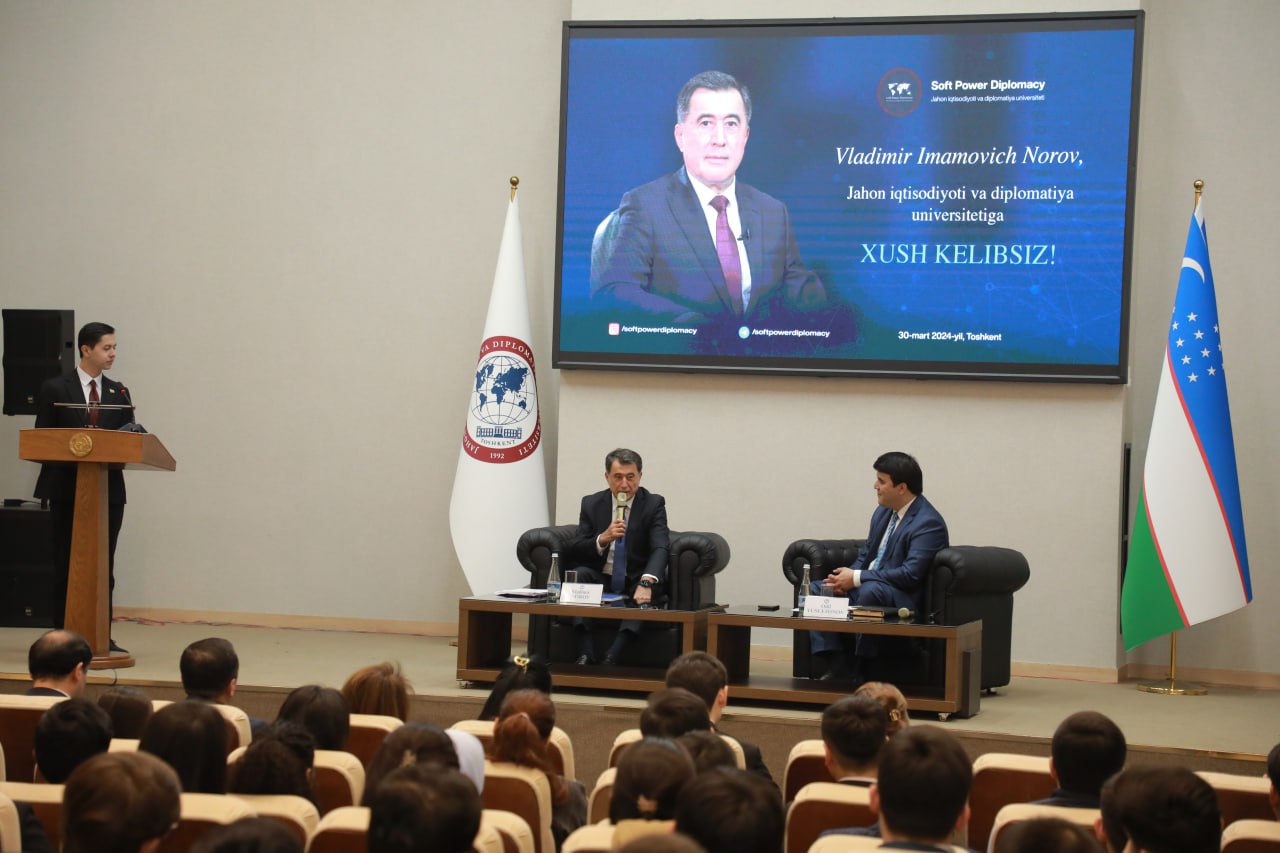
On 5 December 2025, the University of World Economy and Diplomacy hosted an international scientific and practical conference, “The Constitution in the Era of the Sustainable Development Goals: Challenges and Prospects.” Its main purpose was to look at how Uzbekistan’s constitutional reforms can support the 2030 Agenda, especially its first and central goal of ending poverty in all its forms. The organizers also set a practical task: preparing recommendations for improving the country’s constitutional legislation.
The conference brought together representatives of the Office of the United Nations High Commissioner for Human Rights (OHCHR), experts from the OSCE Academy, the International Organization for Migration (IOM), the United Nations Development Programme (UNDP), and the Center for Asian Legal Exchange (CALE) of Nagoya University. Professors and constitutional scholars from various countries, international experts, leading legal scholars of Uzbekistan, UWED faculty members and constitutional law specialists from several foreign states also took part. The presence of UN agencies working directly on poverty reduction, human rights and migration gave the discussions a clear global dimension.
The conference was organized as presentations, meetings and open dialogues. Participants discussed how to integrate the Sustainable Development Goals into the constitutional and legal system. They also looked at how to strengthen constitutional guarantees of human rights and the mechanisms for putting them into practice. Further topics included the development of digital government, artificial intelligence and law, new models of constitutional review, and international experience in ensuring parliamentary openness and the accountability of deputies.
A separate discussion focused on criteria for assessing the effectiveness of local governance bodies. This matters greatly for poverty reduction in Uzbekistan, where much of the work with low-income families happens at the level of districts and mahallas. Participants also considered the constitutional meaning of gender equality and social justice in sustainable development, since these principles are closely tied to fair access to opportunities and public services. Special attention was paid to legal guarantees of social protection for low-income and vulnerable groups and to the role of law in implementing national poverty-reduction programmes such as “From Poverty to Prosperity.”
By the end of the conference, international experts and leading legal scholars of Uzbekistan supported the development of strategic recommendations, political and legal proposals, and scientific conclusions. These would reflect the Sustainable Development Goals within the framework of the country’s ongoing constitutional reforms.
With this conference, UWED continued its work of connecting academic research with policy making for SDG 1. It also contributed to building a legal foundation for a society in which poverty is reduced and no one is left behind.
| Date: | 06.12.2025 |
| Views: | 1524 |
| Share: |