UWED hosted Expert Round Table on “Digital Transformation and Its Impact on Sustainable Development”
UWED hosted Expert Round Table on “Digital Transformation and Its Impact on Sustainable Development”
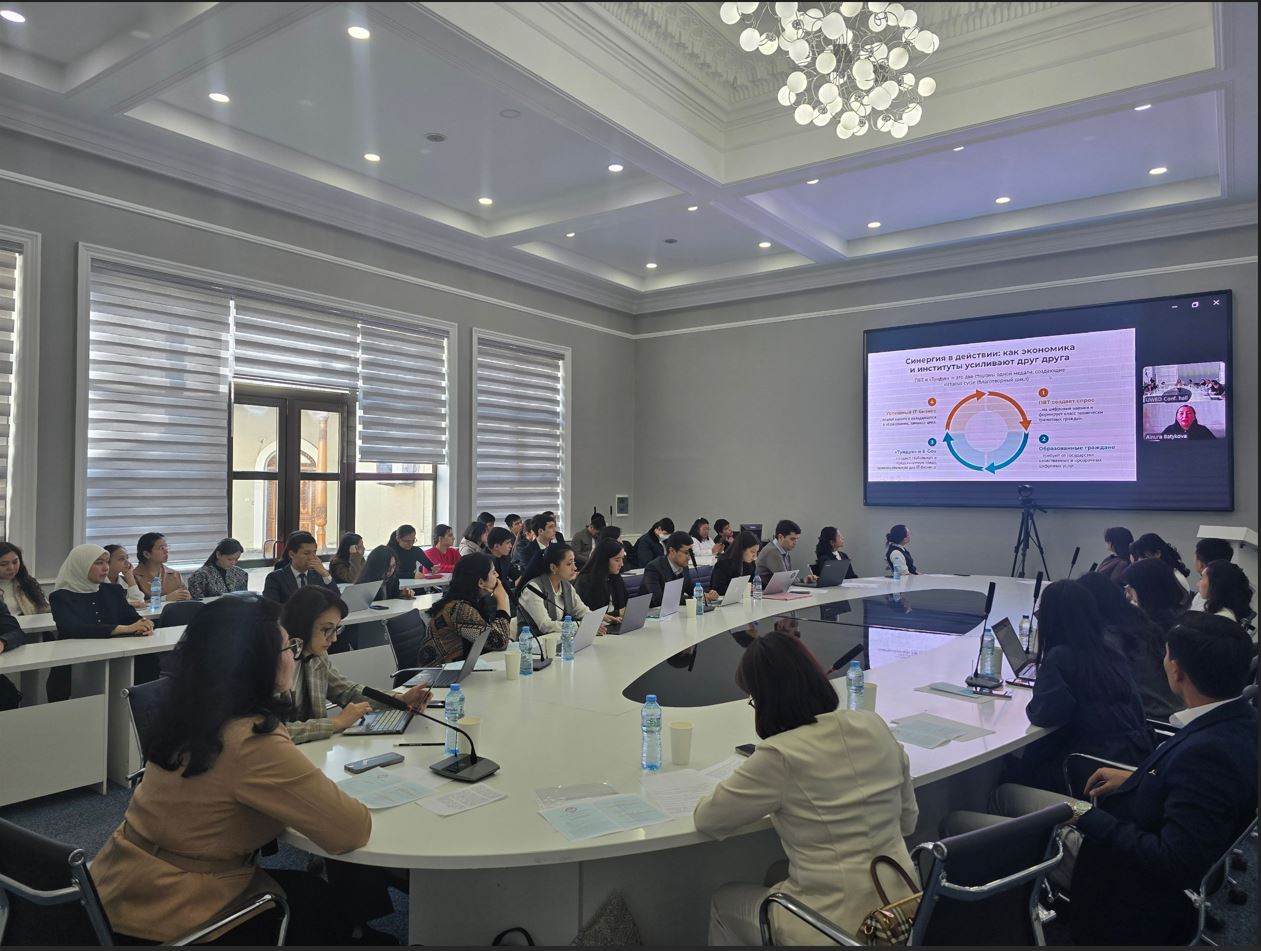
The International Economics Department of the University of World Economy and Diplomacy (UWED) successfully held an international expert round table titled “Digital Transformation and Its Impact on Sustainable Development” on November 28, 2025, Tashkent. The event was attended by prominent scholars, international experts, and practitioners from Kyrgyzstan, Kazakhstan, China, and the United States to discuss how new digital technologies are transforming economic structures, sustainable development practices, and inclusive growth in Central Asia and beyond.
Digital transformation has become a crucial driver of global economic change, influencing productivity, environmental governance, education, public administration, and social inclusion. However, the digital divide continues to pose challenges for achieving the Sustainable Development Goals (SDGs). The round table aimed to address these issues by exploring the economic, technological, and institutional dimensions of digitalization.
The expert round table “Digital Transformation and Its Impact on Sustainable Development” is closely aligned with key SDG metrics by addressing how digital technologies accelerate progress across measurable indicators of economic, social, and environmental development. The event supports SDG 4 through strengthening ICT competencies (Indicator 4.4.1) and promoting sustainability education (4.7.1). It contributes to SDG 8 by highlighting how innovation and digital productivity tools improve economic efficiency (8.2.1) and encourage technology adoption among enterprises (8.3.1). Discussions on digital infrastructure, AI, and scientific cooperation directly support SDG 9, particularly indicators related to expanding ICT access (9.c.1) and enhancing research capacity (9.5.1). By examining the digital divide, the round table informs SDG 10 metrics on inclusion and equal access to digital services. Digital agriculture, environmental monitoring, and smart technologies discussed in the panels strengthen SDG 12 indicators on resource efficiency (12.2.1) and sustainability reporting (12.6.1), while climate-related digital tools advance SDG 13 education and adaptation metrics (13.3.1). The emphasis on e-government and transparent digital governance aligns with SDG 16 indicators on institutional effectiveness (16.6.2), and the international composition of participants reinforces SDG 17 metrics on global partnerships and scientific cooperation (17.16.1). Altogether, the event demonstrates how digital transformation serves as a measurable accelerator of SDG implementation.
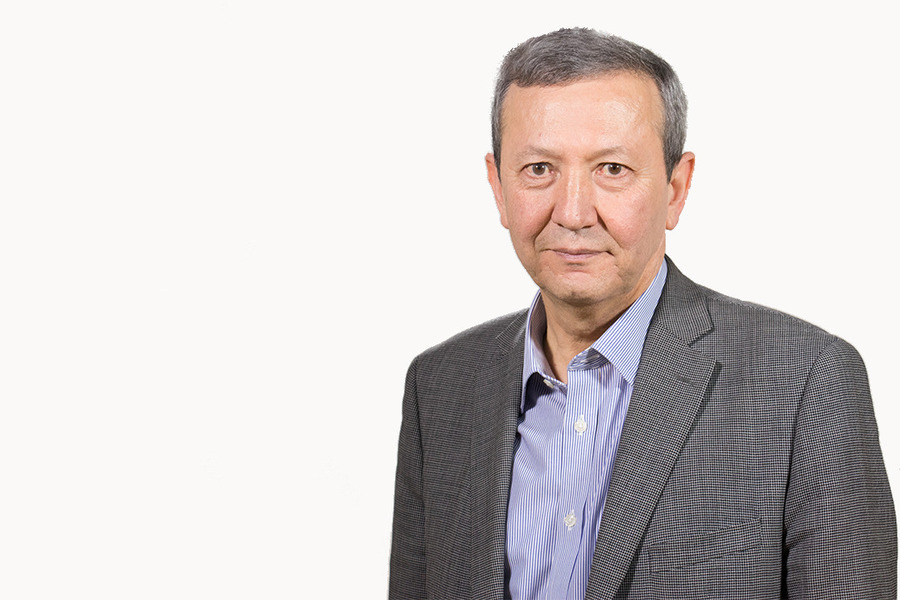
The opening remarks were delivered by Dr. L.M. Tashpulatova, Head of the International Economics Department at UWED, who emphasized the importance of integrating digital innovation into national development strategies to ensure long-term sustainability and economic resilience. Panel I “Digitalization for Environmental Sustainability” chaired by Dr. Feruza Bekmurodova, examined how digital tools — including precision agriculture, smart resource management, and environmental monitoring systems — contribute to ecological balance and efficient use of natural resources.
Speakers Dr. Nurgul Kazangapova (Kazakh Agrotechnical Research University), Dr. Ainura Baytikova (Kyrgyz National Agrarian University) and Dr. Suriya Turayeva (UWED) highlighted the potential of digital agriculture, climate-smart technologies, and cross-border cooperation in promoting sustainable environmental practices.
Panel II named “From Innovation to Impact — Technology’s Role in Building a Sustainable Society” moderated by Acting Associate Professor Khulkar Karimova (UWED), focused on the broader societal implications of technological innovation, including governance, financial technology, artificial intelligence, and digital services. Experts Mr. Xie Yush and Prof. Wang Jinguo (Lanzhou University, PRC), Mr. Fan Yuxuan (Lanzhou University, PRC), Mr. Nick Ismail (FinTech Engineer, USA) emphasized the transformative potential of AI, blockchain, and digital financial systems in enhancing public services, bridging socio-economic gaps, and supporting green and sustainable growth.
The program concluded with closing remarks by Dr. L.M. Tashpulatova, who underscored UWED’s commitment to fostering international academic dialogue and promoting research that supports sustainable development in Uzbekistan and the region.
| Date: | 29.11.2025 |
| Views: | 1642 |
| Share: |