UWED Vice Rector Delivers a Keynote Address on Central Eurasia’s Global Role at CESS 2026
UWED Vice Rector Delivers a Keynote Address on Central Eurasia’s Global Role at CESS 2026
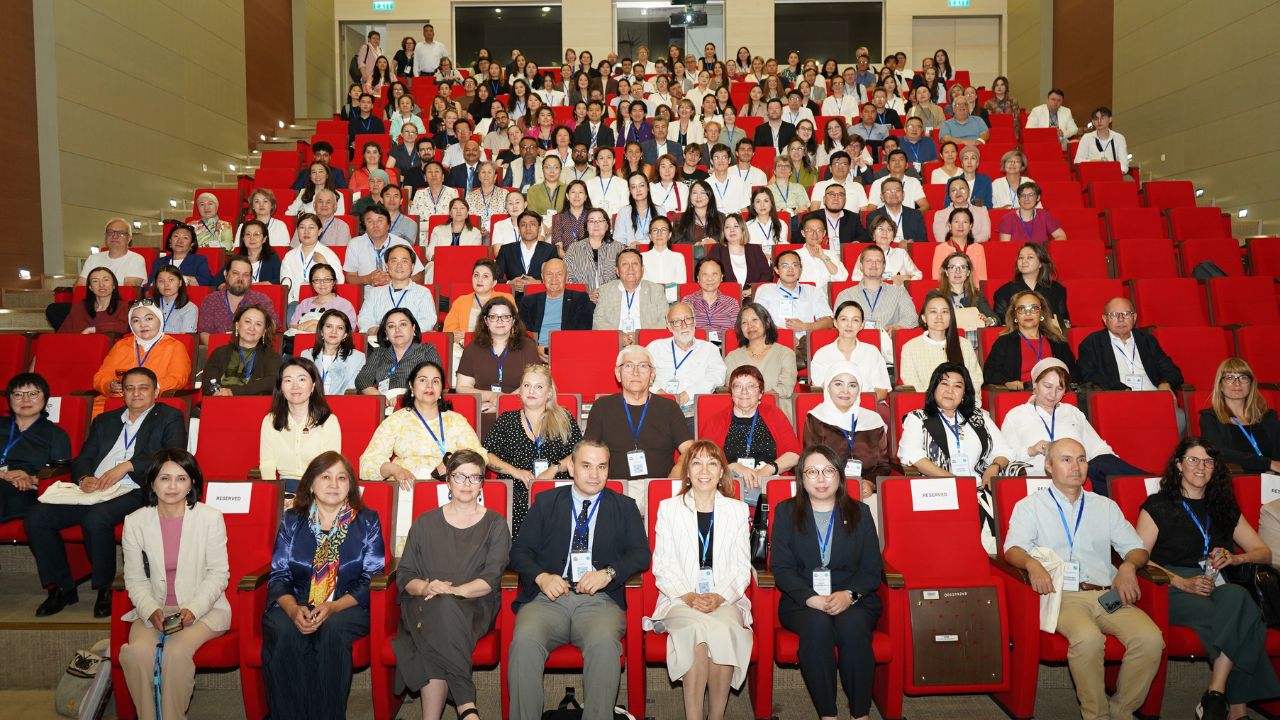
Nazarbayev University hosted the CESS–2026 Regional Conference of the Central Eurasian Studies Society. Held under the theme “(Re)thinking Central Eurasia: Spaces, Societies, and Power” the conference brought together more than 500 scholars and experts from 39 countries. Today, the Central Eurasian Studies Society, or CESS, unites more than 500 researchers worldwide and contributes to the advancement of Central Eurasian studies, the expansion of academic cooperation, and the promotion of interdisciplinary approaches.
The opening ceremony featured remarks by Gulmira Qanay, Vice President of Nazarbayev University; Riccardo Pelizzo, Dean of the university’s Graduate School of Public Policy; and Dina Sharipova, President of CESS for 2026 and Vice Dean for Research at the Graduate School of Public Policy.
The conference keynote address was delivered by Professor Timur Dadabaev of the University of Tsukuba in Japan and Vice Rector for Research and Innovation at the University of World Economy and Diplomacy under the Ministry of Foreign Affairs of the Republic of Uzbekistan.
In his address, Professor Timur Dadabaev focused on the role and significance of Central Eurasia in a rapidly changing global political environment. He noted that for many years, Central Asia had been portrayed as an object of great-power rivalry, a transit corridor, or a peripheral region. At the same time, he emphasized that contemporary academic research increasingly highlights the agency of the region’s states and societies, local perspectives, decolonial approaches, and alternative ways of understanding the region.
The address also underscored the close relationship between national statehood and good-neighborly relations. It was noted that a strong state requires a stable regional environment, while successful national development directly depends on peaceful and mutually beneficial cooperation with neighboring countries.
CESS–2026 welcomed representatives of more than 180 universities, research centers, and international organizations. Through research presentations, panel discussions, and academic exchanges, participants explored new scholarly approaches to the study of society, governance, migration, mobility, and regional transformation.
| Date: | 22.06.2026 |
| Views: | 724 |
| Share: |