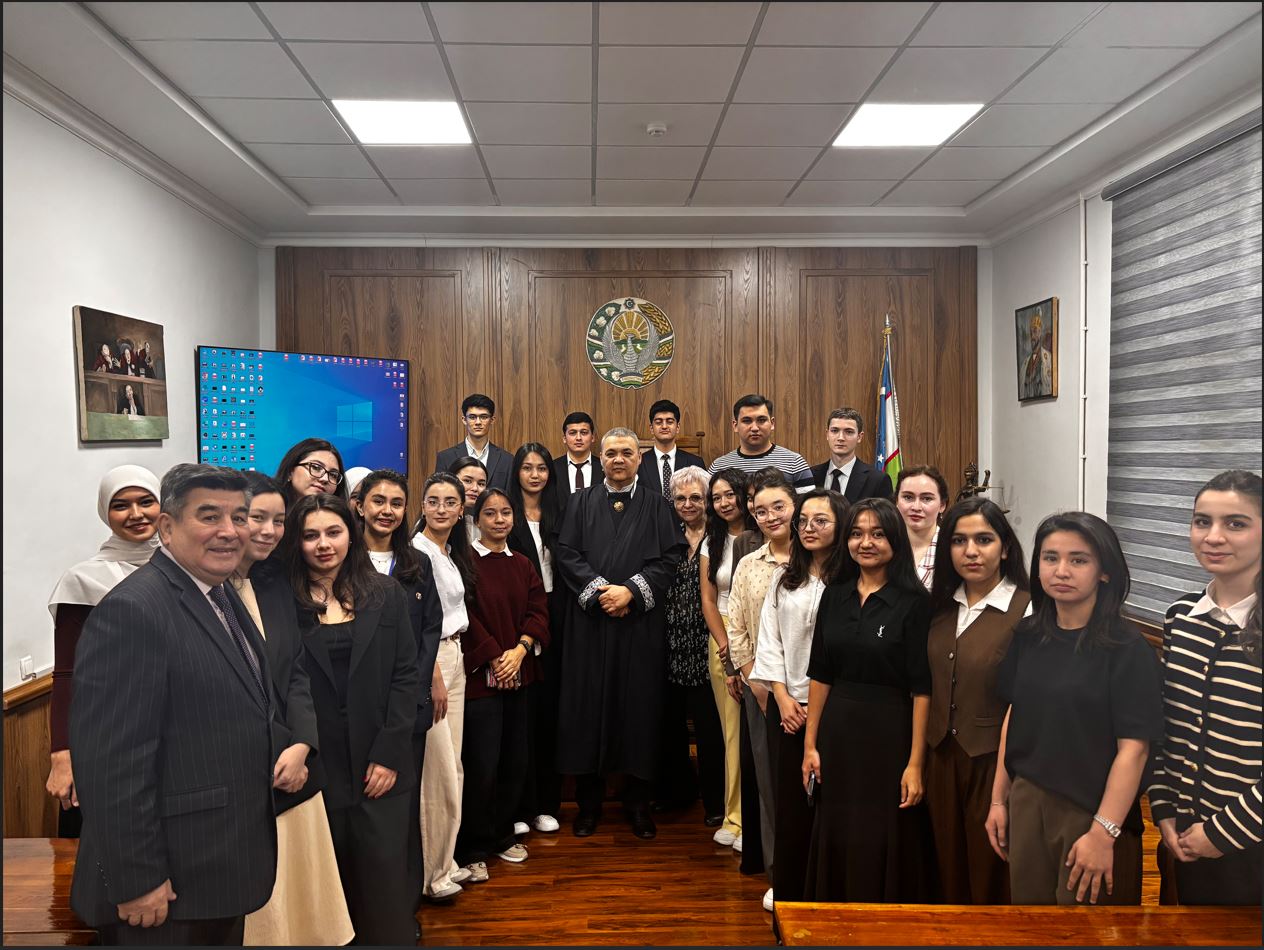
MASTER CLASS ON INHERITANCE LAW IN FOREIGN COUNTRIES
MASTER CLASS ON INHERITANCE LAW IN FOREIGN COUNTRIES
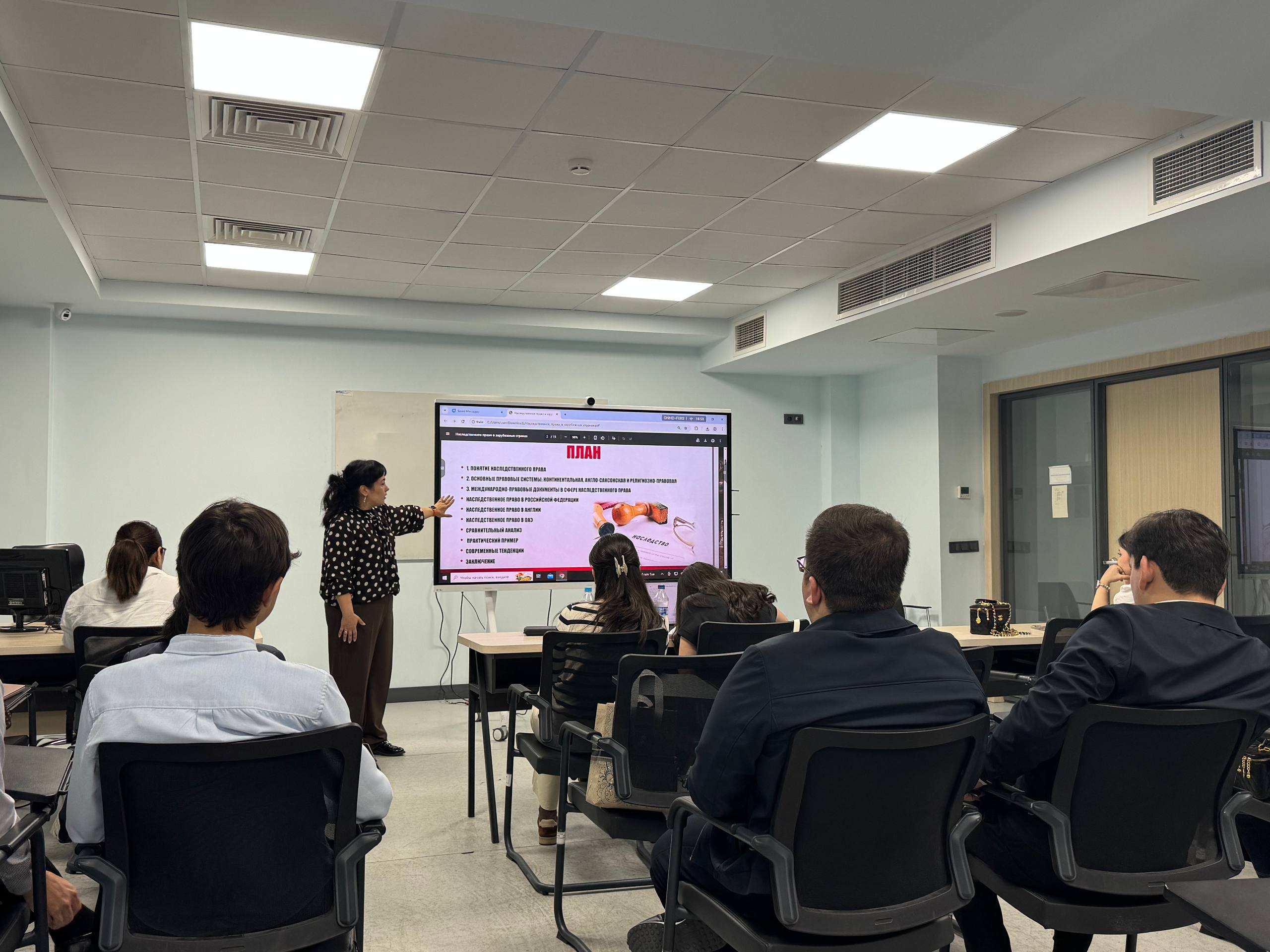
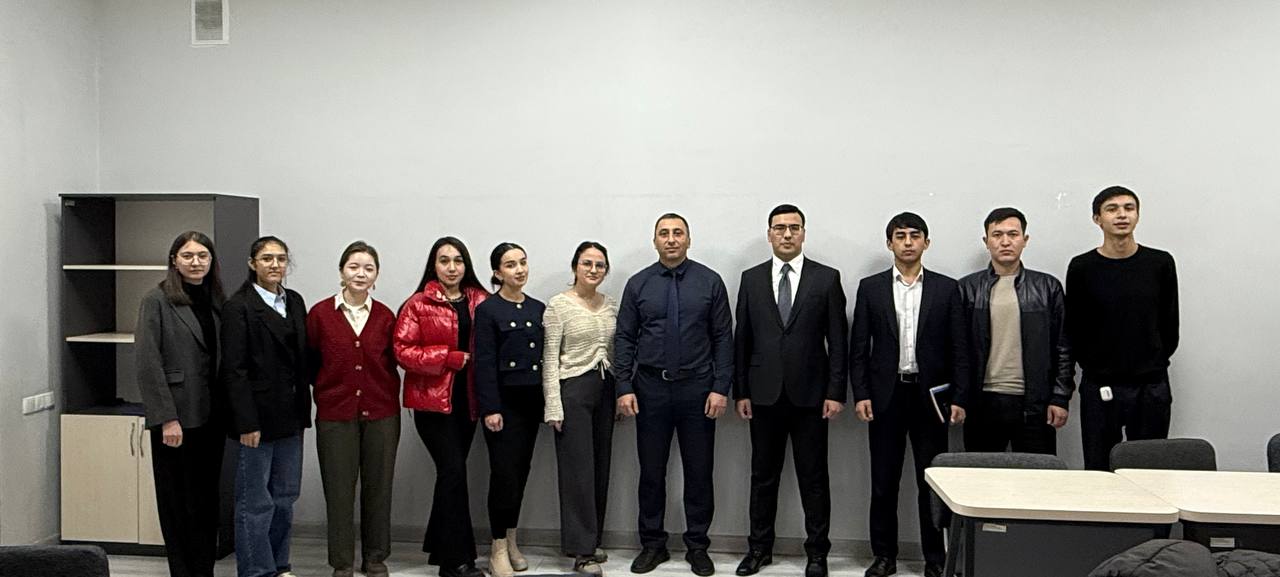
On April 2 of the current year, a master class was held at the University of World Economy and Diplomacy for master’s students enrolled in the “International Commercial Arbitration and Dispute Resolution” program. The event was conducted within the course “Civil and Commercial Law of Foreign Countries” on the topic “Inheritance Law in Foreign Countries.”
The master class was organized by Head of the Department of Civil Law and Private International Law Disciplines Masadikov Sherzodbek and Professor Imamova Dilfuza of the same department.
Azizova Nigina, an experienced practitioner and specialist in the field of notarial practice and inheritance law, was invited to deliver the master class.
During the masterclass, Nigina Azizova outlined the specific features of the legal regulation of inheritance matters in various foreign countries. The session covered issues relating to intestate succession and testamentary succession, including the formal requirements and validity of wills under different legal systems, as well as the procedure for accepting an inheritance. Particular attention was paid to the procedures for opening a succession, registering inheritance rights and the role of the notarial profession in these processes. In addition, Nigina Azizova shared her practical experience in the field of registering inheritance by will and highlighted the most common disputes arising in this area.
The master’s students demonstrated strong interest in the topic, actively participated in discussions, raised questions related to the practical application of inheritance law, and received comprehensive and well-reasoned answers.
The organization of this master class directly contributes to the implementation of United Nations Sustainable Development Goal 16, “Peace, Justice and Strong Institutions,” in particular Target 16.3 – promoting the rule of law and ensuring equal access to justice.
The master class became a significant contribution to the development of academic dialogue, strengthening the link between theory and practice, and improving the educational process.
| Date: | 02.04.2026 |
| Views: | 829 |
| Share: |