
Jurisprudence (international legal activity)
Direction description
| Code | Title | Language | Duration | ECTS credits | Departments |
| 60420100 | Jurisprudence (by type of activities) | Uzbek / Russian / English | 4 years | 240 ECTS credits | International Law and Public Law Sciences; Civil Law and Private International Law |
Program structure
Training in the bachelor’s program 60420100 – Jurisprudence (by type of activity) is carried out in the form of full-time study. The program is organized on the basis of the credit-module system, and the standard duration of study is four years, comprising 240 ECTS credits. The curriculum includes both compulsory and elective subjects, allowing students to build an individual academic trajectory in line with their academic interests and future professional orientation.
The programme provides a strong foundation in core legal disciplines, particularly during the first years of study. Students take major subjects such as Theory of State and Law, Civil Law, Criminal Law, Business Law, International Public Law, and International Private Law. These courses establish the theoretical and analytical basis for more advanced and specialised study.
At later stages of the programme, students may choose from a broad range of elective subjects and develop a more focused academic profile. Elective pathways include areas such as National Law, Private International Law, and Public International Law. Depending on their chosen trajectory, students may study subjects such as Fundamentals of Legal Policy, Parliamentary Law, Family Law, Banking Law, Intellectual Property Rights, Anti-Corruption and Compliance, Comparative Private Contract Law, Civil and Commercial Law of Foreign Countries, International Intellectual Property Law, International Transportation Law, International Investment Law, Law of International Treaties, World Trade Organization Law, International Migration Law, Regulation of Regional Economic Integration, and International Dispute Resolution.
A distinctive feature of the programme is its multilingual format. During their studies, students develop proficiency in Uzbek, Russian, English, and an additional foreign language.
The programme combines academic study with practical training. During their studies, students may undertake qualifying internships in a range of institutions and professional settings. Internship opportunities are available in the Ministry of Foreign Affairs, the Ministry of Investments and Foreign Trade, judicial authorities, justice bodies, prosecutor’s offices, law firms, business entities engaged in international economic activity, public authorities at national and local level, as well as in offices and institutions operating abroad.
Career opportunities
Graduates of the program may pursue professional activity in a wide range of legal and internationally oriented fields, including:
· government bodies involved in foreign policy and international cooperation;
· the diplomatic service and consular institutions;
· ministries, state committees, and other public authorities;
· judicial and law-enforcement bodies;
· international intergovernmental and non-governmental organizations;
· legal departments of state institutions and private companies;
· banking, financial, and commercial organizations;
· law firms and consulting structures.
The program prepares graduates for careers requiring legal expertise in national and international settings, including public administration, diplomacy, legal consulting, international business, and institutional legal support.
Explore the detailed syllabi below.
Course Syllabi
- Syllabi for Courses of the First Year Bachelor’s Programme in International Law
- Syllabi for Courses of the Second Year Bachelor’s Programme in International Law
- Syllabi for Courses of the Third Year Bachelor’s Programme in International Law
- Syllabi for Courses of the 4th Year Bachelor’s Programme in International Law
Alumni reviews
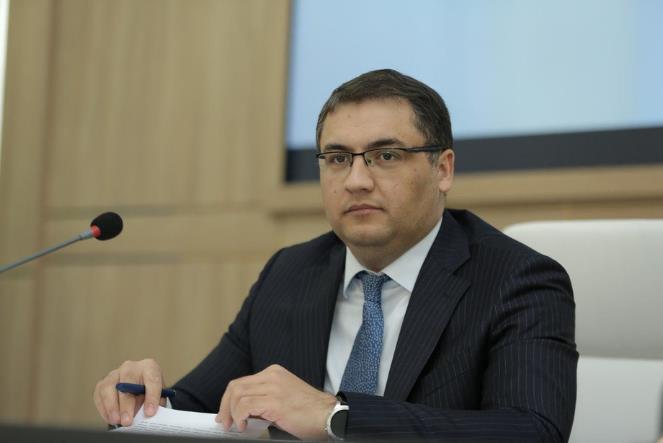
Ruslanbek Davletov
Minister of Justice of the Republic of UzbekistanAt the moment, several legal reforms are underway in Uzbekistan. I believe that the flexibility and modern knowledge and skills of students who are thirsty for knowledge and inquisitive like you are very important in the transition to a new model of public administration in our country.