UWED hosts roundtable on WTO accession and export competitiveness
UWED hosts roundtable on WTO accession and export competitiveness
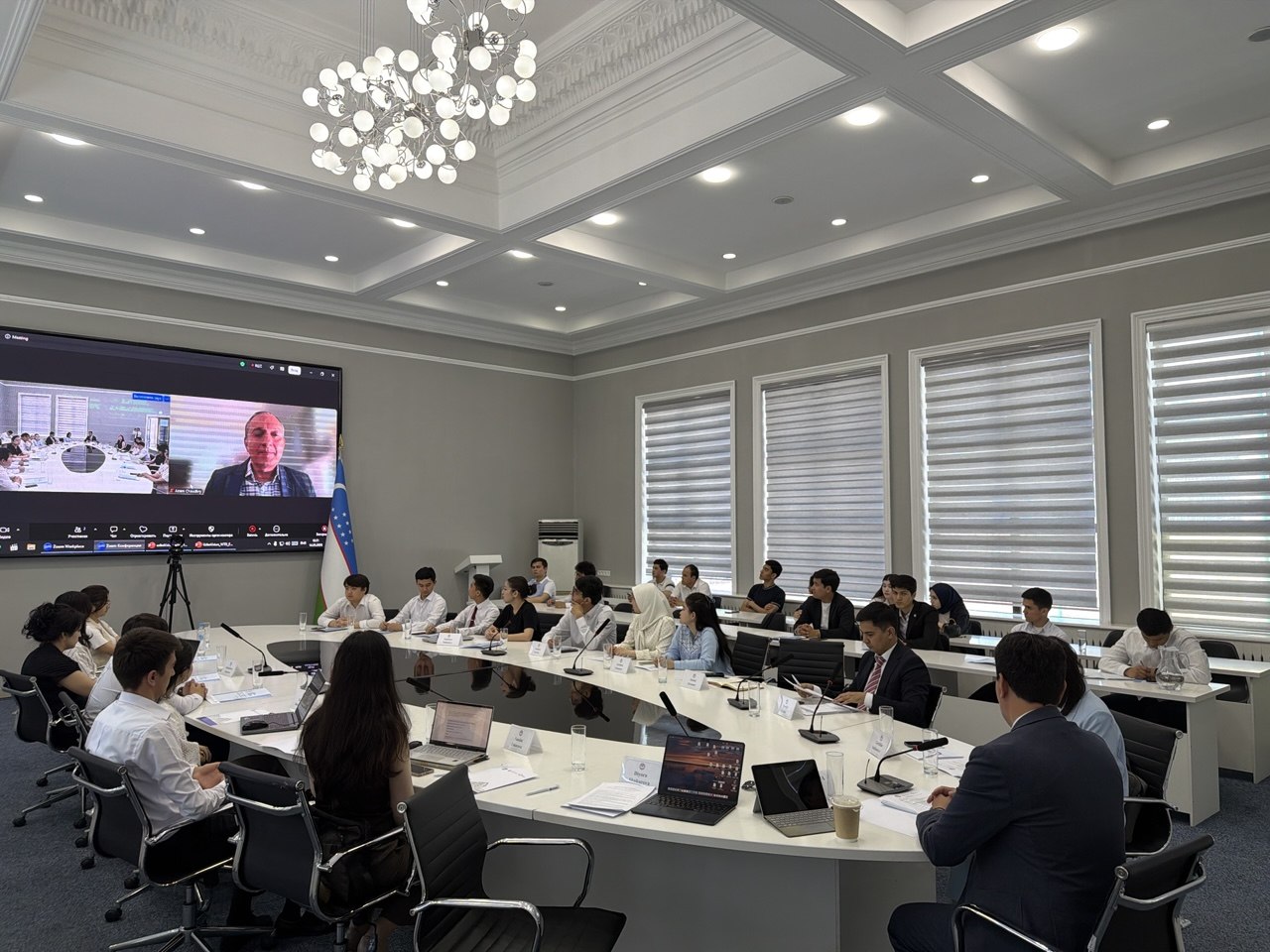
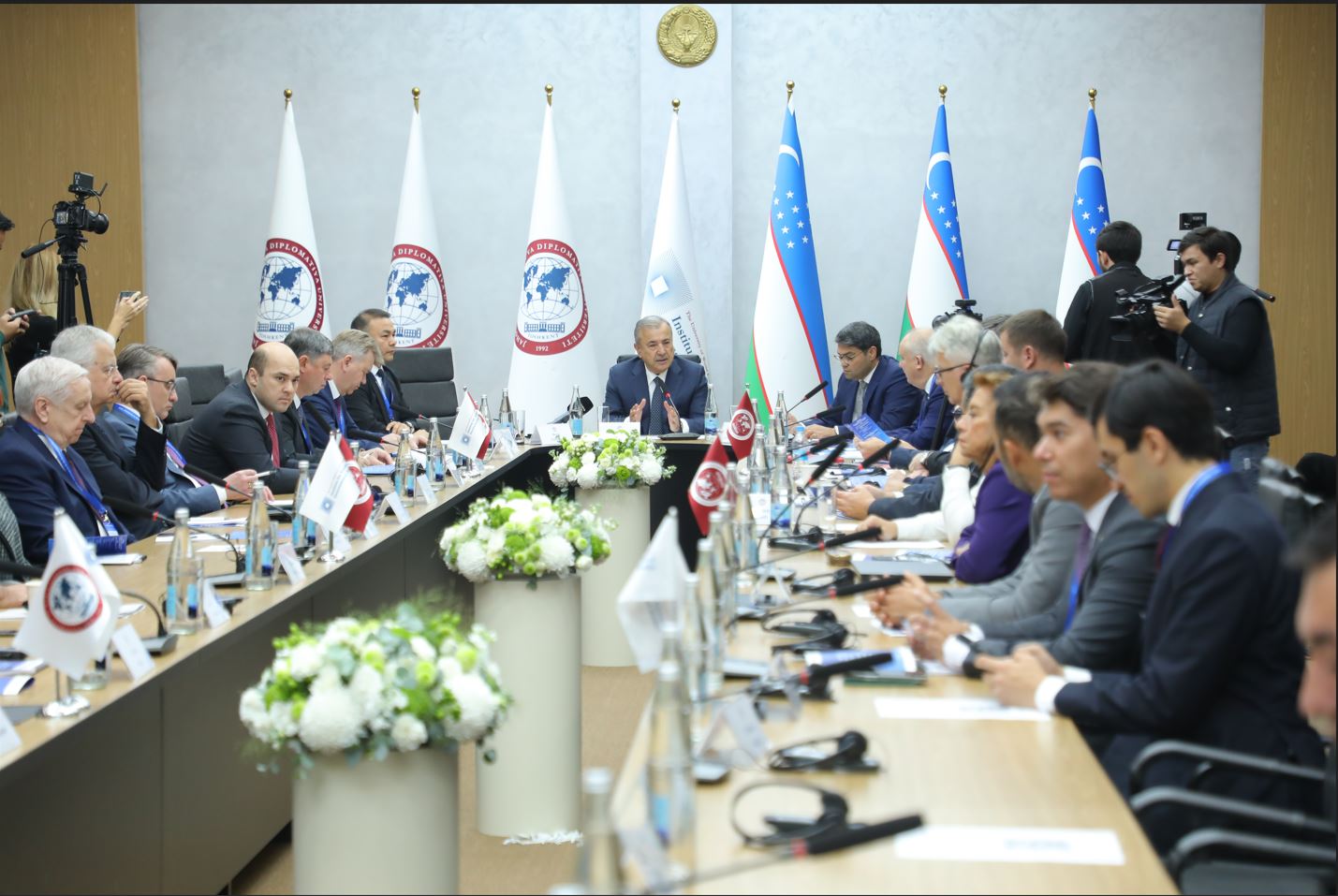
The University of World Economy and Diplomacy hosted a roundtable discussion titled “Uzbekistan’s WTO Accession – Strategies for Export Competitiveness”.
The event was organized by the WTO Chairs Programme at UWED and brought together representatives of government agencies, the private sector, academic and research institutions, as well as young scholars.
The main purpose of the roundtable was to strengthen practical dialogue among key stakeholders, expand professional networks, and promote evidence-based cooperation in the areas of trade policy, legislative reform and export competitiveness.
Uzbekistan’s accession to the WTO is currently one of the priority areas of the country’s economic reform agenda, international trade integration and legal modernization. This process is not limited to international negotiations. It is also closely connected with comprehensive domestic reforms aimed at strengthening institutions, improving the regulatory environment and enhancing the competitiveness of the national economy.
Opening the event, Dr. Umid Yakubkhodjaev, Coordinator of the WTO Chair at UWED, emphasized that WTO accession requires close coordination among public authorities, Parliament, business associations, universities and research institutions. It was noted that national expertise, applied research, capacity building and a deeper understanding of private-sector needs are essential for ensuring that accession contributes to sustainable economic development.
In this context, the WTO Chair at UWED serves as an important academic and expert platform for strengthening knowledge and capacity in the fields of trade policy, international economic law and the multilateral trading system. Through curriculum development, research support, outreach activities and stakeholder dialogue, the Chair contributes to Uzbekistan’s WTO accession process and to the preparation of a new generation of trade policy specialists.
The first panel, “WTO Accession: Institutional Readiness and Legislative Reform Agenda”, focused on the legal and institutional aspects of Uzbekistan’s accession process. Presentations were delivered by Dr. Azam Amjad Chaudhry, Dean of the Faculty of Economics, Co-Director of the Innovation and Technology Center and Pro-Rector at the Lahore School of Economics; Professor Gavkhar Sultonova, Head of the Centre for Economic Diplomacy at the Institute for Advanced International Studies; Mr. Qodir Obidov, representative of the Ministry of Justice of the Republic of Uzbekistan responsible for harmonizing national legislation with WTO agreements; Mr. Akmal Akramov, Chief Scientist at the Institute of Parliamentary Studies under the Legislative Chamber of the Oliy Majlis; and Dr. Azizbek Toyirov, WTO expert at Tashkent State University of Law.
The speakers exchanged views on legislative harmonization, institutional preparedness, parliamentary research, economic diplomacy, legal education and the role of evidence-based analysis in supporting Uzbekistan’s WTO accession. Particular attention was paid to the need to strengthen national expertise, improve inter-agency coordination and ensure the active involvement of the private sector in reform discussions.
Participants noted that the accession process requires not only the adoption of new laws, but also the development of a new culture of trade policymaking based on transparency, predictability and continuous dialogue with stakeholders.
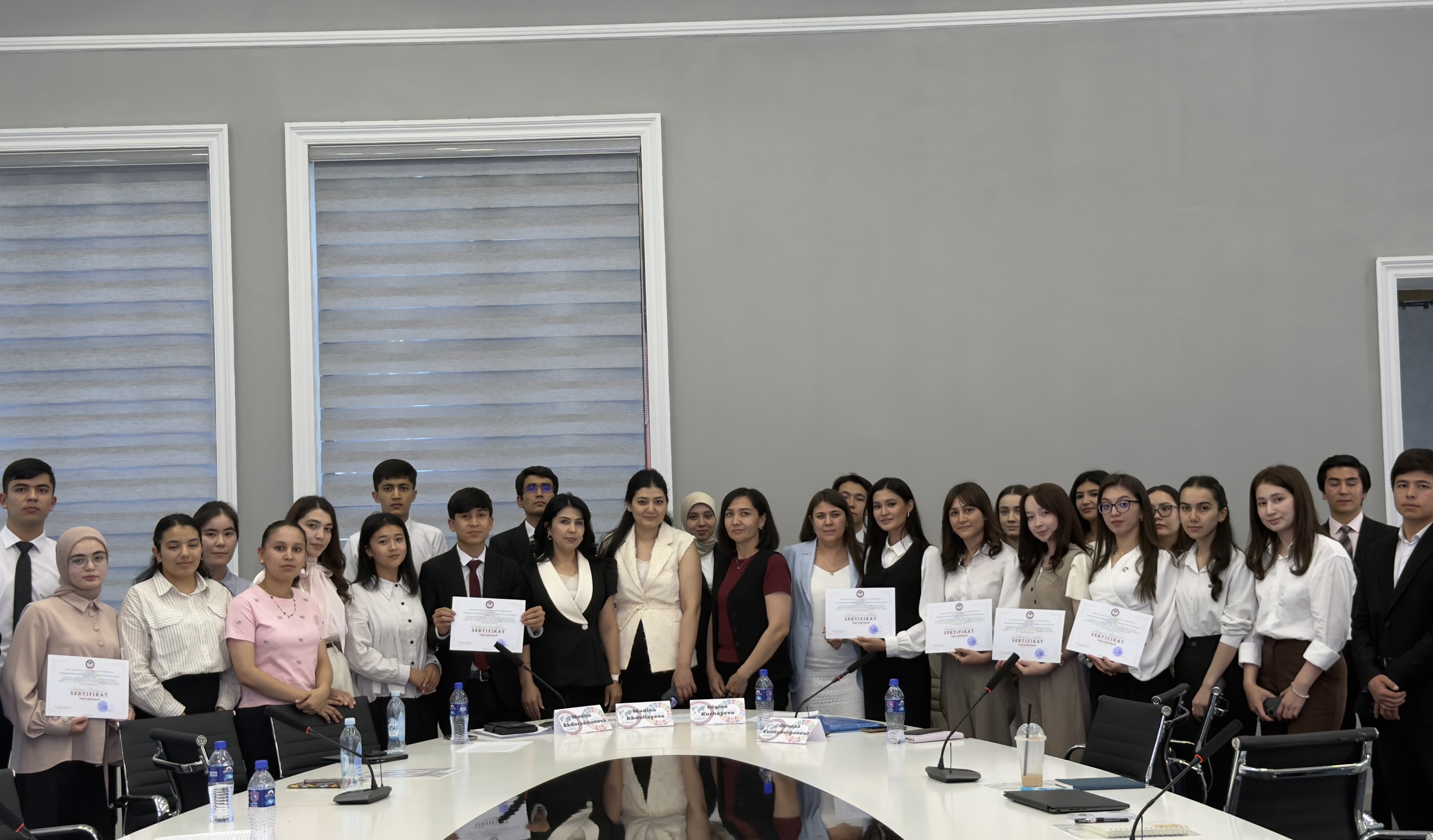
The second panel, “Rethinking Export Competitiveness: Evidence-Based Insights for Uzbekistan’s WTO Future”, was devoted to the role of academic research in strengthening Uzbekistan’s export potential. Young researchers and early-career academics presented their studies and research ideas on export diversification, the competitiveness of domestic enterprises, regulatory reform and opportunities arising from future WTO membership.
The discussions confirmed the growing importance of capacity building for Uzbekistan’s successful participation in the global trading system. Participants emphasized that WTO accession should be accompanied by practical training, applied research and stronger cooperation between government institutions, business and academia. Such cooperation is essential for improving export competitiveness, helping domestic producers adapt to international trade rules and ensuring that WTO membership generates tangible benefits for the national economy.
At the conclusion of the event, participants underlined the need to continue regular dialogue in this format. The roundtable demonstrated the role of the WTO Chair at UWED as a bridge between public policy, private-sector needs and academic expertise, contributing to the formation of a professional community capable of supporting Uzbekistan’s effective and beneficial integration into the multilateral trading system.
| Date: | 14.05.2026 |
| Views: | 983 |
| Share: |