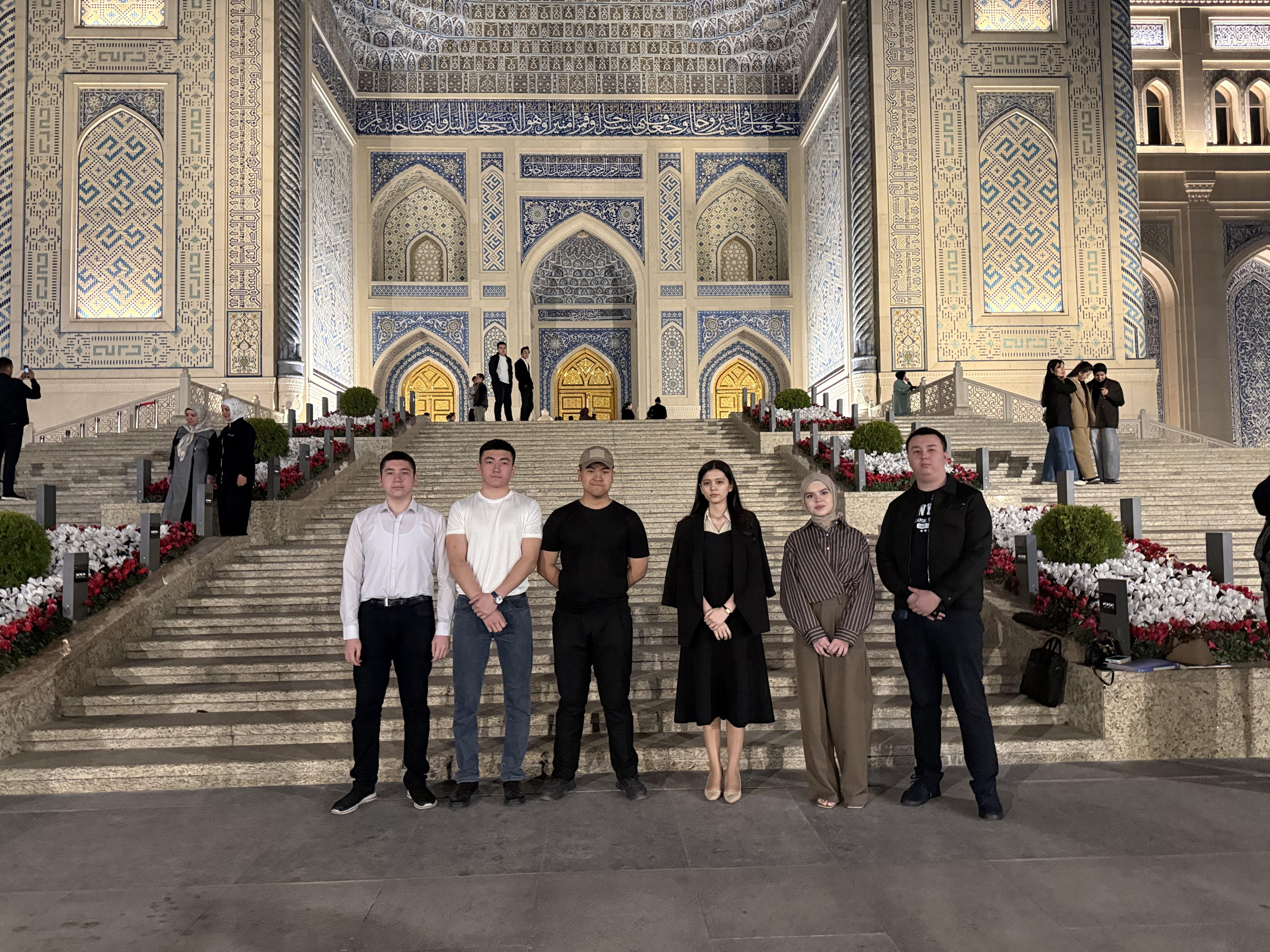
An Open Lecture with an Experienced Diplomat held at UWED
An Open Lecture with an Experienced Diplomat held at UWED
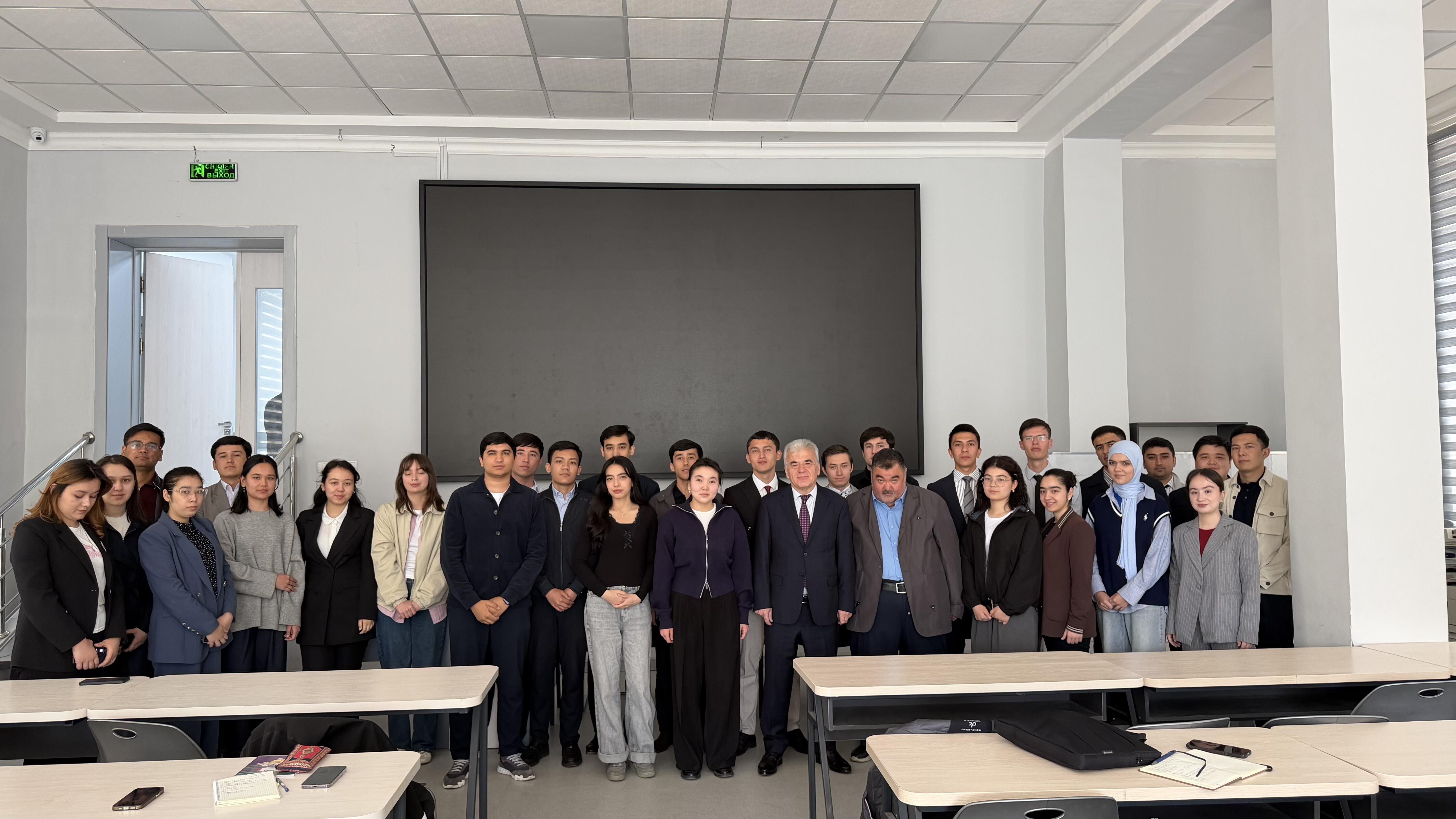
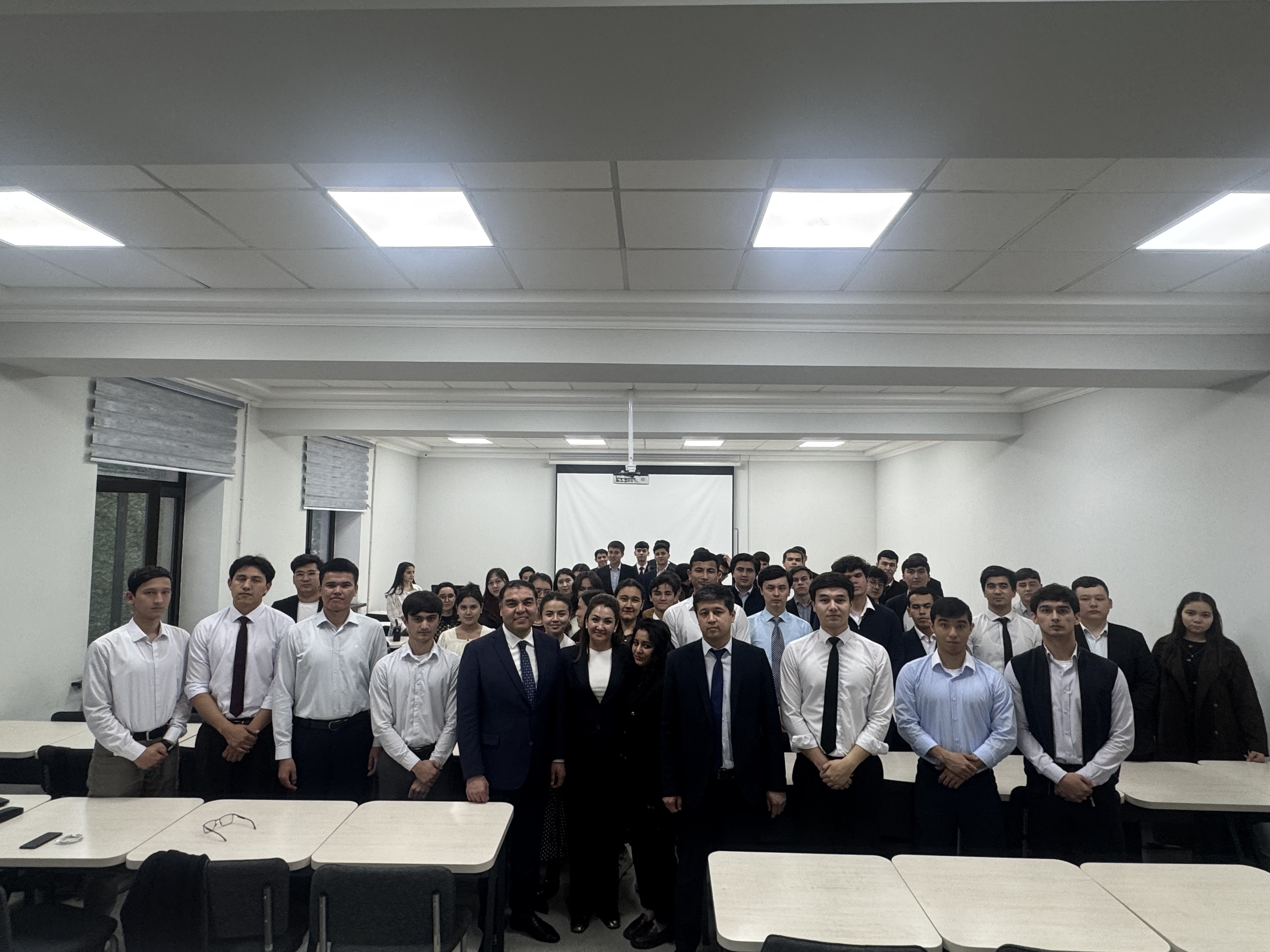
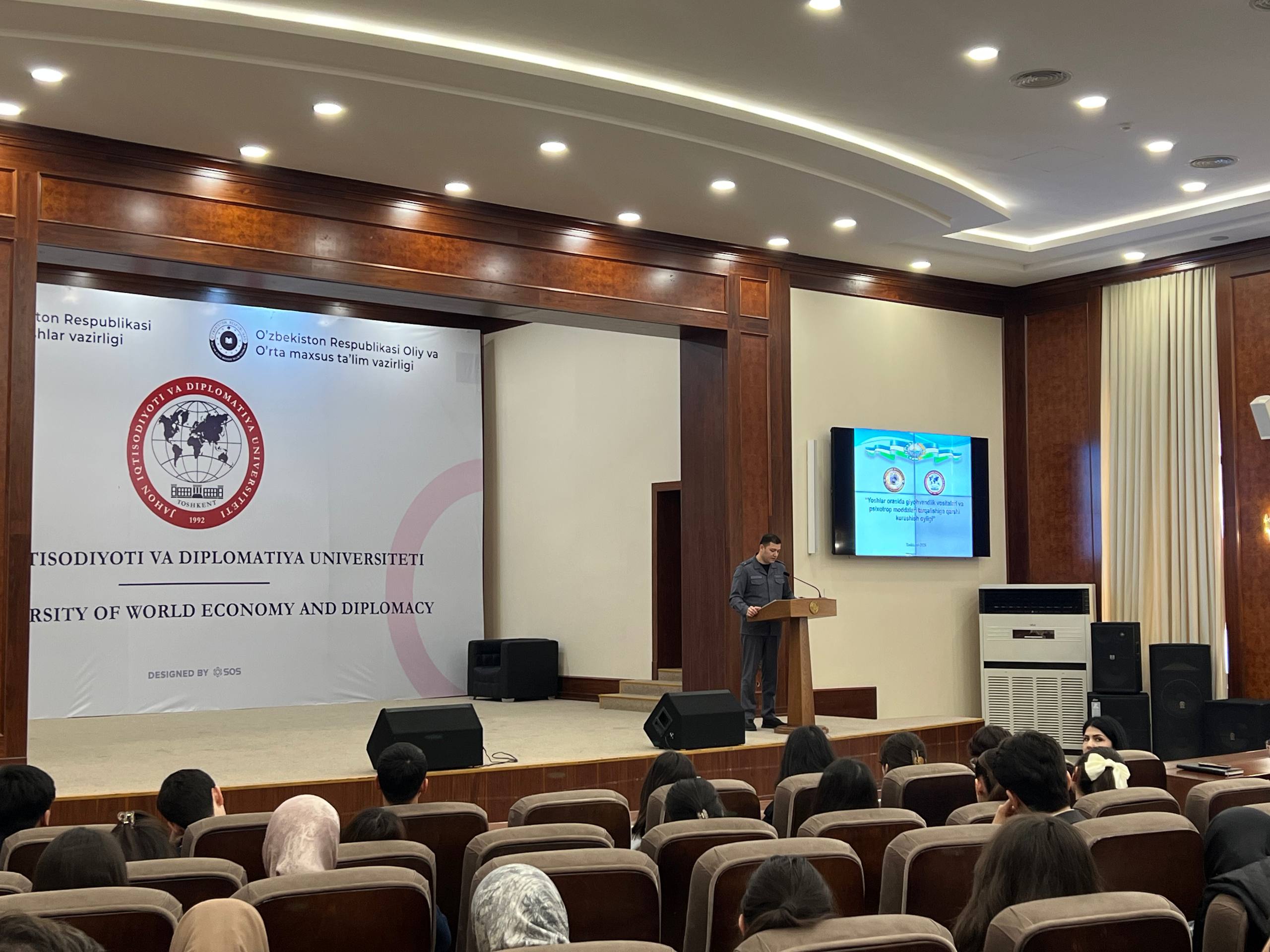
An open lecture featuring an experienced diplomat was held at the University of World Economy and Diplomacy as part of the “Central Asian Studies” course. The guest speaker was Ulugbek Abdunabievich Abduyaminov, First Secretary of the Department for Cooperation with Central Asian Countries of the Ministry of Foreign Affairs of the Republic of Uzbekistan, who has more than thirty years of professional diplomatic experience.
The event became a logical continuation of the university’s consistent efforts to integrate academic learning with practical diplomacy, as well as to strengthen cooperation with state institutions. This format of education aligns with the priorities of national educational policy, which places particular emphasis on training a new generation of highly qualified professionals equipped with modern analytical and practical competencies.
During the lecture, Ulugbek Abdunabievich provided a detailed overview of the key directions of Uzbekistan’s foreign policy toward the countries of Central Asia. It was emphasized that in recent years the region has evolved into a space of sustainable dialogue, trust, and mutually beneficial cooperation. Particular attention was given to the role of the Head of State in the qualitative rethinking of regional policy, the transition from limited interaction to open and pragmatic partnership, as well as the formation of an atmosphere of good neighborliness and mutual consideration of interests.
Within the context of contemporary approaches, the speaker noted that Central Asia is viewed as a unified space for joint development, where priority is given to expanding trade and economic ties, deepening investment cooperation, and implementing large-scale infrastructure projects. The importance of regular Consultative Meetings of the Heads of State of the region was also highlighted as an effective mechanism for coordinating positions and developing joint decisions.
Students showed particular interest in the practical aspects of diplomatic activity, including the specifics of conducting negotiations, the mechanisms of foreign policy decision-making, and the role of analytical work within the Ministry of Foreign Affairs. The lecture was conducted in the format of a dynamic and substantive dialogue, during which participants received comprehensive answers to their questions.
At the conclusion of the meeting, Ulugbek Abdunabievich offered a number of practical recommendations aimed at developing critical thinking among future specialists. In particular, he emphasized the importance of the ability to distinguish well-grounded expert assessments from manifestations of informational influence, including elements of hybrid attacks, which is especially relevant in the context of the global transformation of the international information environment.
Such events contribute to improving the quality of student training, fostering a comprehensive understanding of contemporary international processes, and developing professional skills that are in demand in the field of foreign policy and international relations.
| Date: | 27.04.2026 |
| Views: | 820 |
| Share: |