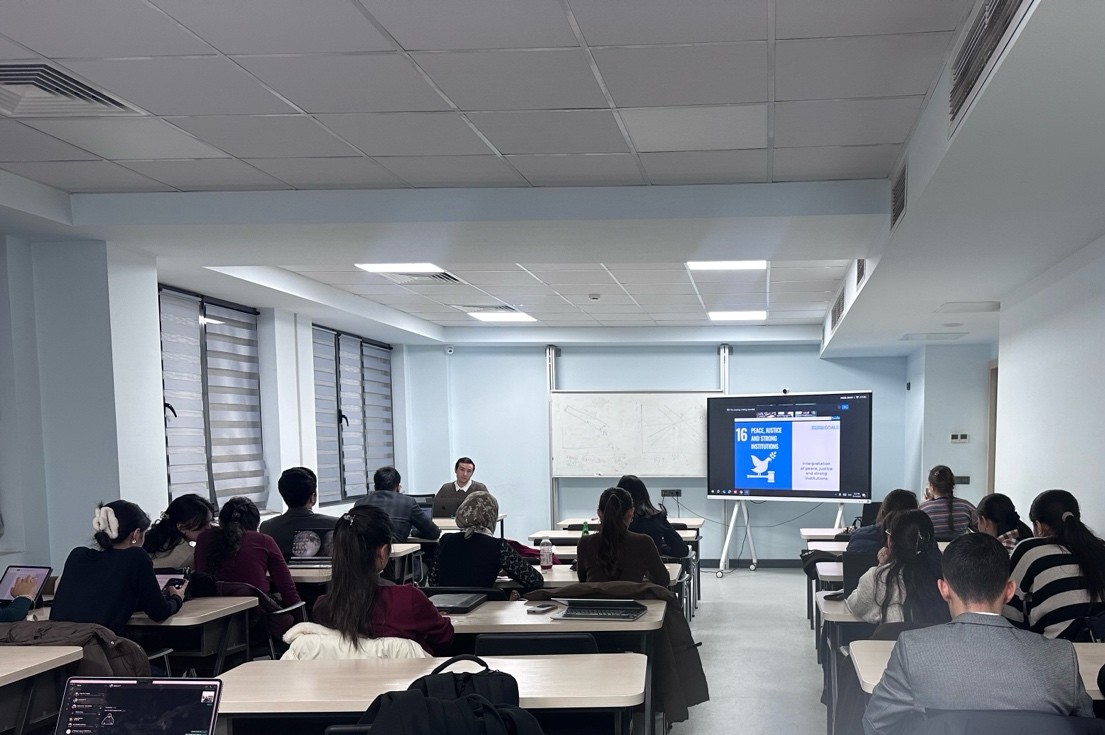
Faculty members of “International Economics” department and students of the UWED conducted a field visit to the TXTY-2025 fair
Faculty members of “International Economics” department and students of the UWED conducted a field visit to the TXTY-2025 fair
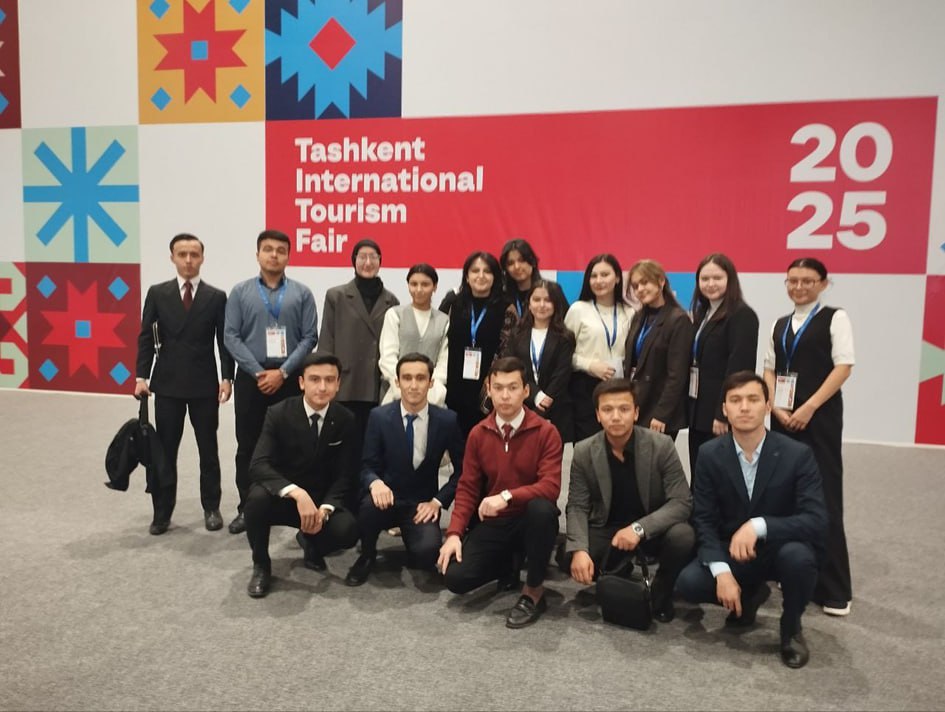
On 27 November 2025, lecturers of the “International Economics” Department, 2nd – 3rd year students of the International Economic Relations programme, and first-year Master’s students of the World Econom speciality visited the TXTY-2025 fair as part of a practical field session for the courses “Microeconomics” and “Models in International Trade.” This visit enabled participants not only to study real market mechanisms but also to observe in practice the principles aligned with the Sustainable Development Goals (SDG) metrics, including quality education, economic growth, innovation and responsible consumption.
TXTY-2025 – the largest tourism fair in Central Asia – provided students with direct exposure to the economic foundations of the tourism market, such as demand and supply formation, pricing mechanisms, competitive structures and the contribution of the services sector to economic growth.
The visit was closely aligned with SDG metrics: it strengthened students’ skills in practical analysis and market observation, contributing to SDG 4 on quality education; demonstrated the role of tourism in economic growth, services exports and SME activity, supporting SDG 8; showcased real examples of innovation in aviation, logistics and MICE tourism, corresponding to SDG 9 on industry and infrastructure; and allowed students to observe environmentally oriented approaches and sustainable tourism practices, reflecting SDG 12 on responsible consumption and production.
During the visit, students familiarized themselves with the activities of representatives of the tourism, aviation, hospitality, transport and handicraft sectors, analysing tourism’s multiplier effect, its role in job creation and its contribution to economic growth.
This field-based practical session served not only as a strong example of integrating theory and practice, but also as an important educational experience that demonstrated how economic analysis connects with SDG metrics in real-world settings.
| Date: | 27.11.2025 |
| Views: | 1250 |
| Share: |