A master class on the topic “Legal and Institutional Foundations of Informatization in Uzbekistan and Issues of International Cooperation” was held at UWED
A master class on the topic “Legal and Institutional Foundations of Informatization in Uzbekistan and Issues of International Cooperation” was held at UWED
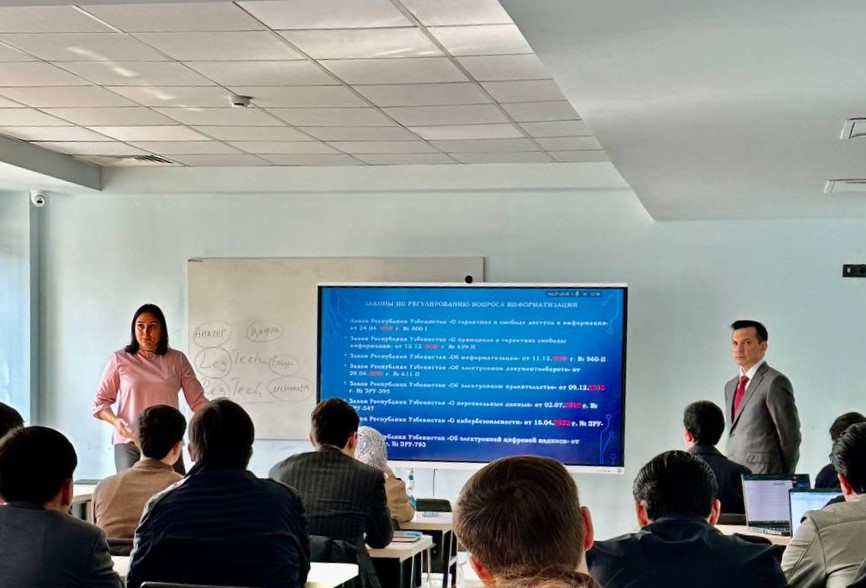
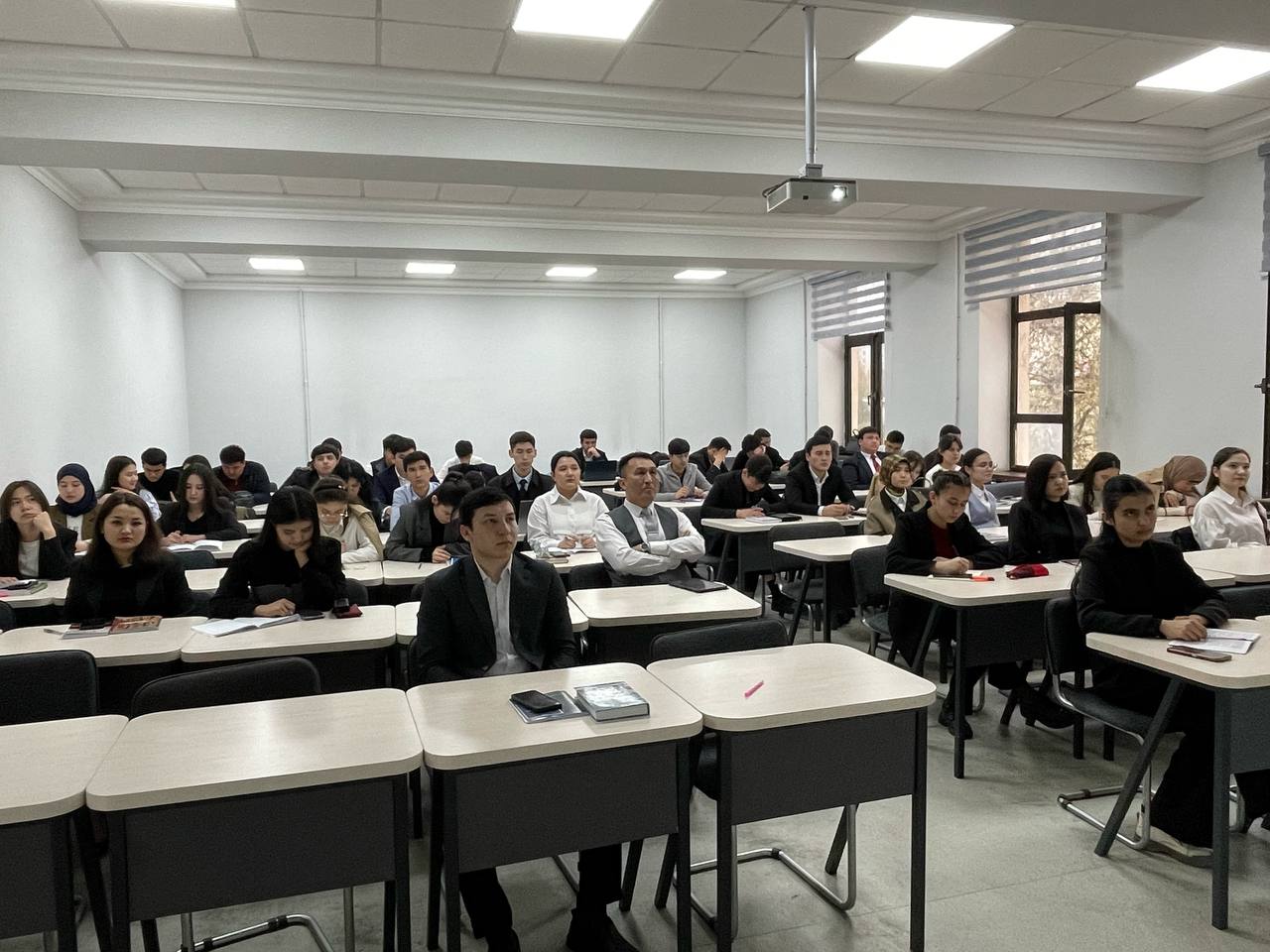
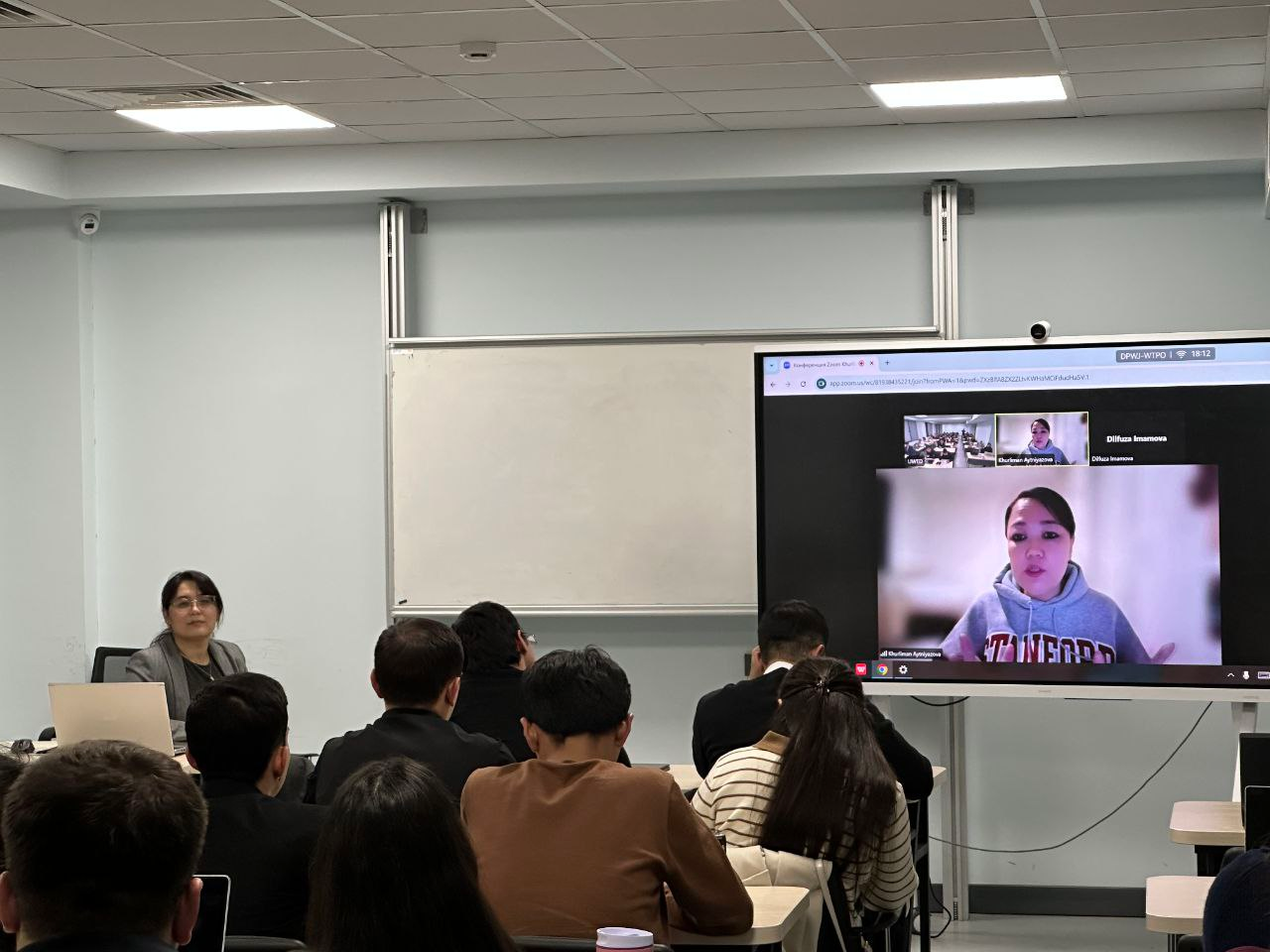
On November 11 this year, Darya Odilovna Abdalimova, Head of the Legal Department of AGMK JSC, a lawyer at Inha University in Tashkent, and an expert with extensive work experience in relevant state organizations in the field of informatization, conducted a master class on the topic “Legal and Institutional Foundations of Informatization in Uzbekistan and Issues of International Cooperation” within the course of International Information Law for 4th-year students.
The meeting was attended by professors of the Faculty of International Law, including Doctor of Law, Professor N. A. Nugmanov.
During the lecture, the expert emphasized that the development of information technology processes in the Republic of Uzbekistan is an important area of international cooperation. She explained that aligning with the experiences of foreign countries enables the joint implementation of innovative solutions in Uzbekistan’s economy, education, healthcare, and public administration. Special attention was given to the development of e-government services, the improvement of digital literacy, and the creation of unified technical and legal standards necessary for digital transformation in Uzbekistan.
The expert also provided detailed information on how international legal cooperation in this field is based on the principles of sovereign equality of states, non-interference in internal affairs, the prohibition of using the information space for aggressive or unlawful purposes, and respect for human rights and freedoms in the digital environment. She highlighted the central coordinating role of the United Nations in developing universal approaches, drafting normative documents and recommendations aimed at preventing cyber threats, and fostering a culture of safe use of information technologies.
At the end of the event, students received answers to their questions, and an exchange of views took place regarding how international legal cooperation in the fields of information security and digitalization serves as a key condition for ensuring the stability, openness, and security of the global digital space. It was noted that the development of agreed international norms and mechanisms contributes to strengthening state sovereignty, protecting citizens’ rights, and building a stable architecture for international information security.
| Date: | 11.11.2025 |
| Views: | 1434 |
| Share: |