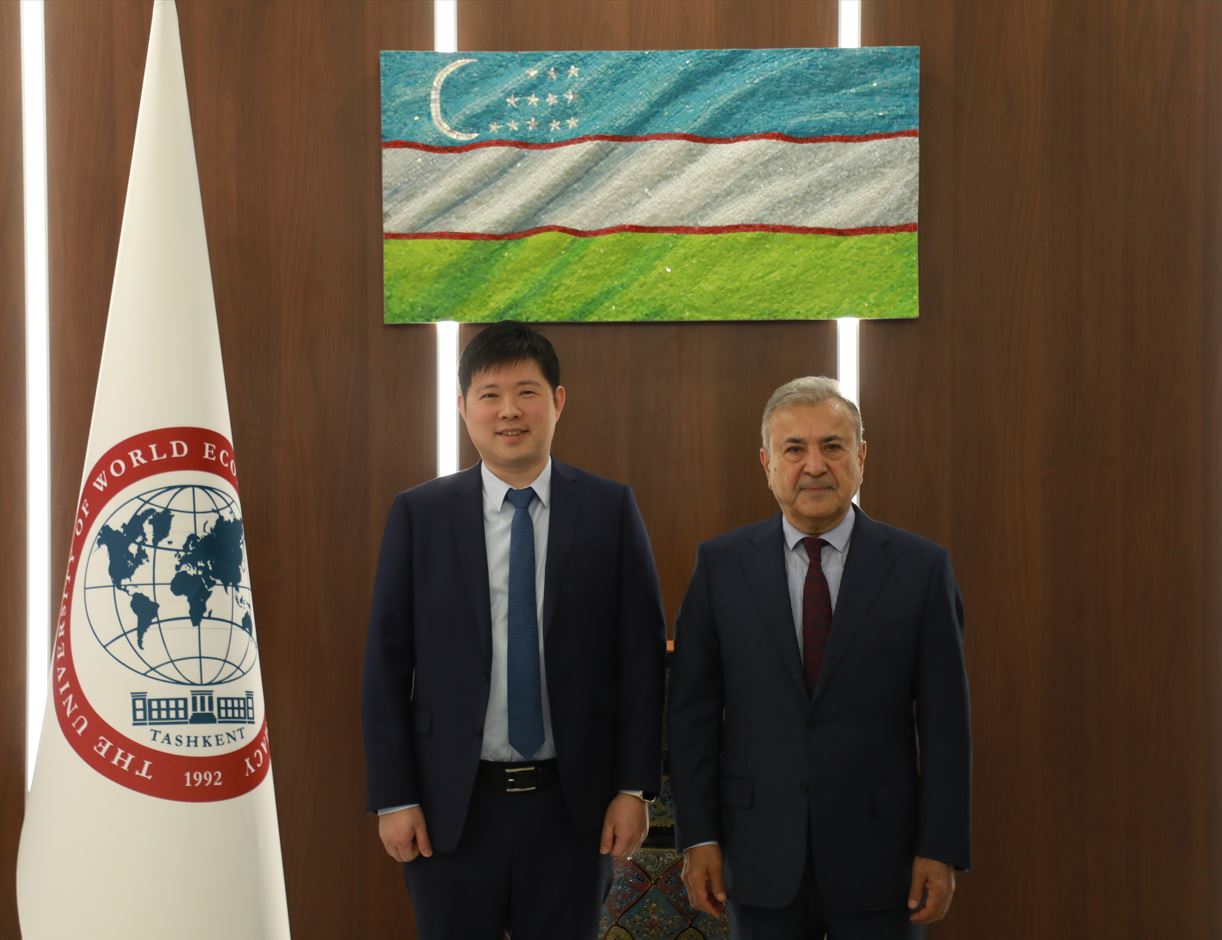
Director of the Institute for Strategic and Regional Studies under the President of the Republic of Uzbekistan Eldor Aripov delivered a lecture at UWED
Director of the Institute for Strategic and Regional Studies under the President of the Republic of Uzbekistan Eldor Aripov delivered a lecture at UWED
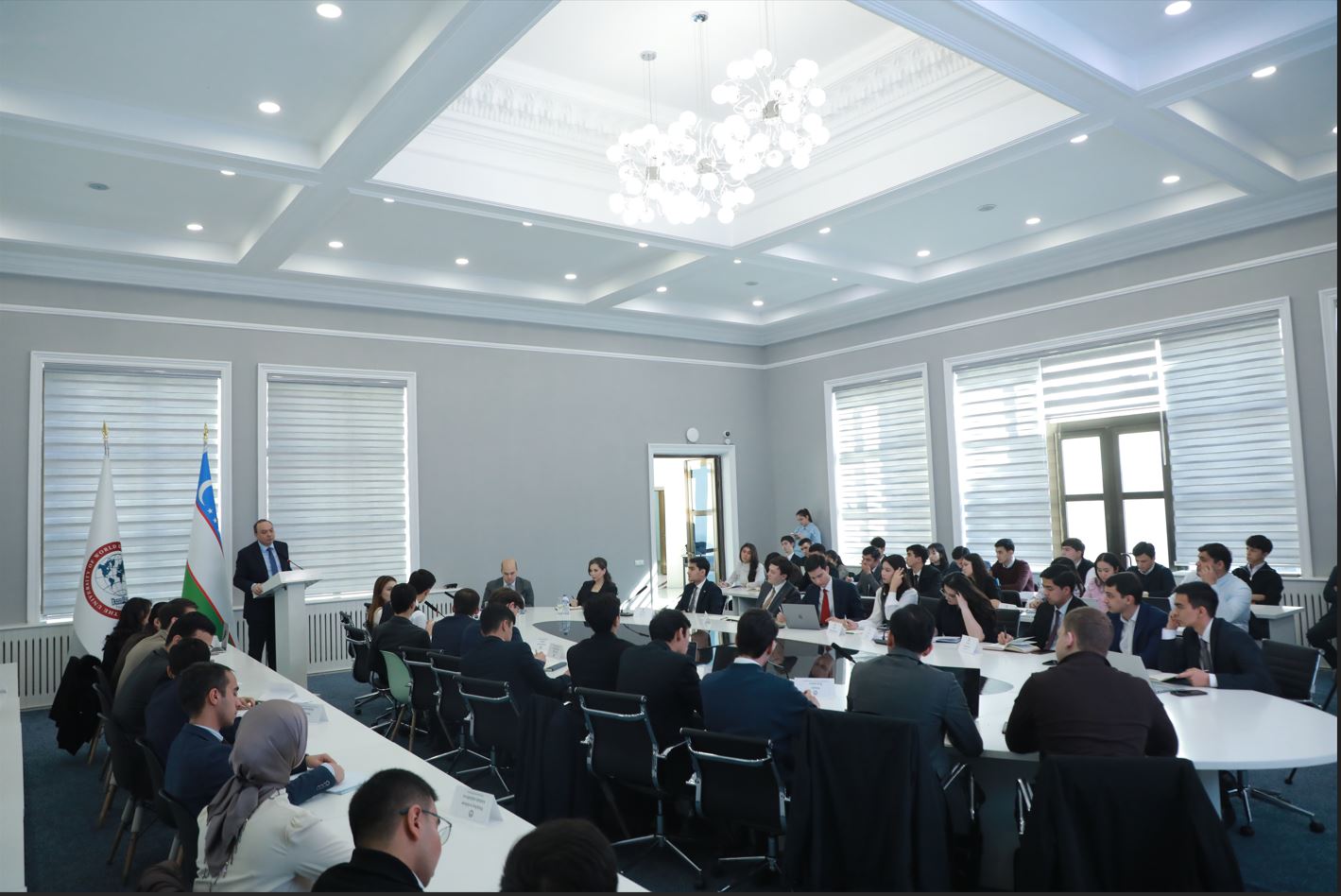
On November 26 of this year, the University of World Economy and Diplomacy hosted a lecture on the topic "Transnational Threats to Security, Economic Development, and Sustainability". It was conducted by the Director of the Institute for Strategic and Regional Studies under the President of the Republic of Uzbekistan Eldor Aripov.
In his speech, he noted that Central Asia is a region where the interests of major world powers intersect, as well as serious transnational threats affecting security and development. Uzbekistan, which has borders with all the states of the region, is at the center of these processes and therefore is especially vulnerable to emerging challenges.
He paid special attention to climate change and the threat of water shortages, which he called the main transnational challenge. He noted that over the past 50-60 years, the area of glaciers in the region has decreased by about a third, and by the middle of the century, many of them may disappear completely. This will lead to a significant reduction in available water resources, which is already evident in the example of neighboring Iran, where the drought has reached critical proportions and is forcing the authorities to consider the possibility of evacuating the population. An additional risk factor is the construction of the Kosh-Tepa canal by Afghanistan, which can change the water balance in the Amu Darya basin.
No less dangerous, according to the lecturer, are extreme natural phenomena and man-made threats. Every year, millions of Central Asians suffer from natural disasters, including a significant part of the population of Uzbekistan. Significant damage is also caused by old uranium tailings dumps located in neighboring countries, as well as the risk of a breakthrough of Lake Sarez, which, if implemented, could cause a large-scale disaster.
Speaking about security, Aripov stressed that the threats of terrorism and extremism are still among the most acute. Numerous radical groups operate in the region and its environs, and the situation in Afghanistan contributes to the growing threat of the spread of extremist ideas, the movement of militants and the development of illegal infrastructure, including arms trafficking and digital extremism.
The increase in the scale of drug trafficking is also a matter of serious concern. Despite a decline in opium poppy cultivation in Afghanistan, drug smuggling continues to grow, and Uzbekistan has seen a significant increase in drug crimes and seizures in recent years.
At the same time, he noted that in recent years, cooperation between the countries of Central Asia has noticeably strengthened. He gave examples of the growth of mutual trips, the expansion of trade, the increase in investment and the transformation of water and energy cooperation from a source of conflict to a sphere of cooperation. According to him, this became possible thanks to the course pursued by the leadership of Uzbekistan, which creates conditions for openness, trust and mutual support.
Concluding the lecture, Eldor Aripov stressed that the further development of the region is associated with the deepening of cooperation and institutionalization of interaction between the states. He emphasized the initiative of the President of the Republic of Uzbekistan to create the Community of Central Asia and Azerbaijan and the formation of a permanent Secretariat. Such a step, according to the lecturer, will make it possible to move to a higher level of integration and eventually form a single economic space capable of effectively responding to modern challenges.
At the end of the lecture, the Director of the Institute for Strategic and Regional Studies under the President of the Republic of Uzbekistan devoted time to questions from the audience and answered in detail the questions of interest to students, explaining certain aspects of the topic and giving additional examples from the practice of regional cooperation.
| Date: | 30.11.2025 |
| Views: | 2103 |
| Share: |