An Open Discussion on “Human Dignity and Environmental Rights in the Constitution” held at UWED
An Open Discussion on “Human Dignity and Environmental Rights in the Constitution” held at UWED
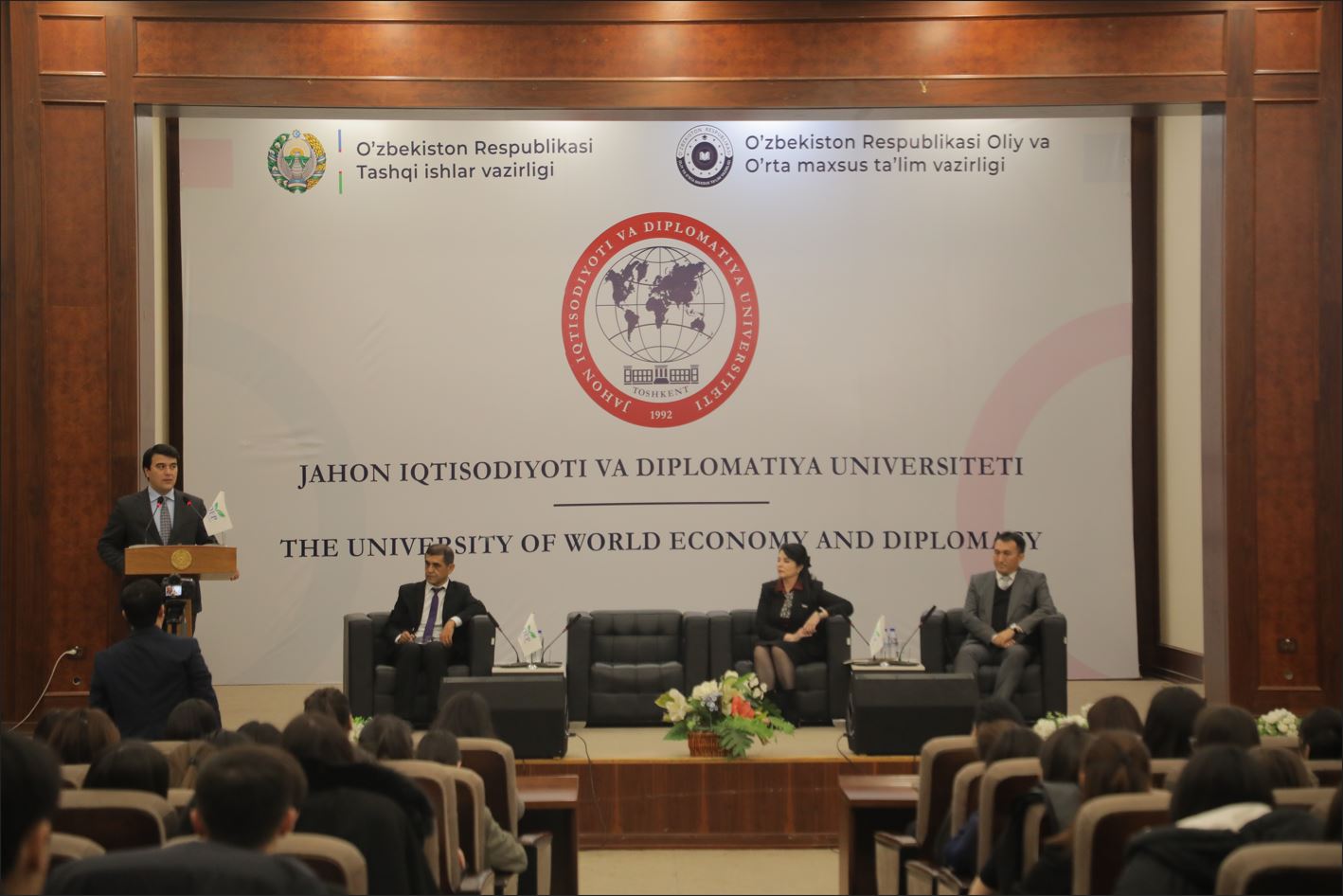
On December 2, 2025, the University of World Economy and Diplomacy hosted an open discussion dedicated to the theme “Human Dignity and Environmental Rights in the Constitution.” The event was organized in cooperation with the Legislative Chamber of the Oliy Majlis, the Uzbekistan Ecological Party, and the Tashkent State University of Law. Important issues related to human rights, environmental security, and the role of environmental policy in the country’s development were thoroughly discussed.
The event was opened by Odil Yusupjanov, First Vice-Rector for Youth Affairs and Spiritual-Educational Work of UWED. In his speech, he emphasized the significance of the reforms carried out by the state to enhance human dignity and ensure environmental rights, their practical importance, and the role of youth participation in these processes.
Prominent experts in law-making and environmental rights took part in the discussion:
Gulchehra Tajibaeva — Member of the Legislative Chamber of the Oliy Majlis from the Uzbekistan Ecological Party;
Shuhrat Fayziev — Deputy of the Mirzo Ulugbek District Council, First Adviser to the Minister of Justice, Professor of the “Environmental Law” Department at TSUL.
In their presentations, the speakers provided detailed insights into new guarantees of human rights reflected in the Constitution, state priorities aimed at ensuring environmental security, the rational use of natural resources, and the promotion of environmental awareness in society.
During the event, students, researchers, and young specialists asked questions related to environmental legislation, citizens’ environmental responsibility, the role of public oversight, and existing practical challenges. The invited experts gave legally grounded and practical answers to each question.
Additionally, proposals were put forward to develop environmental education, expand inter-university cooperation, and support youth environmental initiatives. Students also presented their ideas regarding youth environmental projects, training-practice programs, and innovative initiatives.
At the end of the event, the winners of the “Best Ecologist of the Year” competition were ceremonially awarded. The discussion contributed to raising environmental awareness, supporting environmental policy, and enhancing youth involvement in environmental protection.
This dialogue marked an important step toward strengthening environmental education at UWED, encouraging youth initiatives, and expanding scientific-practical cooperation in the field of environmental rights.
| Date: | 03.12.2025 |
| Views: | 1658 |
| Share: |